
Common wasp
Vespula vulgaris · Social wasps
A small, social yellow-and-black wasp that nests in cavities and can deliver painful stings and become a nuisance around food.
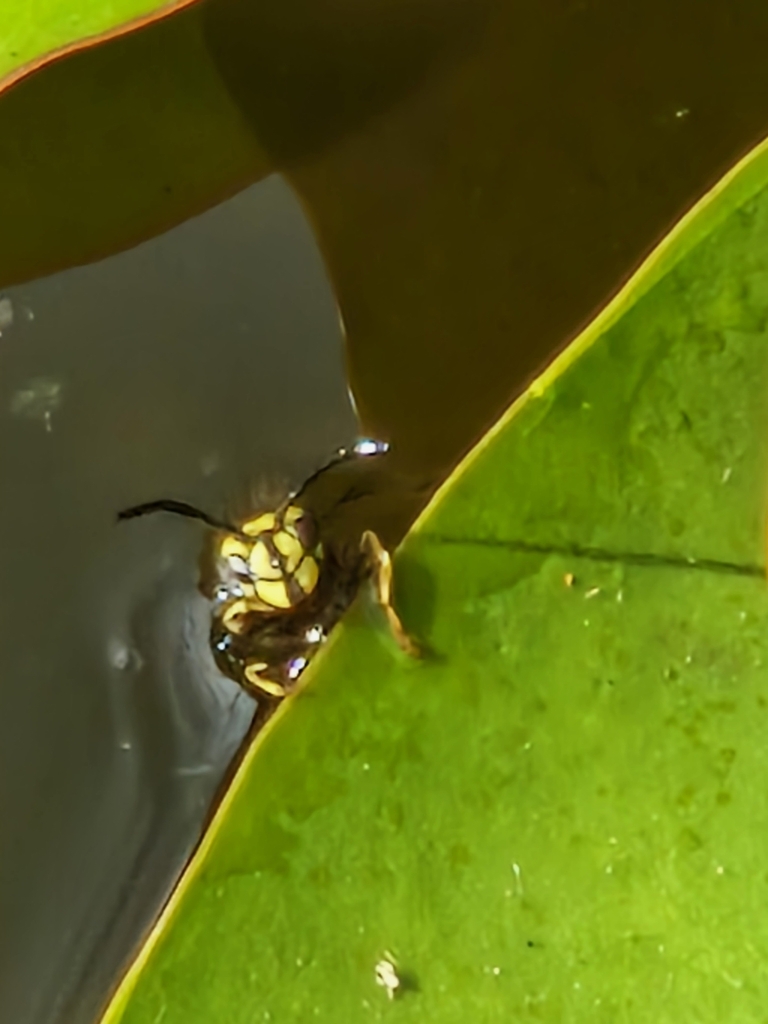
!Is the common wasp dangerous?
Yes, it can be. Workers can deliver painful stings repeatedly; stings cause local pain, swelling and redness. In people allergic to wasp venom, stings can cause severe systemic reactions including anaphylaxis. First aid: move to a safe area, wash the sting site with soap and water, apply a cold pack to reduce swelling, use oral antihistamine for itching if appropriate, and seek emergency care for signs of anaphylaxis (difficulty breathing, swelling of face/throat, rapid pulse, fainting).
Pets
Wasps can sting pets; multiple stings may cause swelling, pain, and in small animals systemic effects. Allergic reactions in pets are possible and require veterinary care if severe.
📖Overview
Vespula vulgaris is a social wasp found across Europe and introduced to other regions worldwide. Colonies are annual: a queen starts a nest in spring, workers expand it through summer, and males and new queens appear late summer to autumn. Workers defend the nest and will sting when threatened; they also scavenge sugary foods and protein sources, which brings them into contact with people.
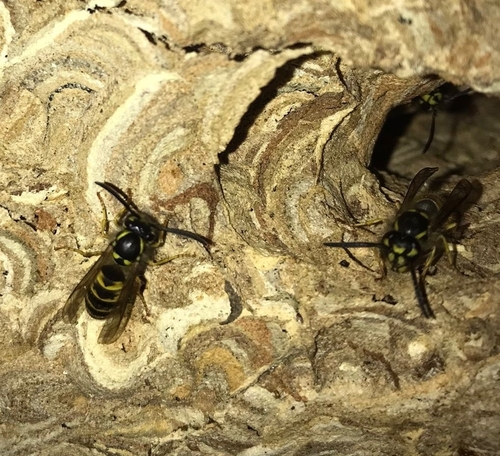
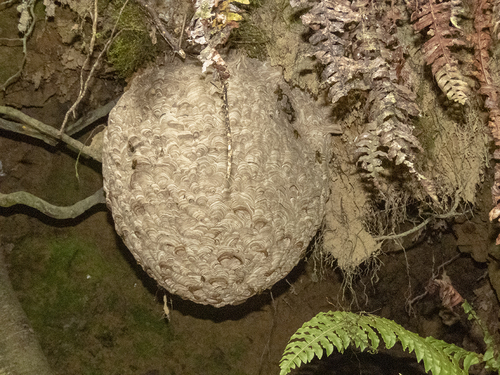
Nests are built from chewed plant fibres mixed with saliva to form papery combs and envelopes. Typical nest sites include cavities in walls, attics, tree holes, compost heaps and underground chambers. Populations peak in late summer when nests reach maximum size and foraging activity increases around outdoor gatherings and exposed food.
🔍How to identify a common wasp
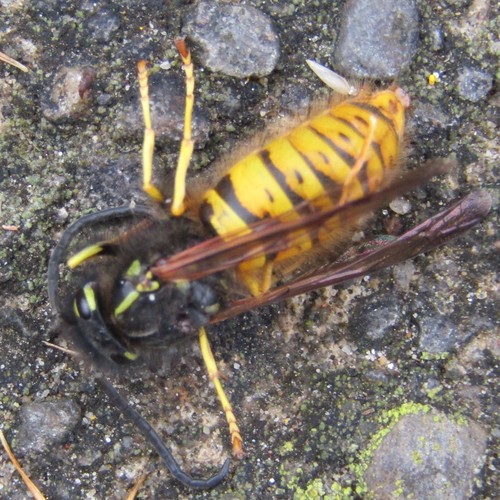
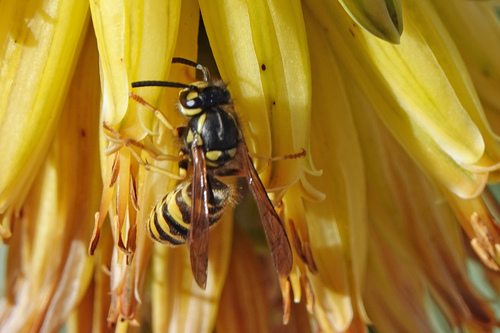
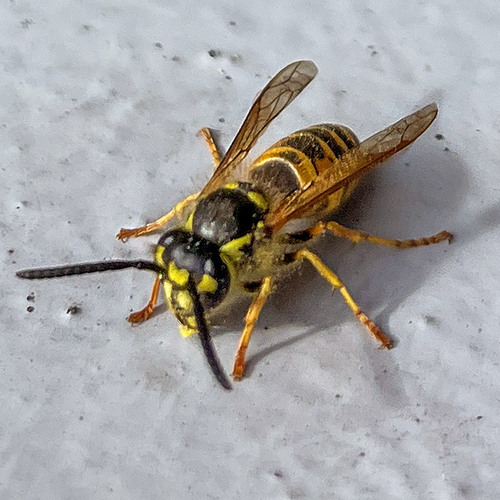
Adults are 10-16 mm long (workers), with a robust, compact body marked in black and yellow bands. The face and head have black markings on a yellow background; the abdomen shows alternating black and yellow stripes. Antennae are elbowed. Queens are larger (up to 20 mm) and males (drones) have slightly different head and antenna shapes and may show more extensive yellow on the face. Like other yellowjackets, the abdomen joins the thorax at a narrow waist.
- Yellow and black banded abdomen with compact, stocky body and elbowed antennae
- Size: workers about 10-16 mm; queens noticeably larger
- Facial and abdominal pattern differences from similar species (see similar species)
Lookalikes
German wasp Vespula germanica
Very similar in size and color; V. germanica usually shows three small black dots on the yellow face and slightly different abdominal patterning. Accurate distinction often requires close inspection or expert ID.
European hornet Vespa crabro
Larger (up to 30 mm), with more brown and reddish markings rather than stark black-and-yellow bands.
Paper wasps Polistes spp.
Slender body and long legs that hang in flight, with a narrow waist and different nest structure (open comb without a covering envelope).
↻Life cycle
Egg
Laid by the queen in cells of the nest; hatch in a few days depending on temperature.
Larva (grub)
Legless grubs fed by workers on chewed insects and protein; grow rapidly over 1-2 weeks.
Pupa
Larvae pupate in sealed cells and transform into adults over about 1-2 weeks.
Adult (worker/queen/drone)
Workers forage and maintain the nest; new queens and males are produced late season for mating; old colony dies in autumn except mated queens that overwinter.
🍃Diet and predators
Young eat
Fed by workers on regurgitated chewed insects and other protein-rich prey
Adults eat
Feed on nectar, sap, honeydew and sugary foods; adults also scavenge on human food and fruit
Predators of the young
Birds, small mammals, parasitic wasps and flies, ants (in some situations)
Predators of adults
Birds (e.g., bee-eaters), spiders, hornets, robber flies, and some mammals; humans often destroy nests
🌱Effect on plants and gardens
Adults feed on nectar and can act as pollinators, while workers forage protein (other insects) to feed larvae. They are not major crop pests but may damage soft fruits by feeding on juices.
How to get rid of common wasps
For single wasps, avoid swatting (which releases alarm pheromones). To discourage foraging wasps: keep food and drinks covered, remove fallen fruit and open garbage, seal compost and bins. If you find a nest in or near your home, do not attempt removal if you are inexperienced or allergic. Professional pest control is safest for nests inside structures or large colonies. For small, exposed nests late in season, insecticidal dusts applied at dusk or dawn when workers are less active can be effective; follow label directions and safety precautions.
📍Where and when to find it
Look for foraging workers on flowers, sap runs, fruit, bins and picnics; nests in cavities, attic spaces, under eaves, hollow trees, or underground.
Best time
Late spring to early autumn, with highest numbers and visibility in midsummer to early autumn afternoons.
Observation tips
Wear light-colored clothing, move slowly, avoid sudden swatting, and photograph from a safe distance. To locate nest entrance watch for repeated wasp traffic to and from a single hole.
✨Fun facts
- Workers can sting repeatedly because their stinger is not barbed like a honey bee's.
- Late-summer peaks in wasp numbers are due to large colony sizes; new queens leave to mate and found next year's colonies.
- Nest paper is made from chewed plant fibres mixed with saliva.
?Frequently asked questions
Do common wasps sting?
Yes. Workers will sting in defense of the nest or if handled; stings are painful and can trigger allergic reactions in some people.
Are common wasps aggressive?
They are defensive around their nest and may be persistent around food. They are not aggressive if unprovoked, but disturbance or swatting can provoke attacks.
Why are wasps in my house?
Wasps enter houses seeking shelter, nesting cavities (wall voids, attics), or indoor food and sugary drinks. Small openings and gaps in walls or eaves can allow queens to establish nests.
How do I get rid of a wasp nest?
For nests inside structures or large colonies, contact a professional pest controller. For small, accessible nests late in season you can treat at dusk/dawn with labeled insecticidal products while wearing protective clothing; always follow product instructions and safety advice.
Where do common wasps live?
They nest in cavities, underground burrows, wall voids, attics and sheltered spots in gardens, woodland edges and urban areas across their range.
📷Photos of the common wasp
More bees, wasps & ants
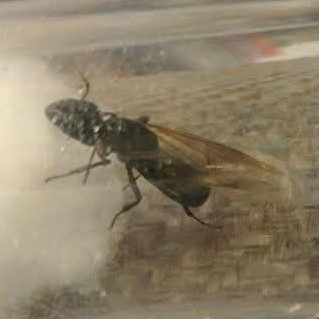
Bites and formic acid
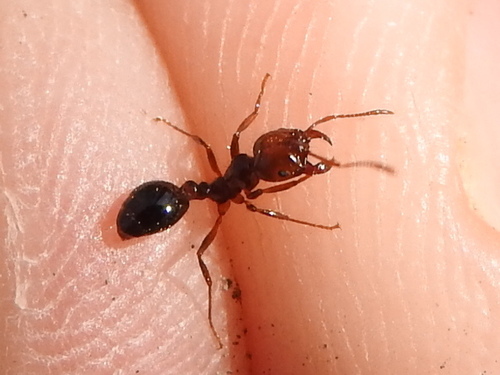
Painful sting
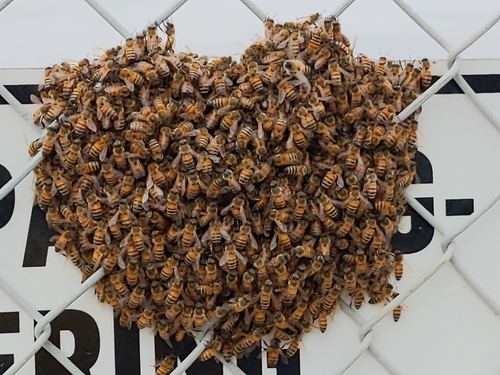
Stinging insect
Can sting
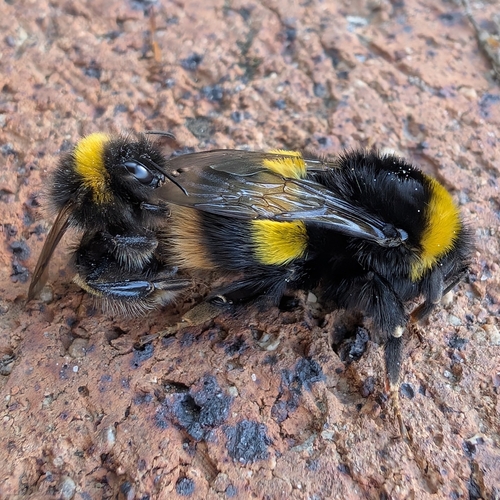
Can sting
Can sting
This guide was written with AI assistance and fact-checked, last updated 2026-10-09. Identification from photos is never certain: don't handle insects you can't identify, and get medical advice for bites, stings or allergic reactions.