
Bald-faced hornet
Dolichovespula maculata · Yellowjackets and hornets
A striking black-and-white social wasp that builds large paper nests in trees and buildings and can deliver painful, repeated stings.
!Is the bald-faced hornet dangerous?
Yes, it can be. Bald-faced hornets can sting repeatedly and deliver a painful sting. For most people stings cause local pain, swelling and redness. People with known insect venom allergies can develop severe allergic reactions (anaphylaxis) and require immediate medical attention. First aid: move away from the nest, wash the sting site with soap and water, apply cold compress, take antihistamine for swelling if not allergic, and seek emergency care if breathing difficulty, widespread hives, or dizziness occur.
Pets
Stings can be painful for pets and may cause swelling or allergic reactions. Small animals are at greater risk from multiple stings; seek veterinary care if your pet is stung repeatedly or shows signs of distress.
📖Overview
Dolichovespula maculata is a social wasp native to North America. Despite the common name, it is a type of yellowjacket rather than a true Old World hornet. Colonies are annual and founded by a queen each spring; they grow through summer to several hundred workers and decline in autumn. Bald-faced hornets are predatory on other insects (which they chew and feed to larvae) and also feed on nectar and sugary liquids as adults. They build large, enclosed paper nests often suspended from branches, eaves, or shrubs.
🔍How to identify a bald-faced hornet
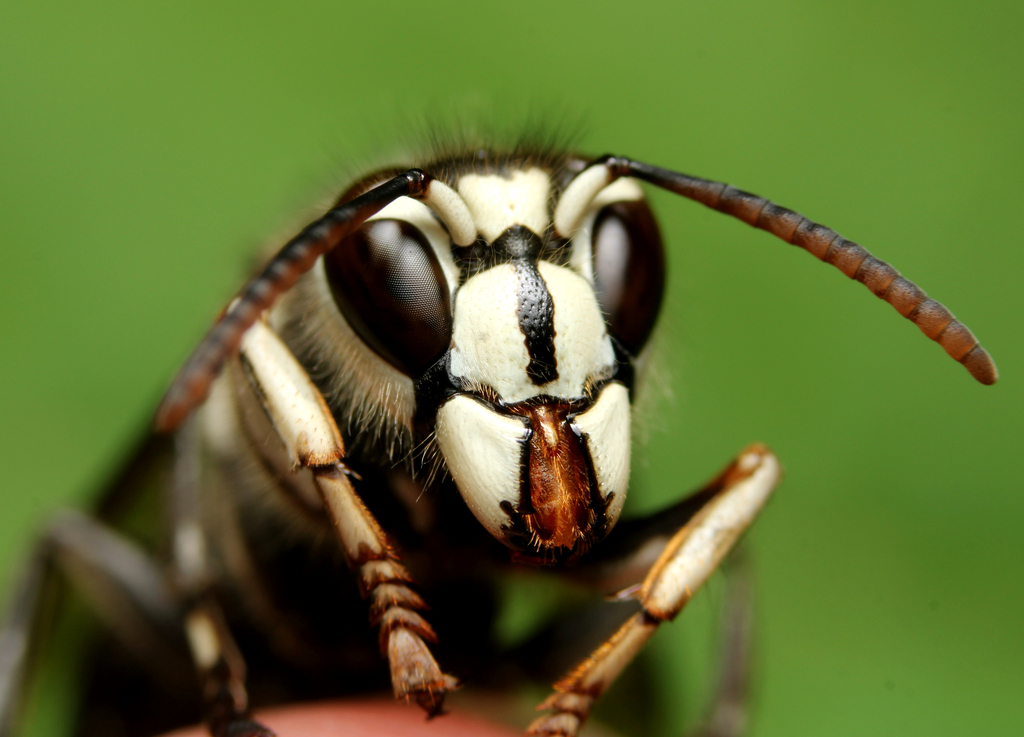
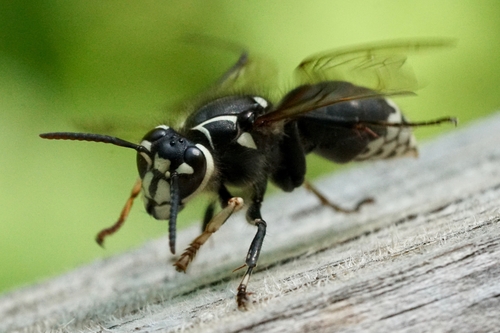
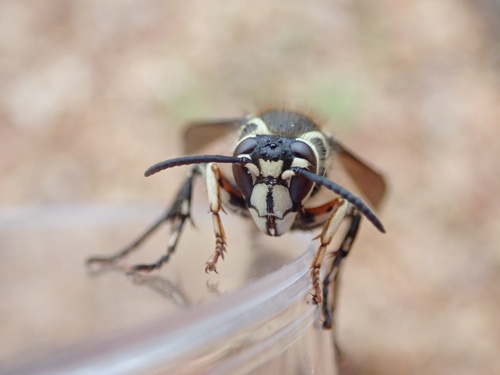
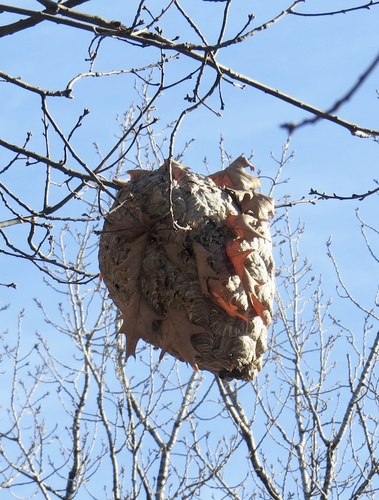
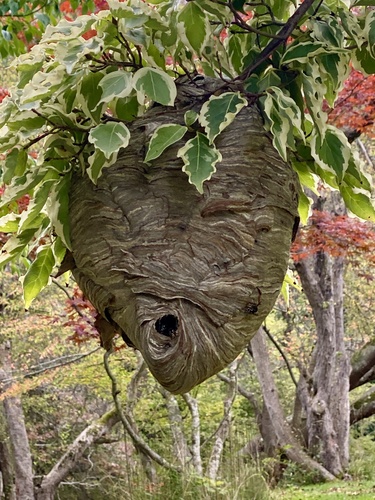
Adults are robust wasps with mostly black bodies and distinctive white markings on the face, thorax and abdominal segments, giving the 'bald-faced' look. The face and large patches on the abdomen are white; the remainder of the body is glossy black. Nests are round or ovoid, covered in layered gray papery comb and can reach the size of a basketball when colonies are large.
- Distinctive white face and white abdominal markings on a mostly black wasp
- Robust body 12-20 mm long; larger than many common paper wasps
- Large gray papery, enclosed round or football-shaped nests often hanging from branches, eaves or shrubs
Lookalikes
European hornet Vespa crabro
European hornets are larger and primarily brown and yellow rather than black-and-white; their nests are usually in cavities rather than exposed hanging paper nests.
Common yellowjacket Vespula spp.
Yellowjackets are smaller and have yellow-and-black banding rather than the bold white face and patches of D. maculata; their nests are commonly underground or in wall cavities.
↻Life cycle
Egg
Laid by the queen in individual brood cells in spring and summer; hatch in a few days.
Larva (grub)
Larvae are fed chewed-up insects and protein brought by workers; they grow through several instars.
Pupa
Larvae spin a cap over their cell and pupate, transforming into adults within the sealed cell.
Adult (worker, male, queen)
Workers maintain the nest, forage and care for larvae; new queens and males are produced late season, mated queens overwinter and queens found new colonies next spring.
🍃Diet and predators
Young eat
Protein: chewed insects and other arthropods provided by workers
Adults eat
Sugars and carbohydrates: nectar, tree sap, ripe fruit, honeydew and sometimes human food/drinks
Predators of the young
Predatory insects, spiders, and birds that can breach the nest or take exposed brood
Predators of adults
Birds (some species), mammals (raccoons, skunks) that tear open nests, and other wasps or hornets
🌱Effect on plants and gardens
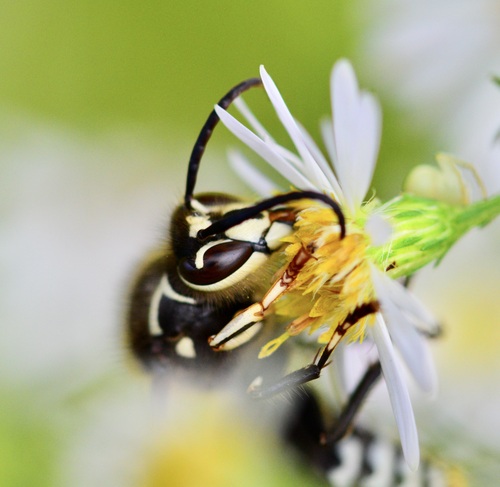
Adults visit flowers for nectar and can act as incidental pollinators. Larvae are fed on captured insects, so colonies help control some garden pests.
How to get rid of bald-faced hornets
If a nest poses a threat, hire a licensed pest control professional to remove or treat it. For DIY: only attempt removal at night when wasps are less active, wear protective clothing, and use an appropriate wasp spray labeled for aerial nests or an approved dust insecticide placed into the nest entrance; plan an escape route and have a partner. Do not attempt nest removal if allergic to stings. Sealing potential nest sites and reducing food attractants (open trash, ripe fruit, sweet drinks) helps prevent problems.
📍Where and when to find it
Look for paper nests in trees, shrubs, under eaves, porch rafters, or attached to buildings. Workers forage on flowers, sap, ripe fruit, and near outdoor food and drinks.
Best time
Best observed from late spring through early fall; workers are active during daylight, nests are easiest to examine from a safe distance in summer.
Observation tips
Use binoculars or a zoom lens to photograph nests from a distance. Do not approach or attempt to touch a nest; nighttime is when wasps are least active if careful observation is necessary.
✨Fun facts
- Despite the name 'hornet', it is a type of yellowjacket (genus Dolichovespula).
- A single bald-faced hornet nest can contain several hundred individuals at peak colony size.
- Workers catch and chew insects to create a protein-rich 'meat' feed for growing larvae, while larvae in turn produce sugary secretions that workers consume.
?Frequently asked questions
Do bald-faced hornets sting?
Yes. They can sting repeatedly and deliver a painful sting; avoid disturbing nests.
Are bald-faced hornets aggressive?
They defend their nest vigorously if it is threatened, but solitary workers away from the nest are less likely to attack if not provoked.
Why is there a large gray nest on my tree?
It is likely a bald-faced hornet nest. They build large, enclosed paper nests in trees, shrubs or under eaves; do not disturb it.
How can I get rid of a bald-faced hornet nest?
For safety, hire a licensed pest control professional. If you must act yourself, treat at night when wasps are inside, wear protective gear, and use products labeled for aerial nests; do not attempt removal if allergic to stings.
Are bald-faced hornets beneficial?
Yes. They help control pest insects and visit flowers for nectar, although they can be a nuisance or hazard near people.
📷Photos of the bald-faced hornet
More bees, wasps & ants
Bites and formic acid
Painful sting
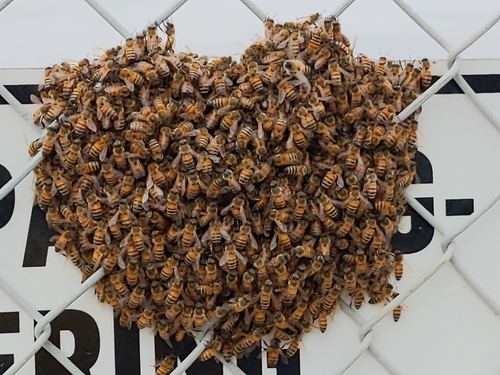
Stinging insect
Can sting
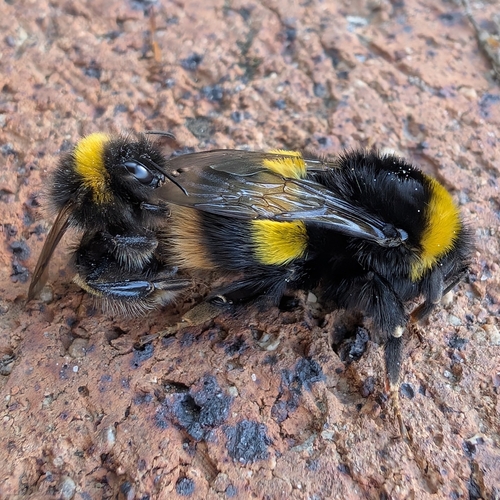
Can sting
Can sting
This guide was written with AI assistance and fact-checked, last updated 2026-10-09. Identification from photos is never certain: don't handle insects you can't identify, and get medical advice for bites, stings or allergic reactions.