
Bald-faced hornet vs Four-toothed mason wasp
These two are easy to mix up. Here's how to tell a bald-faced hornet from a four-toothed mason wasp, and whether either one bites or stings.
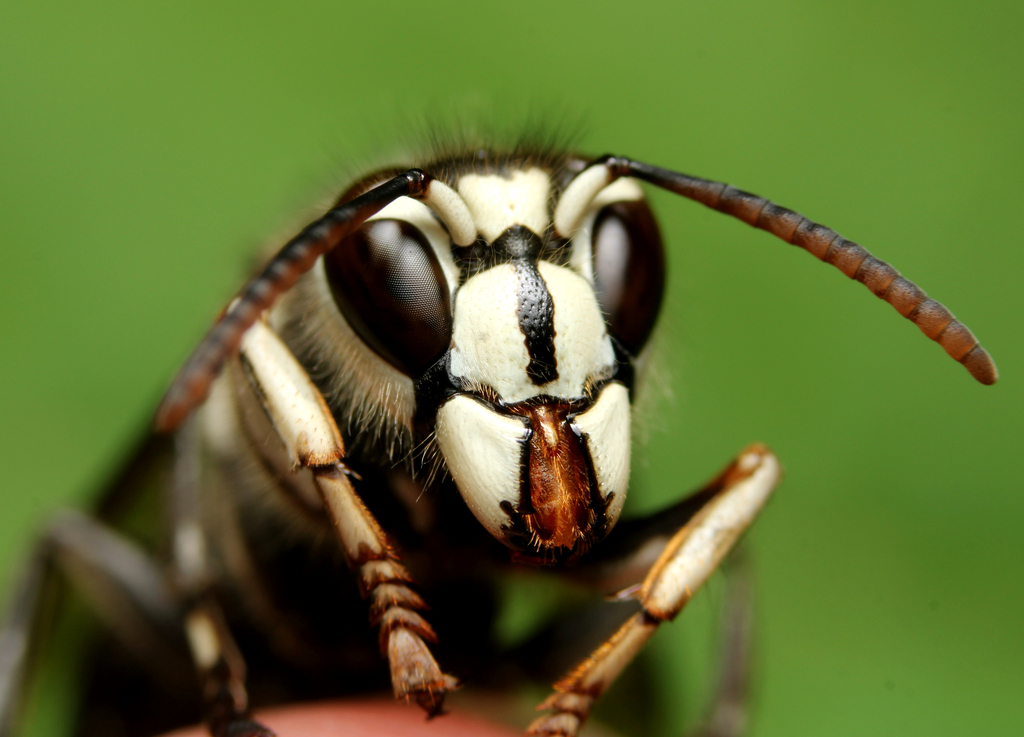
Bald-faced hornet
Dolichovespula maculata
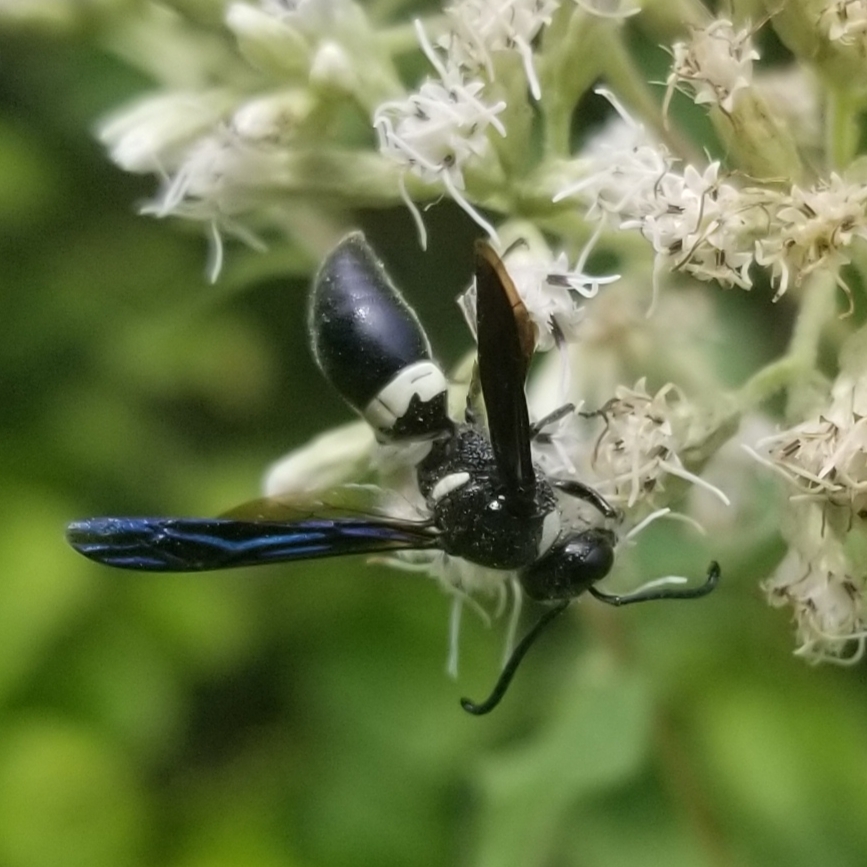
Four-toothed mason wasp
Monobia quadridens
≠The key differences
Similar black-and-white colouring, but a social wasp with white markings at the tip of the abdomen and a large papery nest; Monobia has a single ivory band near the front of the abdomen.
⚖︎Side by side
| Bald-faced hornet | Four-toothed mason wasp | |
|---|---|---|
| To humans | Painful sting | Painful sting |
| Size | About 12-20 mm body length (queens largest) | Approximately 12-20 mm body length |
| Colours | Black, White, Papery gray (nest) | Black, Dark brown, Cream (markings) |
| Family | Vespidae | Vespidae |
| Habitat | Woodlands, suburban and urban areas; nests in trees, shrubs, under eaves, attached to buildings or in dense vegetation | Woodlands, edges, meadows, gardens, urban areas — wherever suitable cavities and flowers are available |
| Range | Widespread across North America, from Alaska and southern Canada through most of the United States | Eastern and central North America (United States and southern Canada) |
| Active | Active spring through autumn (colony peak in mid to late summer); workers active during daylight | Spring to early autumn (typically April to September); active during daylight hours when temperatures are warm |
| Pest? | Yes | No |
🔍How to spot a bald-faced hornet
- Distinctive white face and white abdominal markings on a mostly black wasp
- Robust body 12-20 mm long; larger than many common paper wasps
- Large gray papery, enclosed round or football-shaped nests often hanging from branches, eaves or shrubs
🔍How to spot a four-toothed mason wasp
- Small, slender solitary wasp 8-18 mm long with a glossy dark body and pale abdominal markings
- Look for the four small tooth-like projections at the tip of the abdomen (gives the common name)
- Nests in small cavities and mud partitions; presence of small mud cells in stems, holes or man-made cavities suggests mason wasps
- Adults visit flowers; observe body shape and behaviour — not a paper wasp (no large paper nest) and not a yellowjacket (distinct slender waist and solitary nesting)
?Frequently asked questions
What is the difference between a bald-faced hornet and a four-toothed mason wasp?
Similar black-and-white colouring, but a social wasp with white markings at the tip of the abdomen and a large papery nest; Monobia has a single ivory band near the front of the abdomen.
Is a bald-faced hornet or a four-toothed mason wasp more dangerous?
Bald-faced hornet: Painful sting. Four-toothed mason wasp: Painful sting. Bald-faced hornets can sting repeatedly and deliver a painful sting. Monobia quadridens is capable of stinging.
Identification from photos is never certain: don't handle insects you can't identify, and get medical advice for bites, stings or allergic reactions.