
Four-toothed mason wasp
Monobia quadridens · Mason wasps
A small, solitary potter/mason wasp of eastern North America that nests in cavities, provisions brood with caterpillars and visits flowers for nectar.
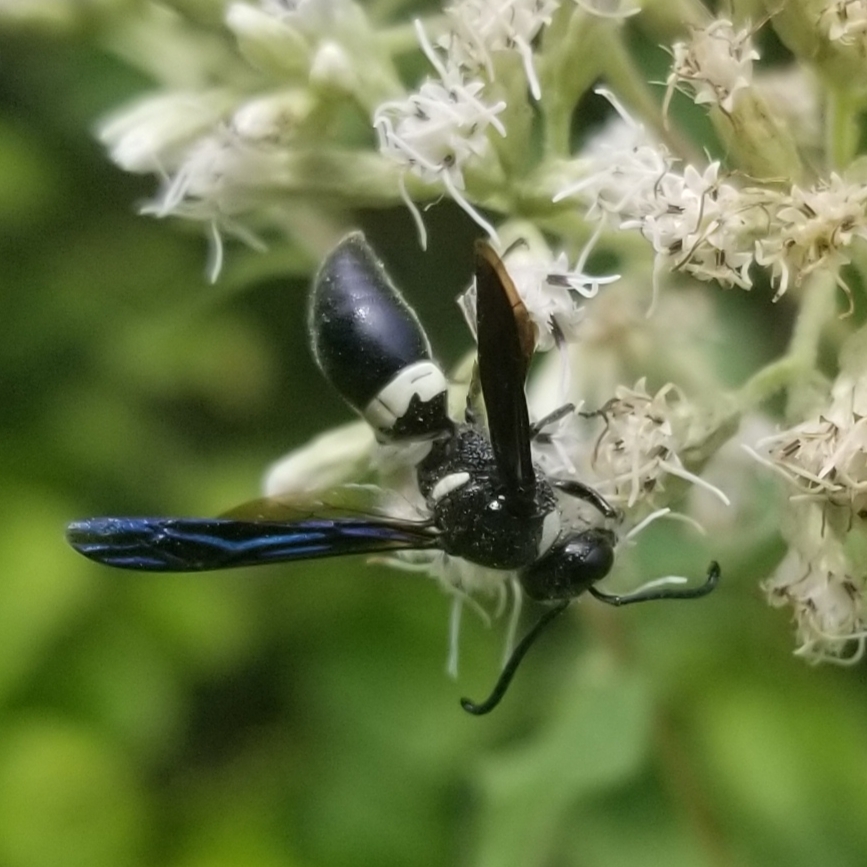
!Is the four-toothed mason wasp dangerous?
Only mildly. Monobia quadridens is capable of stinging. They are solitary and not aggressive toward people but females may sting if grabbed or trapped. Stings typically cause immediate sharp pain, redness and localized swelling. Standard first aid: clean the area with soap and water, apply a cold pack to reduce pain and swelling, and use antihistamine or topical anti-itch preparations if needed. If there are signs of a severe allergic reaction (difficulty breathing, swelling of face or throat, widespread rash, dizziness), use an epinephrine auto-injector if available and call emergency services.
Pets
A sting can be painful to pets (dogs, cats). Small animals or animals that try to bite or catch the wasp may receive multiple stings; watch for swelling or signs of an allergic reaction and consult a veterinarian if concerned.
📖Overview
Monobia quadridens is a solitary wasp in the subfamily Eumeninae (mason or potter wasps). Females build or occupy small cavities (hollow stems, beetle burrows, holes in wood or man-made cavities), partition cells with mud and stock each cell with paralyzed caterpillars for their developing larvae. Adults visit flowers for nectar and are important incidental pollinators and natural enemies of caterpillars. They are not social and do not form colonies.
This species is widespread in eastern North America. Adults are usually non-aggressive when foraging but a female defending a nest can sting if handled or trapped. Stings are not typically life-threatening to people but can be painful and cause local swelling or allergic reactions in sensitive individuals.
🔍How to identify a four-toothed mason wasp
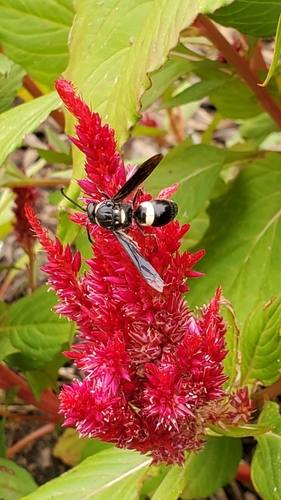
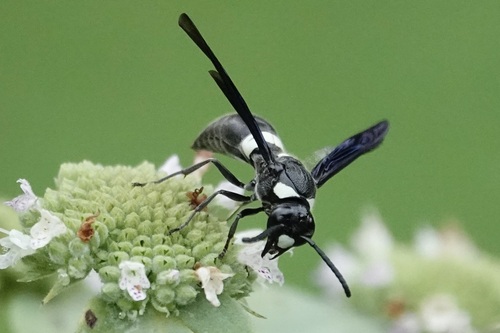
Adults are fairly large, robust mason wasps. The body is black with ivory-white markings: a broad ivory band on the first abdominal segment and small pale marks on the thorax, while the rest of the abdomen is black. Wings are dark and smoky with a bluish-violet sheen. The scientific name quadridens means "four teeth", referring to small tooth-like projections on the body. Antennae are threadlike, and males are smaller than females.
- Small, slender solitary wasp 8-18 mm long with a glossy dark body and pale abdominal markings
- Look for the four small tooth-like projections at the tip of the abdomen (gives the common name)
- Nests in small cavities and mud partitions; presence of small mud cells in stems, holes or man-made cavities suggests mason wasps
- Adults visit flowers; observe body shape and behaviour — not a paper wasp (no large paper nest) and not a yellowjacket (distinct slender waist and solitary nesting)
Lookalikes
Eumenes (potter wasps) Eumenes spp.
Eumenes species build visible mud 'pot' nests attached to twigs or walls; Monobia tends to use existing cavities and the abdominal markings and small terminal teeth differ.
Euodynerus foraminatus Euodynerus foraminatus
Very similar in size and black-and-ivory colouring; check abdominal pattern and structure — specialist keys or an expert are often needed to separate them reliably.
Bald-faced hornet Dolichovespula maculata
Similar black-and-white colouring, but a social wasp with white markings at the tip of the abdomen and a large papery nest; Monobia has a single ivory band near the front of the abdomen.
↻Life cycle
Egg
Female lays a single egg in each mud-lined cell after provisioning it with paralyzed caterpillars.
Larva
Larva hatches and consumes the supplied caterpillars, growing inside the sealed cell.
Pupa
After feeding, the larva pupates within the cell and metamorphoses into an adult.
Adult
Adults emerge, feed on nectar, mate, and females search for cavities to build or reuse cells for their offspring; there are usually two generations per year.
🍃Diet and predators
Young eat
Paralyzed caterpillars and other small lepidopteran larvae provided by the mother
Adults eat
Nectar from flowers, sometimes honeydew
Predators of the young
Parasitic wasps and flies (parasitoids), ants if nests are accessible
Predators of adults
Birds, spiders, dragonflies and predatory insects
🌱Effect on plants and gardens
Adults visit flowers for nectar and can pollinate garden plants. Larvae feed on caterpillars, reducing populations of herbivorous lepidopteran larvae.
📍Where and when to find it
Look for adults on flowers, especially small open blossoms; find nests in hollow stems, old beetle borings, holes in wood, and cavity nesting blocks. Eggs/larvae are inside mud-partitioned cells within those cavities.
Best time
Spring through early autumn (April-September) during warm daylight hours; early morning and late afternoon are good for photographing nectar-feeding adults.
Observation tips
Approach slowly and avoid touching or crowding nests. Use a macro lens or phone close-up to capture body details; photograph nests from a distance and zoom in to avoid disturbing residents.
✨Fun facts
- Despite the common name 'mason' or 'potter', many Monobia quadridens females reuse existing cavities instead of building free-standing mud pots.
- They immobilize (but do not kill immediately) caterpillars with a sting so the larvae have fresh food when they hatch.
- Solitary mason wasps like Monobia are beneficial in gardens because they reduce caterpillar pests while also visiting flowers.
?Frequently asked questions
Is the four-toothed mason wasp dangerous?
Only mildly. It is not aggressive and can only sting if handled or trapped; stings are painful locally and can cause allergic reactions in some people.
Do four-toothed mason wasps bite?
No — like other wasps, they do not 'bite' to feed on you. They can sting with their ovipositor (females) if threatened.
Why is it in my house or on my porch?
Females look for small cavities to build or reuse cells for their brood. Hollow stems, gaps in wood, drilled holes, bee hotels, and crevices in siding are attractive sites.
How can I get rid of them?
If a nest is causing a problem, the safest approach is to wait until adults are inactive (cool evening) and remove or block the cavity, wearing protective gloves and clothing. Destroying a nest while adults are present can provoke stings. Sealing gaps and maintaining screens prevents access. If you have many nests or severe allergy concerns, consult a pest professional.
Where does the four-toothed mason wasp live?
It lives across eastern and central North America in habitats with flowers and suitable nesting cavities: woodlands, fields, gardens and urban areas.
📷Photos of the four-toothed mason wasp
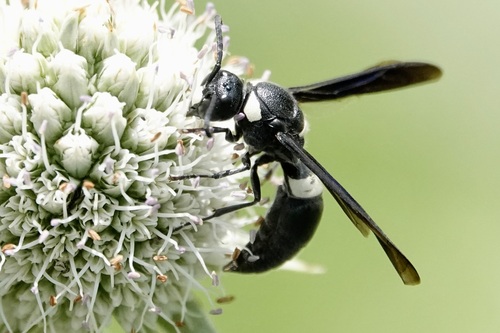
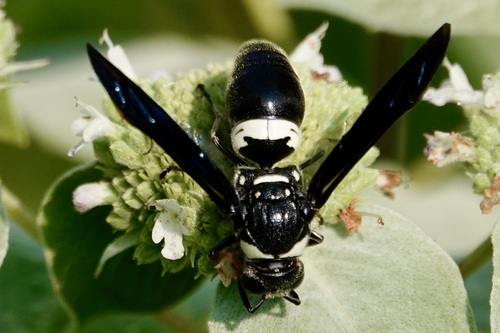
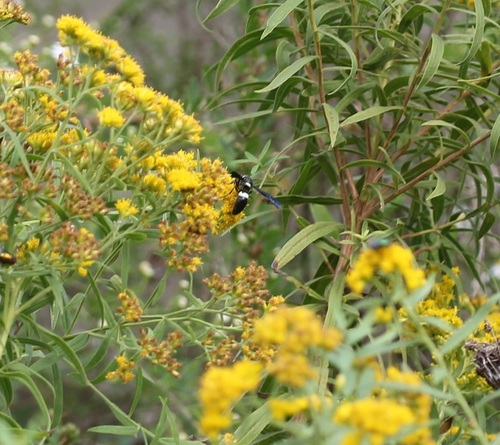
More bees, wasps & ants
Bites and formic acid
Painful sting
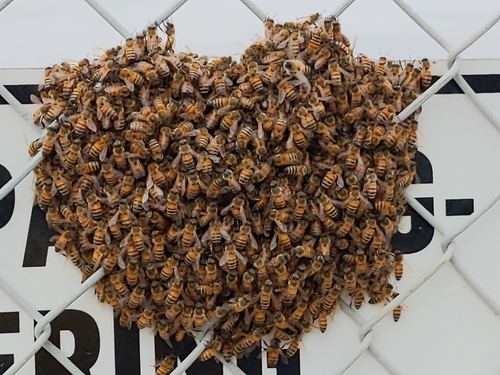
Stinging insect
Can sting
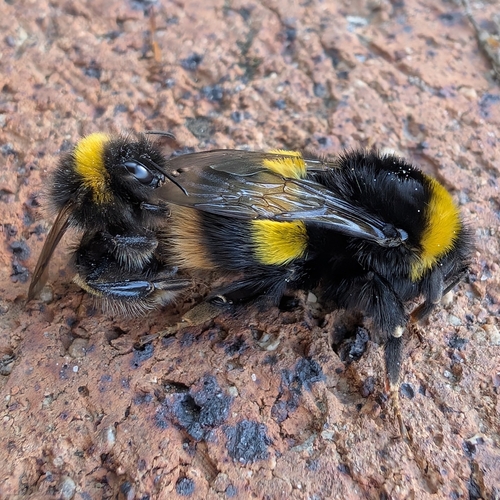
Can sting
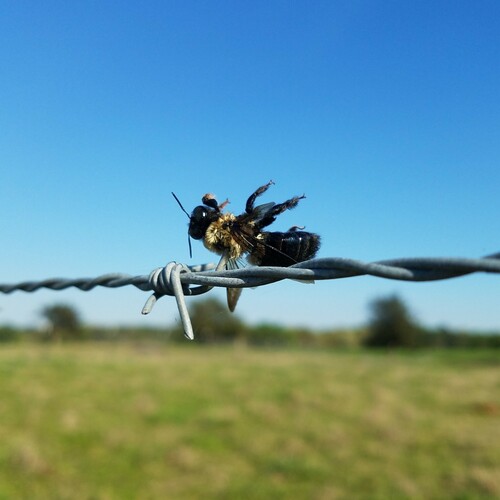
Can sting
This guide was written with AI assistance and fact-checked, last updated 2026-10-10. Identification from photos is never certain: don't handle insects you can't identify, and get medical advice for bites, stings or allergic reactions. More about the four-toothed mason wasp: iNaturalist, Wikipedia.