
White-tailed bumblebee
Bombus lucorum · Bumblebees
A widespread European bumblebee with black body, yellow bands and a distinctive white tail; important pollinator and generally not aggressive.
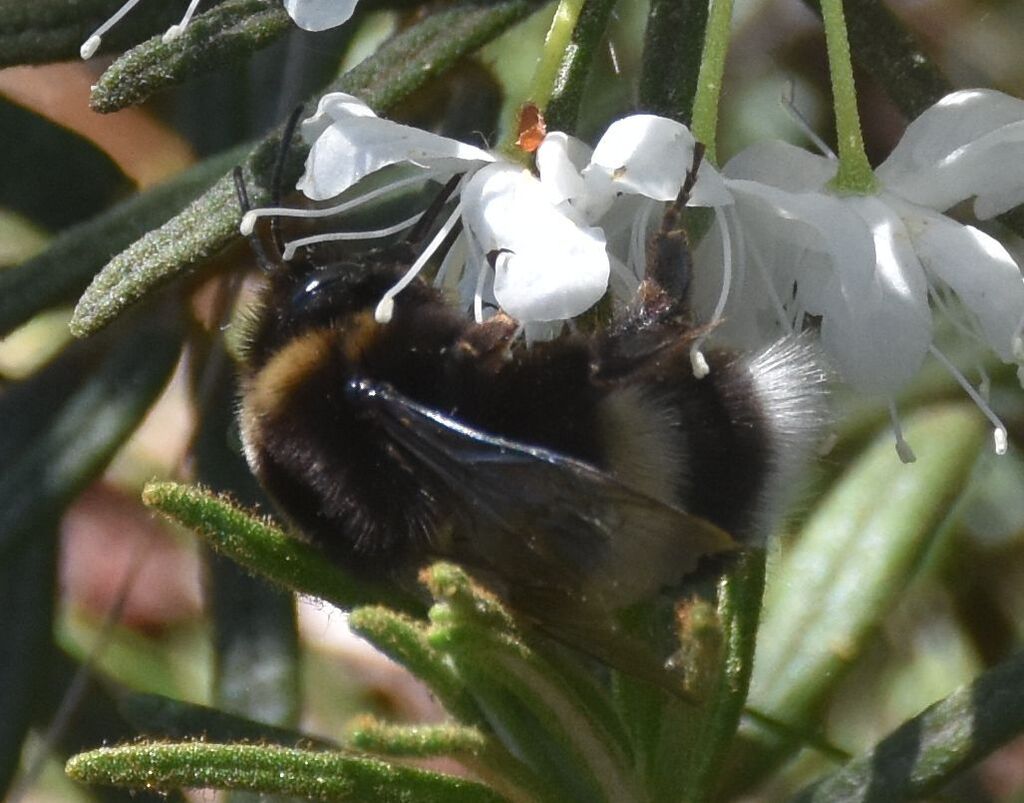
!Is the white-tailed bumblebee dangerous?
Only mildly. Bumblebees can sting, and a sting can be painful and produce local swelling. They rarely sting unless provoked, handled or trapped against the skin, and they can sting more than once. For minor stings: bumblebees do not leave their sting behind, so clean the area, apply a cold pack and take an oral antihistamine if needed. If signs of a severe allergic reaction develop (difficulty breathing, swelling of the face or throat, widespread hives, fainting), use an epinephrine auto-injector if one has been prescribed and call emergency services immediately.
Pets
Stings can be painful for pets; multiple stings or stings in the mouth or throat can be dangerous. Keep pets calm and seek veterinary care if there are signs of severe reaction (swelling, breathing difficulty, collapse).
📖Overview
Bombus lucorum is a common, social bumblebee found across much of Europe and northern Asia. Colonies are annual: a single overwintered queen founds a nest in spring, raises workers through the summer, and produces new queens and males by late summer. It forages on a wide variety of wildflowers and garden plants and is an important pollinator of both wild and cultivated species.
This species belongs to a close group of related bumblebees (the Bombus lucorum complex) that are difficult to separate by appearance alone; reliable identification often requires microscopy or DNA analysis. B. lucorum is generally not aggressive and will only sting if handled or trapped against the skin.
🔍How to identify a white-tailed bumblebee
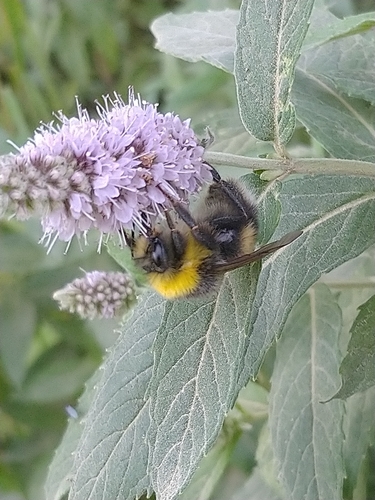
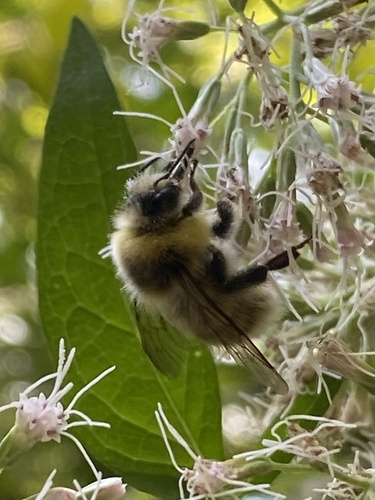
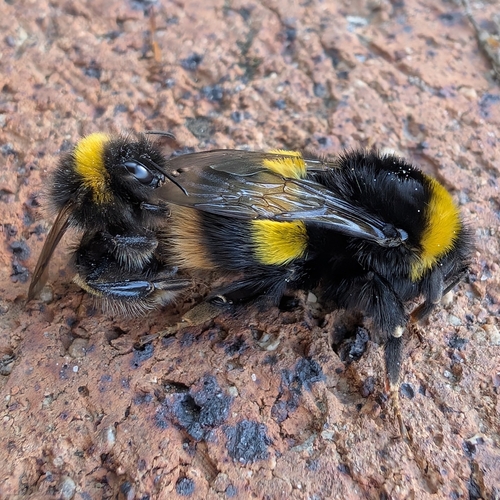
Adults have a robust, hairy body typical of bumblebees. The basic pattern is: a black thorax and abdomen with two prominent yellow bands (one across the thorax and one on the first segment of the abdomen) and a conspicuous white terminal band forming the "white tail." Size and hairiness vary by caste: queens are larger and denser-haired, workers smaller. Males may show paler hairs and sometimes yellow hairs on the face and legs. Because many related species share a similar colour pattern, exact identification by sight alone can be unreliable.
- Two bright yellow bands: one across the thorax and one on the first abdominal segment.
- Distinctive white tail (terminal abdominal band) contrasted with black abdomen.
- Robust, densely hairy body; size differences: queens noticeably larger than workers.
- Be aware: several related species share this pattern; definitive ID often needs microscopic or genetic methods.
Lookalikes
Buff-tailed bumblebee Bombus terrestris
B. terrestris queens have a buff-coloured tail, and its yellow bands are a darker, ochre yellow than the lemon yellow of B. lucorum; workers of both can have white tails, so field separation can be unreliable.
Cryptic bumblebee Bombus cryptarum
A close relative in the lucorum complex with very similar yellow/black/white patterning; separation usually requires microscopic examination or DNA, so visual ID is often uncertain.
↻Life cycle
Egg
Laid by the queen in the nest; each egg hatches in a few days under warm conditions.
Larva (grub)
Legless, white grubs fed by workers on pollen and nectar; grow rapidly over several days to weeks depending on food and temperature.
Pupa
Larvae spin short cocoons and pupate inside; metamorphosis to adult occurs in the pupa over several days to weeks.
Adult (queen, worker, male)
Queens found nests in spring, workers maintain the colony through summer, and new males and queens are produced late season; new queens overwinter.
🍃Diet and predators
Young eat
Fed on pollen and nectar brought by workers (protein-rich pollen essential for larval growth).
Adults eat
Primarily nectar for energy; pollen used as a protein source, especially by foragers provisioning larvae.
Predators of the young
Nest parasites and predators such as wax moths, some beetles and small mammals may raid nests.
Predators of adults
Birds, spiders, robber flies and some insectivorous mammals; adult bumblebees rely on flight and stinging defence.
🌱Effect on plants and gardens
Forages on a wide range of flowering plants, including clovers, thistles, vetches, fruit blossom and garden flowers; important for pollination rather than causing plant damage.
📍Where and when to find it
Foraging on flowers in gardens, meadows, hedgerows and woodland edges. Nests in underground cavities, tussocks or sheltered aboveground sites; look for worker traffic around a small entrance.
Best time
April to September in temperate regions; warm, calm days are best for observing foraging activity (mid-morning to mid-afternoon).
Observation tips
Use a long lens for photos, move slowly and avoid sudden movements; focus on flowers where they are feeding and be aware of queens in spring, which are larger and easier to photograph.
✨Fun facts
- Bumblebees like B. lucorum can vibrate their flight muscles to 'buzz' flowers and release pollen from plants that need vibration (buzz pollination).
- Queens of B. lucorum overwinter alone and start new colonies each spring.
- Because many similar species look nearly identical, scientists use patterns of male genitalia and DNA to tell members of the lucorum complex apart.
?Frequently asked questions
Are white-tailed bumblebees dangerous?
Only mildly. They are not aggressive and are important pollinators, but they will sting if handled, trapped or provoked; people allergic to bee stings should take precautions.
Do white-tailed bumblebees sting?
Yes, females (queens and workers) can sting. Their sting is smooth rather than barbed, so unlike honeybees they do not leave it behind and can sting more than once, but they sting only defensively and stings are uncommon unless provoked.
Why is a bumblebee nesting in my garden or shed?
Bumblebee queens look for sheltered cavities in spring such as old rodent burrows, compost heaps, dense grass tussocks or gaps under sheds—your garden provides food and nesting opportunities.
How can I get rid of a bumblebee nest?
Removal is rarely necessary because colonies are short-lived and beneficial. If a nest poses a safety risk, contact a local beekeeper or pest control that handles bees; avoid DIY nest destruction which can provoke stings and harm pollinators.
How can I attract white-tailed bumblebees to my garden?
Plant a variety of nectar- and pollen-rich flowers that bloom across the season (clover, foxglove, borage, lavender), provide patches of bare soil or tussocks for nesting, and avoid heavy pesticide use.
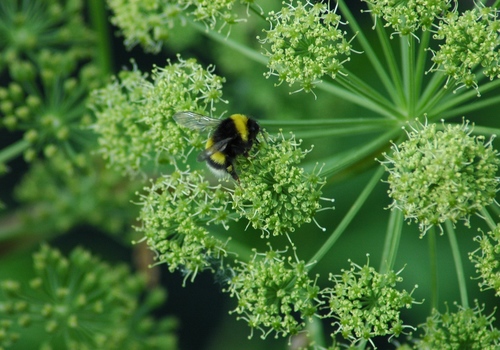
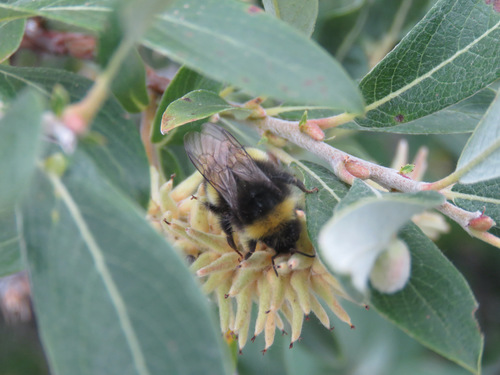
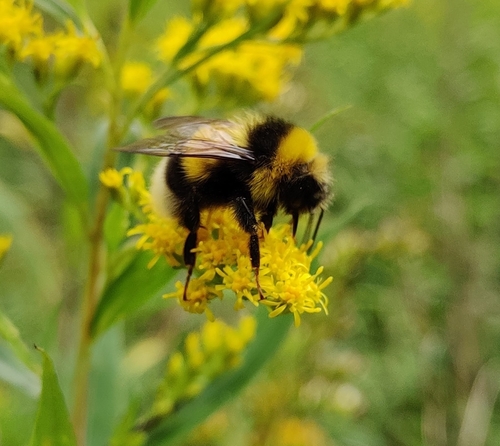
📷Photos of the white-tailed bumblebee
More bees, wasps & ants
Bites and formic acid
Painful sting
Stinging insect
Can sting
Can sting
Can sting
This guide was written with AI assistance and fact-checked, last updated 2026-10-10. Identification from photos is never certain: don't handle insects you can't identify, and get medical advice for bites, stings or allergic reactions. More about the white-tailed bumblebee: iNaturalist, Wikipedia.