
Red harvester ant
Pogonomyrmex barbatus · Harvester ants
A reddish, seed-collecting ant of dry grasslands and prairies known for large surface nests and a painful sting.
!Is the red harvester ant dangerous?
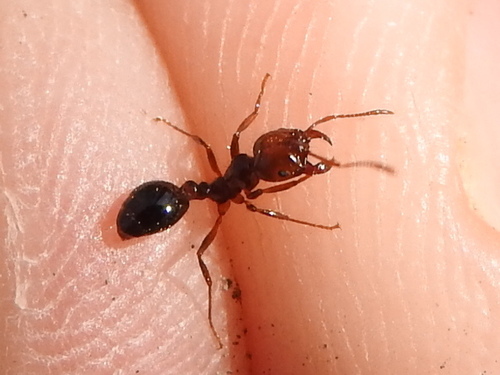
Only mildly. Workers sting and can bite. The sting is very painful, and pain can last for several hours, with localized swelling and redness. For minor stings, clean the area, apply cold packs to reduce swelling and consider oral antihistamines or topical corticosteroid creams for itching. If someone has signs of a severe allergic reaction (trouble breathing, swelling of the face or throat, dizziness), use their epinephrine auto-injector if they have one and call emergency services.
Pets
Dogs and cats can be stung; multiple stings or stings near the face can cause pain, swelling or distress. Small animals are at higher risk of severe reactions. If a pet shows severe symptoms (drooling, vomiting, difficulty breathing, collapse), seek veterinary help immediately.
📖Overview
Pogonomyrmex barbatus is a ground-nesting ant common in arid and semi-arid grasslands of the southwestern and central United States and northern Mexico. Workers gather and store seeds as the main colony food source, creating conspicuous crater-like nests often surrounded by cleared soil and seed husks. Colonies can persist for many years and are important ecological agents for seed removal, soil turnover and nutrient cycling. Workers defend nests aggressively and can deliver a painful sting when provoked.
🔍How to identify a red harvester ant
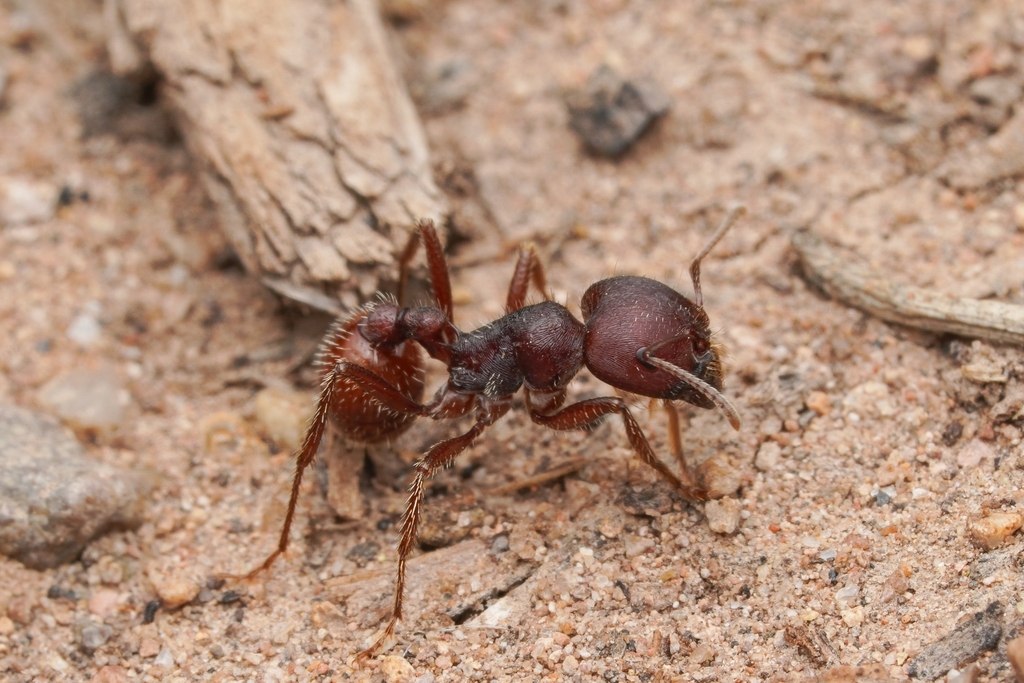
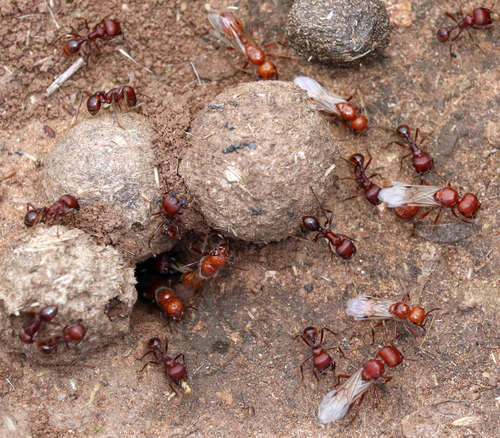
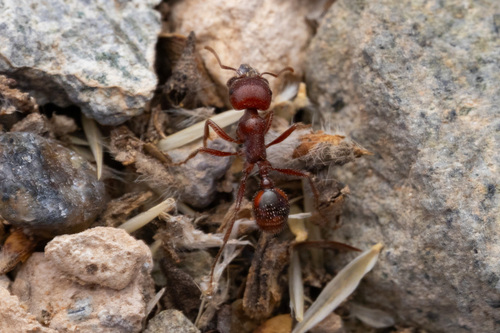
Workers are medium-sized ants with a robust, stocky build and a distinctly reddish to dark red coloration. The head and thorax are broad; the abdomen is slightly darker. Nests are marked by a flat, roughly circular cleared disc of bare soil, often 1-2 m across, sometimes covered with small pebbles, with one or more central entrances. Foraging workers carry seeds or small insect prey and often travel in well-used trails radiating from the nest.
- Reddish, medium-sized workers (6-9 mm) with a robust body and darker abdomen.
- Flat, cleared disc of bare soil around the nest entrance, often 1-2 m across.
- Foraging trails carrying seeds; workers frequently seen carrying or cutting seeds and husks.
- Painful sting if handled or nest disturbed (use caution when approaching nests).
Lookalikes
Western harvester ant Pogonomyrmex occidentalis
Very similar in appearance; P. occidentalis is more common in higher plains and tends to be slightly darker and build larger, flatter nest mounds. Geographic range and subtle morphological characters (specialist keys) distinguish them.
Rugose harvester ant Pogonomyrmex rugosus
Often darker and larger with different head sculpturing; ranges overlap in parts of the Southwest—identification requires close inspection or expert key.
↻Life cycle
Egg
Tiny white eggs laid by the queen inside the nest; development time depends on temperature and food availability.
Larva (grub)
Legless, grub-like larvae that are fed by workers with regurgitated food (primarily seed-derived nutrients and protein from insects).
Pupa
Pupae develop inside the nest, first as soft, often white forms that later darken as adult features form.
Adult (worker/queen/winged reproductives)
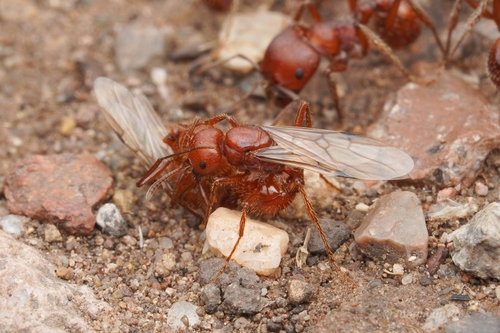
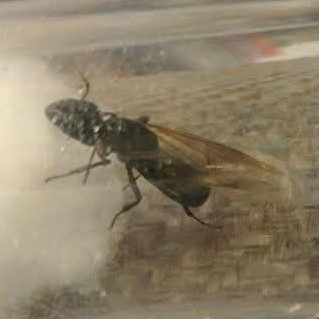
Workers forage for seeds and defend the nest; winged males and females disperse in mating flights; fertilized queens found new colonies or join existing ones depending on local biology.
🍃Diet and predators
Young eat
Fed by workers on a diet of processed seeds and protein from insect prey or dead arthropods.
Adults eat
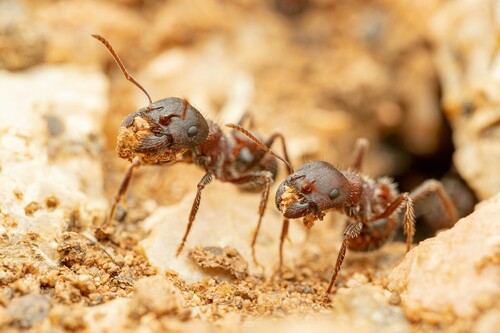
Workers primarily collect and eat seeds; they also scavenge arthropods and honeydew for protein and carbohydrates.
Predators of the young
Birds, small mammals, lizards and other ants may raid nests and eat brood.
Predators of adults
Horned lizards (which specialize on harvester ants), some birds, spiders and predatory insects take foraging workers.
🌱Effect on plants and gardens
Harvester ants remove large numbers of seeds, which can reduce recruitment of some plants but also aid seed dispersal and soil redistribution; generally not a major crop pest but can alter local plant composition.
How to get rid of red harvester ants
Avoid disturbing nests by hand. For nuisance colonies in yards: 1) Use baits labeled for harvester ants, scattered around the nest disc when workers are actively foraging (usually morning or late afternoon on warm days); follow label directions. 2) Professional pest control can use targeted treatments to eliminate colonies. 3) Digging out nests increases the risk of stings and rarely removes the queen. Boiling water is not recommended because it risks burns and seldom kills the colony. Note that harvester ants are the main food of horned lizards, so tolerate nests away from high-traffic areas where possible.
📍Where and when to find it
Look for nests in bare soil patches, road verges, pasture and open lawn areas. Foragers are seen on the soil surface collecting seeds; evening is when many workers retreat to the nest.
Best time
Spring through early fall on warm, dry days; mornings and late afternoons often show active foraging.
Observation tips
Stay a safe distance from active nests (2-3 meters) to avoid stings. Use a telephoto or macro lens for photos. Note cleared nest rims and seed-husks as diagnostic signs.
✨Fun facts
- Harvester ants are major seed predators and can dramatically reduce seed banks in localized patches.
- Nests are visible for years and serve as long-term soil disturbance hotspots that influence plant community patterns.
- Workers use pheromone-marked trails to recruit nestmates to seed sources and defend their territory.
?Frequently asked questions
Do red harvester ants bite or sting?
Workers can both bite and sting; the sting is the main defense and is painful to people and pets.
Are red harvester ant stings dangerous?
For most people stings cause intense local pain lasting hours, plus swelling and itching. Severe allergic reactions are rare but possible: for breathing problems, widespread swelling, fainting or dizziness, use an epinephrine auto-injector if available and call emergency services.
Why are red harvester ants in my yard?
They nest in open, bare or sparsely vegetated ground. Lawns with bare patches, patios, gravel or nearby seed sources attract them.
How do I get rid of red harvester ants?
Use ant baits labeled for harvester ants, applied when workers are actively foraging, or hire a licensed pest control professional. Digging risks stings and rarely removes the queen.
Where do red harvester ants live?
They live in dry grasslands, prairies and open scrub across the southwestern and central United States into northern Mexico, nesting in bare soil patches.
📷Photos of the red harvester ant
More bees, wasps & ants
Bites and formic acid
Painful sting
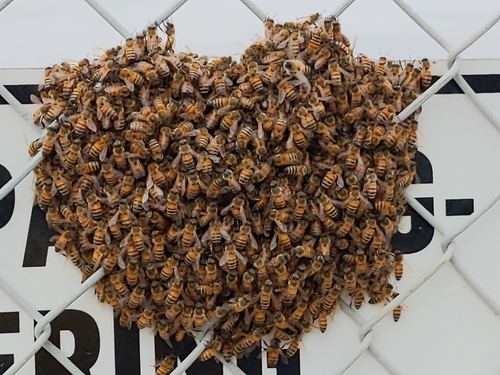
Stinging insect
Can sting
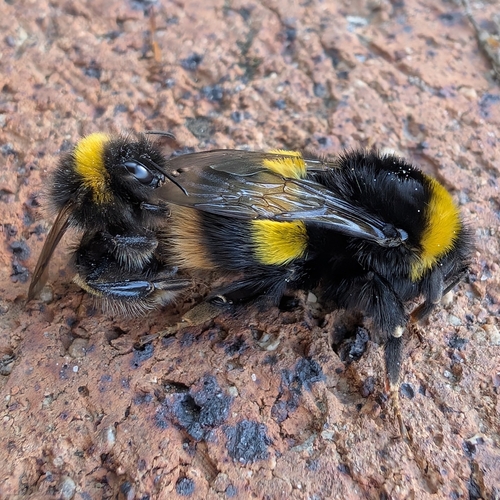
Can sting
Can sting
This guide was written with AI assistance and fact-checked, last updated 2026-10-10. Identification from photos is never certain: don't handle insects you can't identify, and get medical advice for bites, stings or allergic reactions. More about the red harvester ant: iNaturalist, Wikipedia.