
Red harvester ant vs Texas leafcutter ant
These two are easy to mix up. Here's how to tell a red harvester ant from a Texas leafcutter ant, and whether either one bites or stings.
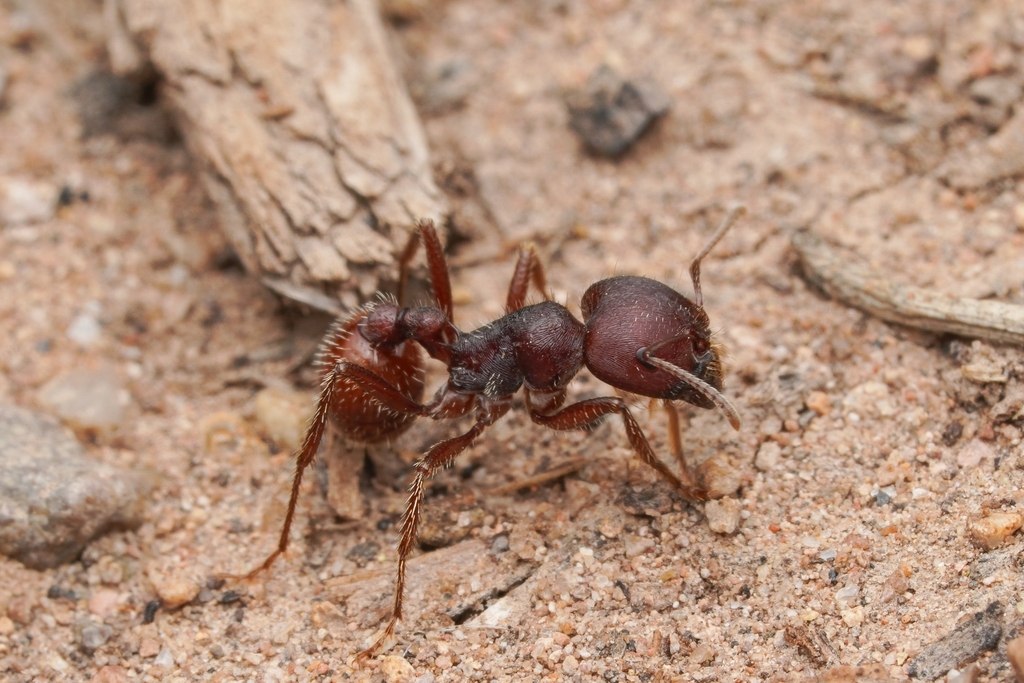
Red harvester ant
Pogonomyrmex barbatus
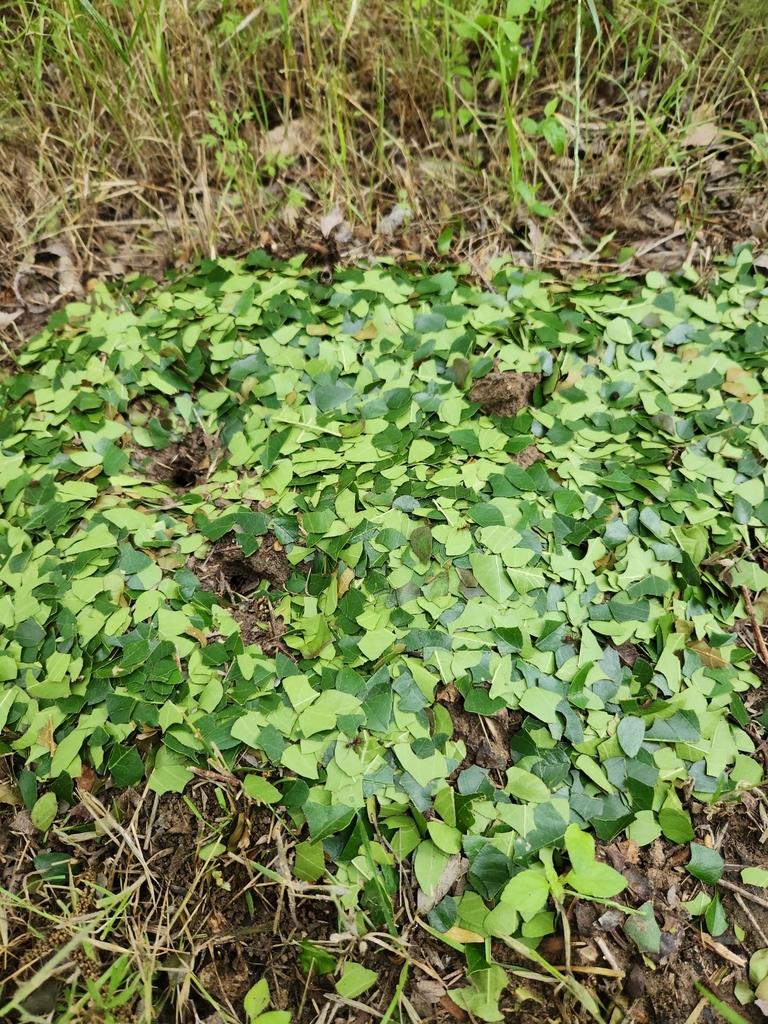
Texas leafcutter ant
Atta texana
≠The key differences
Red harvester ants are also reddish and clear the ground around their nests, but they carry seeds rather than leaf pieces, the workers are all about the same size, and they can deliver a very painful venomous sting.
⚖︎Side by side
| Red harvester ant | Texas leafcutter ant | |
|---|---|---|
| To humans | Painful sting | Painful bite |
| Size | Workers 6-9 mm long; queens larger (12-18 mm) | Workers about 1.5-12 mm (different castes); queens much larger, roughly 2 cm |
| Colours | Red, Dark red-brown, Black (abdomen tones) | Reddish-brown, Dark brown, Black |
| Family | Formicidae | Formicidae |
| Habitat | Dry grasslands, prairies, desert edges, open scrub and disturbed grassy areas; nests in bare soil patches and road verges | Well-drained sandy or loamy soils in pine and oak woodlands, pastures, gardens and landscaped yards; nests underground with multiple entrances and foraging trails |
| Range | Native to the southwestern and central United States into northern Mexico. Common states include Texas, Oklahoma, New Mexico, Arizona and parts of the Great Plains. | Texas and western Louisiana in the United States, and northeastern Mexico |
| Active | Warm months (spring to early fall); peak foraging during warm, dry days, often morning and late afternoon | Year-round in warm climates; peak foraging in spring and summer and often at night or during cooler parts of the day in hot weather |
| Pest? | Yes | Yes |
🔍How to spot a red harvester ant
- Reddish, medium-sized workers (6-9 mm) with a robust body and darker abdomen.
- Flat, cleared disc of bare soil around the nest entrance, often 1-2 m across.
- Foraging trails carrying seeds; workers frequently seen carrying or cutting seeds and husks.
- Painful sting if handled or nest disturbed (use caution when approaching nests).
🔍How to spot a Texas leafcutter ant
- Look for neat trails of workers carrying leaf fragments along ground paths between vegetation and nest entrances.
- Observe worker caste variation: tiny minors up to large majors with broad heads and powerful mandibles.
- Nest entrances are small holes in bare soil often surrounded by excavated earth and cleared vegetation; multiple nearby openings indicate a large colony.
- Reddish-brown to dark brown coloration, with robust, toothed mandibles on larger workers.
?Frequently asked questions
What is the difference between a red harvester ant and a Texas leafcutter ant?
Red harvester ants are also reddish and clear the ground around their nests, but they carry seeds rather than leaf pieces, the workers are all about the same size, and they can deliver a very painful venomous sting.
Is a red harvester ant or a Texas leafcutter ant more dangerous?
Red harvester ant: Painful sting. Texas leafcutter ant: Painful bite. Workers sting and can bite. Texas leafcutter ants are not venomous to people and do not sting.
Identification from photos is never certain: don't handle insects you can't identify, and get medical advice for bites, stings or allergic reactions.