
Texas leafcutter ant
Atta texana · Leafcutter ants
A large, ground-nesting leafcutter ant that harvests plant material to cultivate a fungus garden and can be an agricultural and landscape pest.
!Is the Texas leafcutter ant dangerous?
Only mildly. Texas leafcutter ants are not venomous to people and do not sting. Large workers can deliver painful bites with their sharp mandibles and may pinch repeatedly, sometimes breaking the skin. Clean any bites to prevent secondary infection and seek medical help if you have an unusual or allergic reaction.
Pets
Not systemically toxic to pets, but a swarm of biting workers can cause localized pain or irritation to small animals. Keep pets away from active nests to avoid distress or bites.
📖Overview
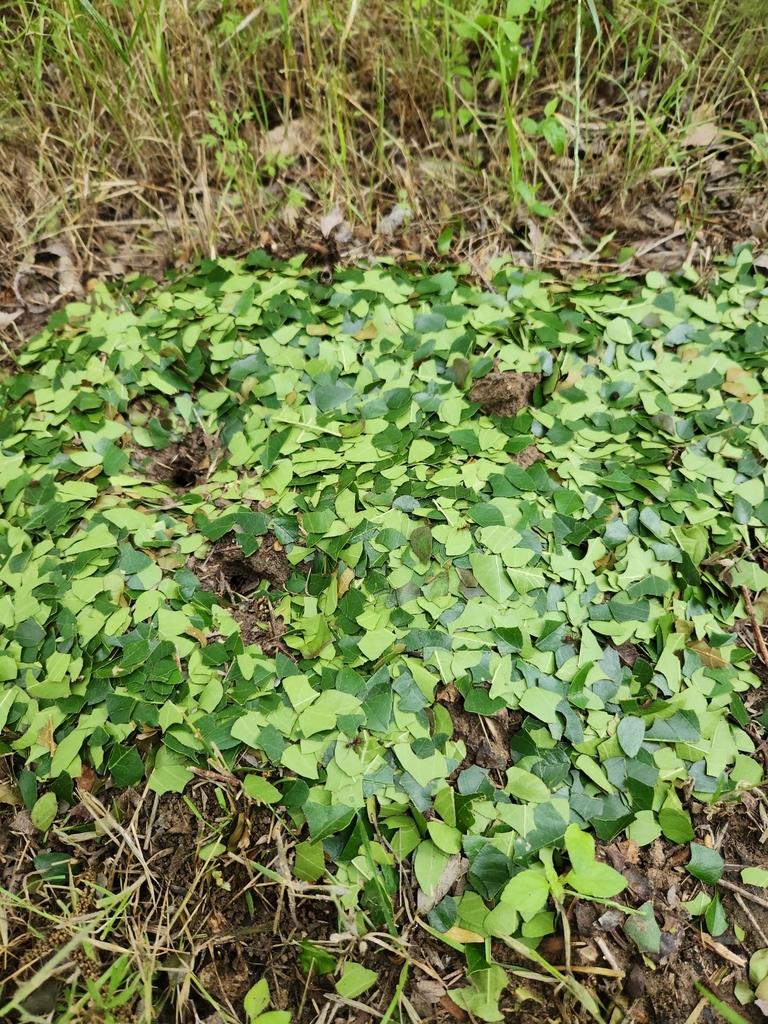
Atta texana is a species of leafcutter ant that builds large underground colonies with extensive fungal gardens. Workers cut and carry leaves and other vegetation back to the nest to serve as substrate for a symbiotic fungus, which is the colony's primary food source. Colonies can contain hundreds of thousands of workers and persist for many years. They are most common in warm, humid parts of the south-central United States and nearby Mexico and are well known for the visible trails of foragers and large cleared areas surrounding nest openings.
Behavior is highly social and division of labor is pronounced: different worker castes (minors, medias, majors) perform cutting, transporting, nest maintenance and defense. These ants can damage ornamental plants, seedlings, and some crops by removing foliage and defoliating small plants when colonies are large or nearby.
🔍How to identify a Texas leafcutter ant
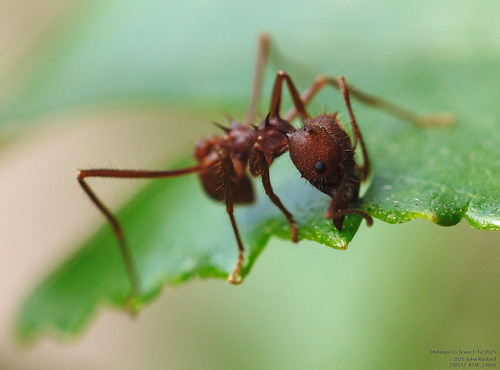
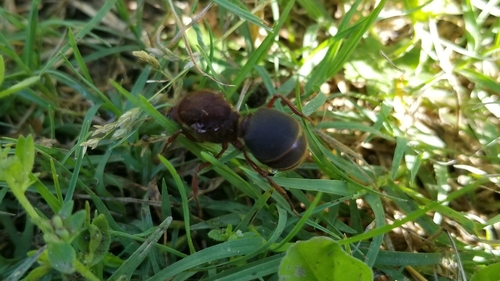
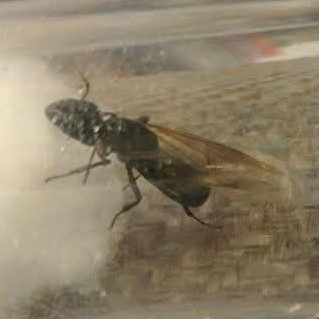
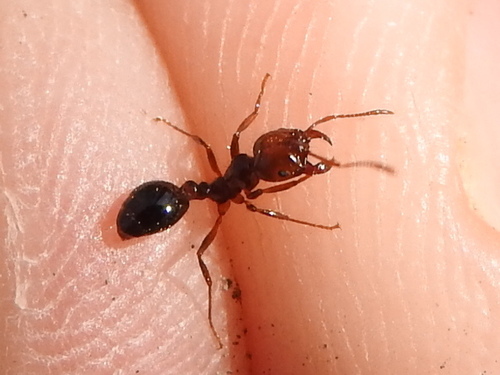
Colonies show marked worker polymorphism. Workers range from small minors with narrow heads to large majors (soldiers) with broad heads and powerful mandibles. Overall coloration is reddish-brown to dark brown; major workers often look bulkier with noticeably large, toothed mandibles used for cutting. Queens are much larger, winged at the nuptial stage, and have an enlarged gaster and thorax. Nest entrances are small holes in the ground often surrounded by excavated soil and cleared vegetation trails used by foragers.
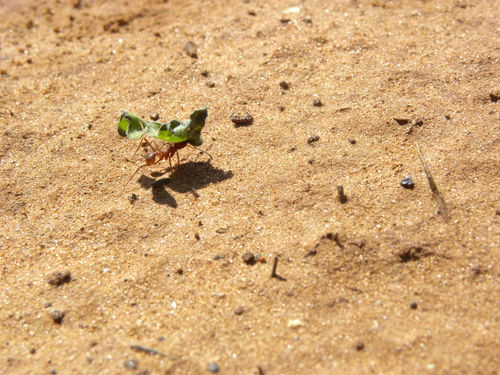
- Look for neat trails of workers carrying leaf fragments along ground paths between vegetation and nest entrances.
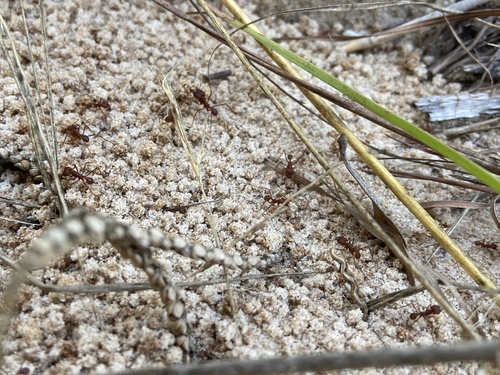
- Observe worker caste variation: tiny minors up to large majors with broad heads and powerful mandibles.
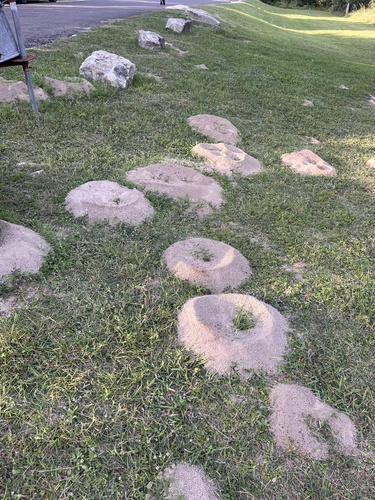
- Nest entrances are small holes in bare soil often surrounded by excavated earth and cleared vegetation; multiple nearby openings indicate a large colony.
- Reddish-brown to dark brown coloration, with robust, toothed mandibles on larger workers.
Lookalikes
Red harvester ant Pogonomyrmex barbatus
Red harvester ants are also reddish and clear the ground around their nests, but they carry seeds rather than leaf pieces, the workers are all about the same size, and they can deliver a very painful venomous sting.
Northern fungus-farming ant Trachymyrmex septentrionalis
Also grows fungus, but colonies are tiny, workers are small, spiny and all one size, and they collect caterpillar droppings and plant debris rather than cutting fresh leaves in long trails.
↻Life cycle
Egg
Tiny, white eggs laid by the queen inside the nest; eggs develop into larvae fed by workers and fungus garden material.
Larva (grub)
Legless white larvae that are fed by workers and fed the fungus; larvae are tended in the fungal garden and undergo several molts.
Pupa
Pupae are immobile and often sealed in chambers while metamorphosis to adults completes.
Adult (worker/queen)
Adults include castes: minor, media and major workers, and reproductive alates (winged males and females) produced seasonally for mating flights; newly mated queens start new colonies.
🍃Diet and predators
Young eat
Larvae are fed with fungal mycelium cultivated on plant substrate brought in by workers.
Adults eat
Adults primarily consume fungal secretions and cultivated fungus; workers also transport plant fragments but feed mainly on the fungus and its nutritive structures.
Predators of the young
Predators and parasites include other ants, parasitic flies (phorids), nematodes and fungal pathogens that can attack brood and fungus gardens.
Predators of adults
Armadillos, horned lizards, birds and other ants take workers; parasitic flies attack foragers and reproductives.
🌱Effect on plants and gardens
Workers cut leaves, flowers and seedlings to feed their fungal gardens. Repeated cutting can defoliate and kill young plants, damage ornamentals and harm seedlings in nurseries and gardens. Established large trees usually tolerate some cutting.
How to get rid of Texas leafcutter ants
Locate the nest and contact a licensed pest control professional experienced with leafcutter ants for effective colony control. For small, isolated nests, professional application of insecticidal baits or directed nest treatments is most reliable. Home remedies such as pouring boiling water into mounds rarely eliminate colonies, can scald you and damage nearby plant roots, so they are not recommended. Use baits labeled for leafcutting ants, following label directions, and protect valuable plants with barriers.
📍Where and when to find it
Look near the bases of trees, in lawns, pastures and garden edges for trails and nest entrances. Foragers carry leaf fragments along visible paths to nest openings.
Best time
Spring through early fall for peak activity; many foragers operate at night or early morning in hot weather.
Observation tips
Follow a trail back to the nest (from a safe distance) to document colony size. Use a telephoto or zoom rather than disturbing the nest. Wear closed shoes and watch for biting workers if you need to be near the colony.
✨Fun facts
- Texas leafcutter ants cultivate a specific fungus as their sole food source — they are among the few animals that 'farm' another organism.
- A large colony can strip a small tree of its leaves in a single night.
- Worker castes are highly specialized: some are tiny and groom the fungus, while large soldiers with oversized heads cut tough plant material.
?Frequently asked questions
Do Texas leafcutter ants bite or sting?
They do not sting, but large workers can deliver painful bites with their mandibles. The bite is mechanical rather than venomous.
Are Texas leafcutter ants dangerous to people?
They are not medically dangerous, but bites can be painful and multiple bites may be unpleasant; watch for infection if skin is broken.
Why are these ants in my yard?
They establish nests in warm, well-drained soil near abundant vegetation because they need a steady supply of plant material to grow their fungus gardens.
How can I get rid of a leafcutter ant colony?
Contact a licensed pest control professional experienced with leafcutter ants. Effective control usually requires treating the nest and surrounding satellite chambers; DIY methods rarely eliminate large colonies.
Do leafcutter ants damage trees or crops?
They can defoliate seedlings, ornamentals and some crops if colonies are large or close by. Mature trees often tolerate occasional cutting.
📷Photos of the Texas leafcutter ant
More bees, wasps & ants
Bites and formic acid
Painful sting
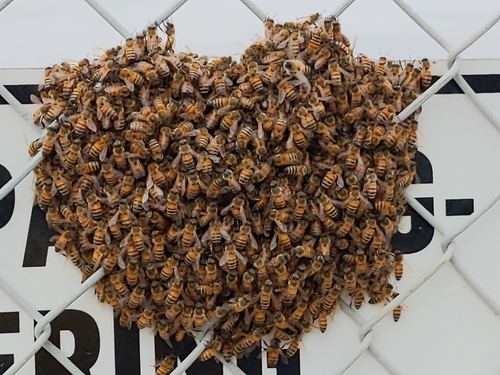
Stinging insect
Can sting
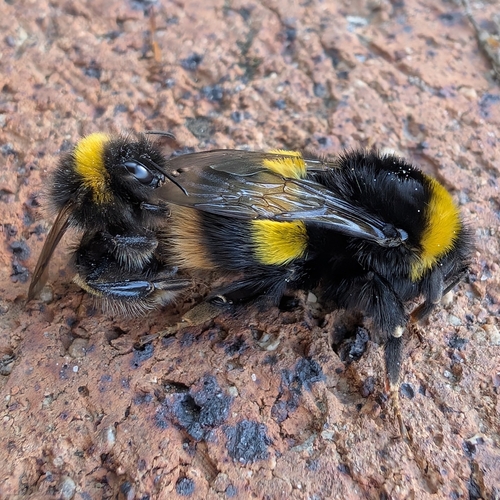
Can sting
Can sting
This guide was written with AI assistance and fact-checked, last updated 2026-10-10. Identification from photos is never certain: don't handle insects you can't identify, and get medical advice for bites, stings or allergic reactions. More about the Texas leafcutter ant: iNaturalist, Wikipedia.