
Africanized honey bee
Apis mellifera scutellata · Honey bees
A highly defensive subspecies of the western honey bee known for aggressively defending colonies and for hybridizing with local honey bees across the Americas.

!Is the africanized honey bee dangerous?
Yes, it can be. Africanized honey bees are not more venomous per sting than other western honey bees, but they are more aggressive and will attack in larger numbers. Stings can be painful and multiple stings increase risk of severe systemic reactions, including anaphylaxis. For first aid: run away and get inside a building or car (do not jump into water, as bees will wait), remove stingers quickly (scrape with a fingernail or card), wash the area, apply cold compresses, and call emergency services for signs of allergic reaction (difficulty breathing, swelling of face/throat, dizziness), using an epinephrine auto-injector if one has been prescribed. If dozens or hundreds of stings occur, seek urgent medical attention even without known allergy.
Pets
Pets can receive multiple stings and may be incapacitated or killed by large numbers of stings; treat it as an emergency and contact a veterinarian immediately if a pet receives many stings or shows breathing difficulty.
📖Overview
Apis mellifera scutellata is a subspecies of the western honey bee native to southern and eastern Africa. In the mid-20th century, bees of this subspecies were introduced to the Americas and hybridized with local European-derived honey bees to create what are commonly called Africanized honey bees. They behave like other honey bees in social structure and pollination but are notably more defensive: they react more quickly to disturbances, pursue perceived threats farther, and will mobilize larger numbers of guard bees.
Africanized honey bees have the same castes and social organization as other honey bees (queen, workers, drones). They make comb, store honey and pollen, and pollinate crops and wild plants. Because of their strong defensive behaviour and tendency to abscond (relocate the whole colony) under stress, they have significant implications for beekeeping, public safety and agriculture where they have become established.
🔍How to identify an africanized honey bee
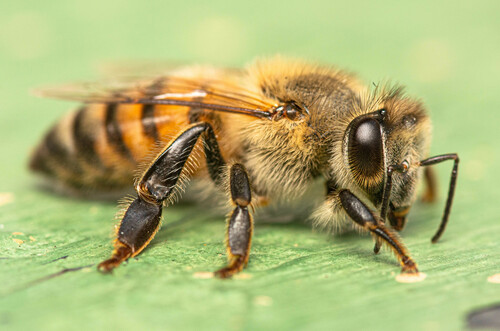
Workers are small to medium-sized honey bees, similar in appearance to European-derived Apis mellifera subspecies. Colouration ranges from golden-brown to darker brown with banded abdomens. Distinguishing Africanized bees from other honey bee subspecies by sight is unreliable without genetic testing; differences are subtle and overlap with European honey bees. Queens are longer-bodied; drones are stouter and hairier.
- Small to medium honey bee size with banded brown and black abdomen; visual ID cannot reliably distinguish Africanized bees from other A. mellifera subspecies.
- Behavioral clues: unusually strong defensive reaction to disturbance, many guard bees, pursuit of perceived threats for long distances.
- Location and history: colonies in areas known to have Africanized populations are more likely to contain hybridized Africanized bees.
- Definitive identification requires genetic testing or morphometric analysis performed by specialists.
Lookalikes
Western (European) honey bee Apis mellifera (European subspecies)
European-derived bees are generally less defensive and less likely to abscond; externally they look very similar and need lab tests for reliable separation.
Giant honey bee Apis dorsata
Apis dorsata is larger, builds open-comb nests on cliffs or buildings and is found in Asia, not the Americas.
↻Life cycle
Egg
Laid singly in comb cells by the queen; hatch in about 3 days.
Larva (worker/queen/ drone)
Nurse workers feed larvae; worker/queen/drone development times differ—workers about 6 days as larvae.
Pupa (capped cell)
Larvae pupate in capped cells; workers emerge about 21 days after the egg is laid.
Adult (worker/queen/drone)
Adults perform colony tasks: workers forage, guard, feed brood; queens lay eggs; drones mate with queens.
🍃Diet and predators
Young eat
Fed by workers on brood food (royal jelly for queens early, then nectar and pollen-derived secretions); larvae consume pollen and nectar-derived jelly.
Adults eat
Adults consume nectar (carbohydrates) and pollen (protein). Foragers collect nectar, pollen, propolis and water.
Predators of the young
Predators and parasites include wax moths, small hive beetles, Varroa mites, ants, birds and some mammals that raid hives.
Predators of adults
Predators include birds, wasps (e.g., European hornet), spiders, skunks and bears; humans are major hive removers or managers.
🌱Effect on plants and gardens
Effective and generalist pollinators of many wild plants and crops. They provide valuable pollination services but can also outcompete native pollinators in some areas.
📍Where and when to find it
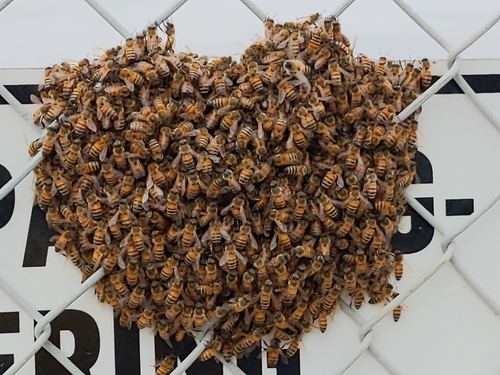
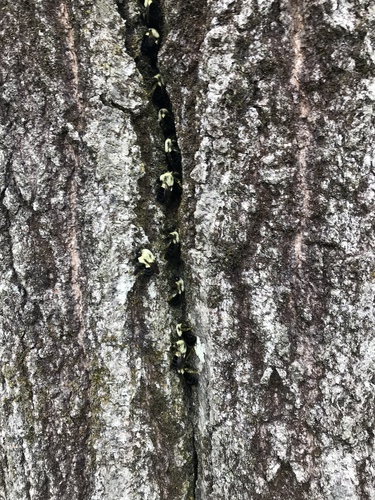
Look for colonies in tree cavities, hollowed logs, rock crevices, building voids, attics and shed walls. Swarms appear as a hanging cluster on branches or structures during migration.
Best time
Warm months and daylight hours; swarming commonly occurs in spring and early summer where climate permits.
Observation tips
Observe from a safe distance with binoculars. Do not disturb colonies; sudden movements or loud noises can trigger defensive behaviour. Photograph swarms from afar.
✨Fun facts
- Africanized bees were created when African A. m. scutellata queens were introduced to Brazil in the 1950s and hybridized with local bees.
- Despite the nickname 'killer bee', most stings are survivable; the danger comes from the number of stings delivered by an aggressive colony.
- Africanized bee colonies can reproduce by swarming and are more likely to abscond and form new colonies when disturbed.
?Frequently asked questions
Are Africanized honey bees more venomous than regular honey bees?
No — an individual Africanized bee's venom is similar to that of European honey bees. The increased danger comes from aggressive group behavior and higher numbers of stings.
Do Africanized honey bees chase people more than other bees?
Yes — they tend to react more quickly, recruit more guards, and pursue perceived threats farther than many European-derived bees.
How can I tell if a swarm is Africanized honey bees?
You cannot reliably tell by sight. Behaviour (high defensiveness and rapid response) and the region's known presence are clues; genetic testing is needed for confirmation.
What should I do if I find a hive in my wall or yard?
Keep people and pets away, do not attempt to remove or spray the hive yourself, and contact a licensed beekeeper or pest control professional experienced with honey bee removals.
Do Africanized bees still pollinate crops?
Yes. They are effective generalist pollinators and do contribute to pollination, but their management is more challenging for beekeepers.
📷Photos of the africanized honey bee



More bees, wasps & ants
Bites and formic acid
Painful sting
Stinging insect
Can sting
Can sting
Can sting
This guide was written with AI assistance and fact-checked, last updated 2026-10-10. Identification from photos is never certain: don't handle insects you can't identify, and get medical advice for bites, stings or allergic reactions. More about the africanized honey bee: iNaturalist, Wikipedia.