
Alfalfa leafcutter bee
Megachile rotundata · Leafcutter bees
A small, solitary leafcutting bee widely managed for alfalfa pollination; nests in cavities and cuts round leaf pieces to line brood cells.
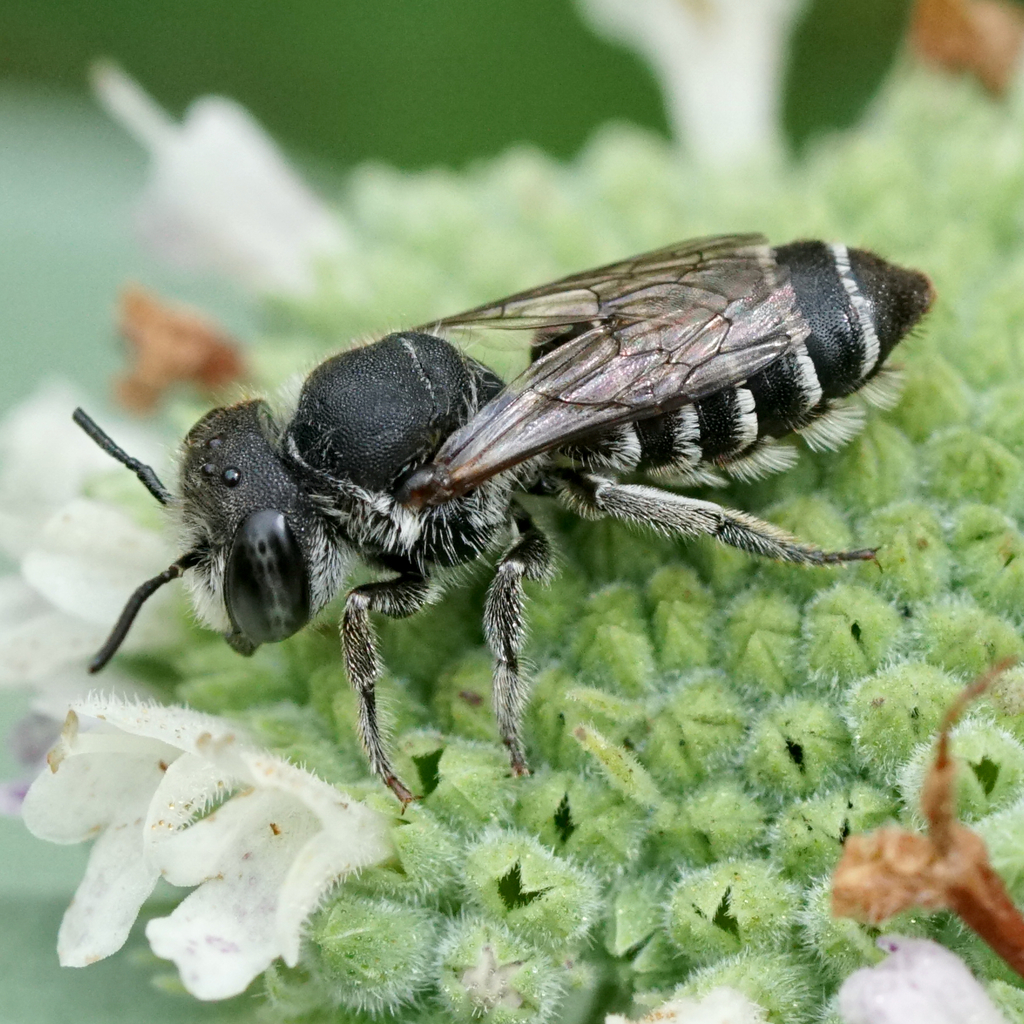
!Is the alfalfa leafcutter bee dangerous?
No. Generally non-aggressive and unlikely to sting unless handled or crushed. Female bees have a sting but it is mild compared with social bees and rarely a medical issue. Treat stings as for any bee: clean area with soap and water, apply cold pack for swelling and for signs of a severe allergic reaction (difficulty breathing, swelling of the face or throat) call emergency services and use an epinephrine auto-injector if one has been prescribed.
Pets
Not dangerous to pets; a sting could cause local pain or swelling if a pet is stung, but serious effects are unlikely.
📖Overview
Megachile rotundata is a solitary leafcutter bee native to Europe and Asia and now widely introduced and managed in North America and other temperate regions for pollinating alfalfa and other crops. Females construct linear brood cells in pre-existing cavities (hollow stems, holes in wood or artificial nesting blocks), lining each cell with circular pieces of leaf. They are non-social: each female provisions and seals her own nest without a worker caste.
These bees are active in warm months and are valued by farmers because they are efficient short-tongued pollinators of alfalfa. Managed populations are kept in nesting trays or blocks, and their overwintering cells are stored and incubated so adult emergence can be timed to crop bloom.
🔍How to identify an alfalfa leafcutter bee
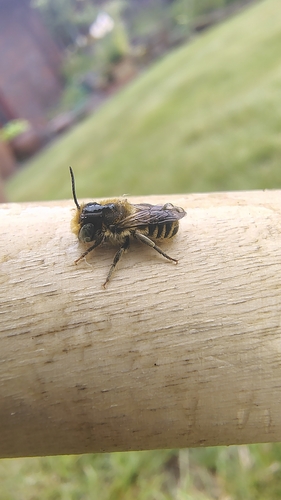
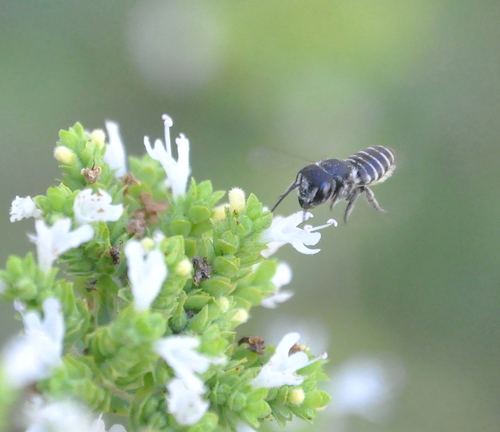
Adults are small stout bees about 6-9 mm long. Females typically have black, slightly shiny abdomens with bands of pale, dense hairs on the underside of the abdomen for carrying pollen (scopa). Males are similar but smaller and lack the scopa. The head and thorax are covered in short fine hairs; wings are clear with pale veins. Characteristic behavior — cutting neat semi-circular or circular pieces from leaves — is a reliable field clue to their presence.
- Look for small black stout bees about 6-9 mm long with pale hairs and pollen-carrying scopa under the abdomen (females).
- Neat semicircular or circular cutouts removed from leaf margins indicate leafcutter bees are active nearby.
- Nest sites are in narrow cavities (hollow stems, drilled wood blocks or cardboard nesting tubes) with linear rows of leaf-lined cells.
Lookalikes
Other Megachile leafcutter bees Megachile spp.
Many Megachile look similar; M. rotundata is smaller and is the species most commonly associated with managed alfalfa nests. Precise identification usually requires microscopic examination of male genitalia or specialist keys.
Mason bees Osmia spp.
Osmia carry pollen on the underside of the abdomen too but typically use mud, not leaf pieces, to separate brood cells and often have a more metallic sheen.
↻Life cycle
Egg
Female lays a single egg on a pollen-nectar provision inside a leaf-lined brood cell.
Larva (grub)
Larvae hatch and consume the provision mass, growing through instars within the sealed cell.
Pupa
After consuming provisions and spinning a cocoon, the larva pupates and develops into an adult; development timing can vary with temperature.
Adult
Adults emerge from overwintered or same-year brood cells, mate, and females build and provision new nest cells during the season.
🍃Diet and predators
Young eat
Consume a mass of pollen mixed with nectar provisioned by the mother, typically alfalfa pollen and other legumes.
Adults eat
Feed on nectar from a variety of flowers; males may also visit flowers for nectar and to find mates.
Predators of the young
Brood parasites (e.g. some wasps), kleptoparasitic bees, ants, and fungal or mite infestations in stored nests.
Predators of adults
Birds, spiders, robber flies and predatory insects.
🌱Effect on plants and gardens
Important and efficient pollinators of alfalfa and other legumes, and visit a variety of wildflowers and garden plants. They do not typically damage host plants beyond small circular leaf cuts that are mostly cosmetic.
📍Where and when to find it
Look at flowering alfalfa, clover and other legumes for foraging adults. Search hollow stems, drilled wood blocks or nesting tubes for leaf-lined brood cells.
Best time
Spring through midsummer in temperate regions; warm sunny days, mid-morning to afternoon, are best for observing activity.
Observation tips
Watch for the distinctive leaf-cutting behavior on host plants and check artificial nesting blocks. Use a macro lens and shallow angle to photograph nesting tubes and leaf pieces without disturbing the bees.
✨Fun facts
- Females cut almost perfect circular pieces from leaves to line brood cells; gardeners often notice the leaf 'notches' before seeing the bee.
- Megachile rotundata is one of the few solitary bees that is widely managed and sold for agricultural pollination.
- Each female builds and provisions all her own brood cells—there are no workers or colonies like honey bees.
?Frequently asked questions
Are alfalfa leafcutter bees dangerous?
No — they are solitary and non-aggressive. Females can sting if handled roughly, but stings are uncommon and usually mild.
Do alfalfa leafcutter bees bite?
They do not bite people in the way biting insects do. Any painful contact would be a sting from a female, not a bite.
Why are there round holes cut from my plants?
Those neat circular or semicircular cuts are made by leafcutter females to line their brood cells. The damage is mostly cosmetic and rarely harms healthy plants.
How can I get rid of them from my garden?
They are beneficial pollinators so removal is not recommended. If you must reduce numbers, remove or seal nesting cavities (hollow stems, drilled blocks) and clean stored nesting materials. Avoid broad insecticides which also kill beneficial pollinators.
Where do they nest?
In pre-existing cavities: hollow plant stems, beetle-bored holes in wood, or artificial nesting tubes and blocks provided by beekeepers and researchers.
Can I keep them for pollination?
Yes. M. rotundata is commonly managed for alfalfa pollination using stacked nesting trays or paper/wooden tubes; proper hygiene, parasite control, and storage of brood for overwintering are important for success.
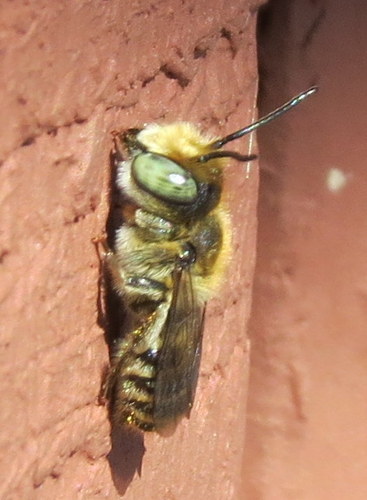
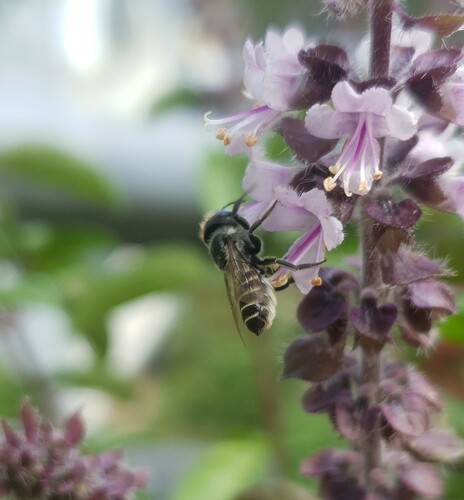
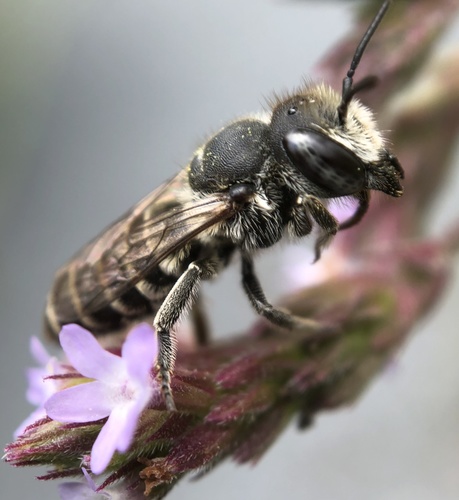
📷Photos of the alfalfa leafcutter bee
More bees, wasps & ants
Bites and formic acid
Painful sting
Stinging insect
Can sting
Can sting
Can sting
This guide was written with AI assistance and fact-checked, last updated 2026-10-10. Identification from photos is never certain: don't handle insects you can't identify, and get medical advice for bites, stings or allergic reactions. More about the alfalfa leafcutter bee: iNaturalist, Wikipedia.