
Ghost ant
Tapinoma melanocephalum · Dolichoderine ants
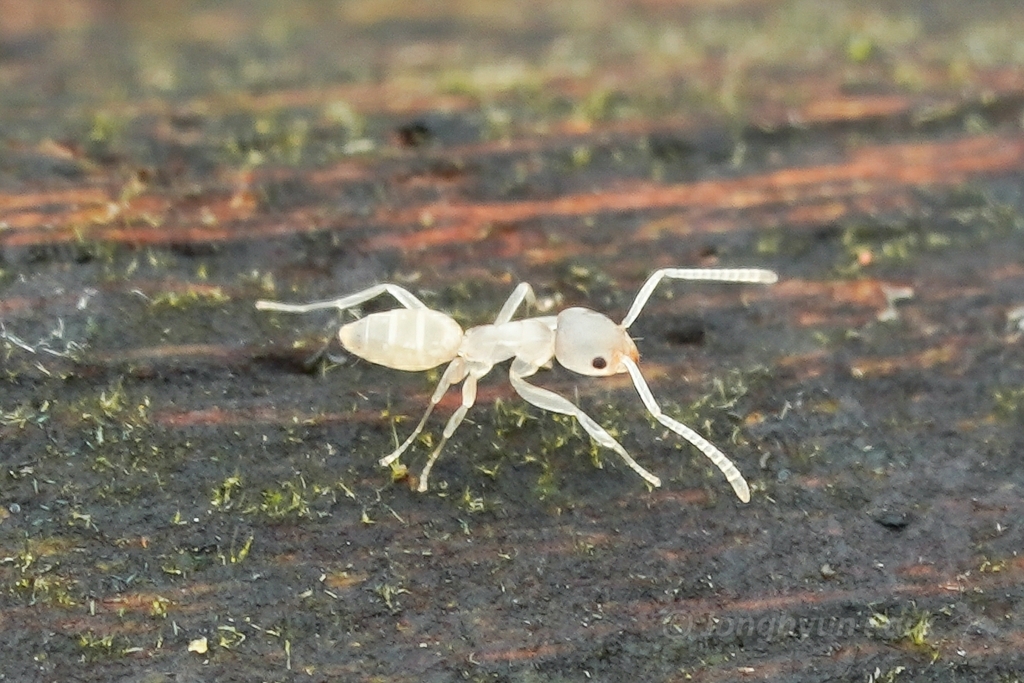
A tiny, widespread indoor pest with a dark head and translucent pale legs and thorax; attracted to sweets and easily forms large infestations.
!Is the ghost ant dangerous?
No. Ghost ants do not sting and rarely bite; they are primarily a nuisance. They can contaminate food surfaces. Clean affected food and surfaces; if an ant bite occurs it is usually a mild, temporary irritation. No special medical treatment is generally required.
Pets
Ghost ants are not toxic to pets but may bother them by foraging on pet food. Large infestations can contaminate food bowls; remove food left out and clean bowls regularly.
📖Overview
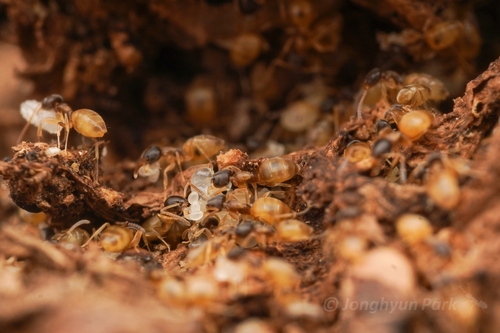
Tapinoma melanocephalum, the ghost ant, is a small ant species native to tropical and subtropical regions and now common worldwide as an indoor and greenhouse pest. It nests in protected sites — wall voids, potted-plant soil, under flooring, behind baseboards and in other warm, humid crevices. Colonies can be large and are often spread through human structures and transported plants.
Ghost ants are omnivores but show a strong preference for sweet foods and honeydew. They do not sting and are not known to transmit serious human diseases, but they contaminate food and can be persistent household pests. Control relies on sanitation, locating nests, and sustained baiting rather than quick knockdown sprays alone.
🔍How to identify a ghost ant
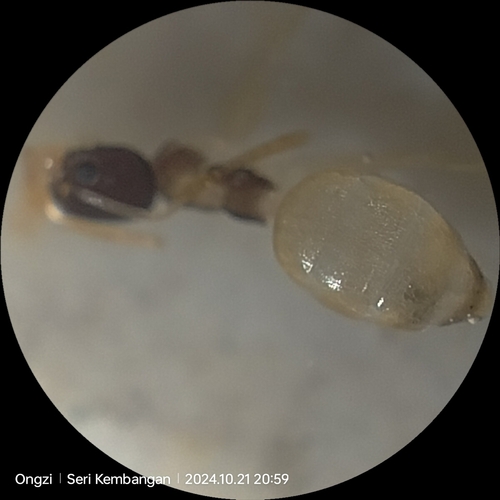
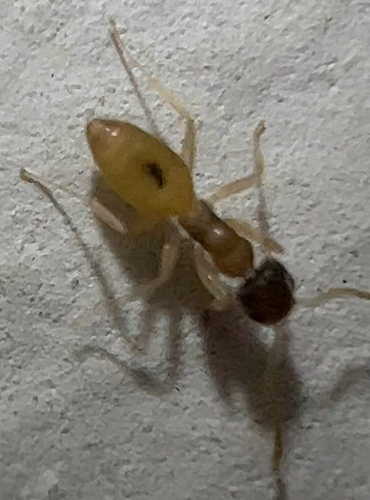
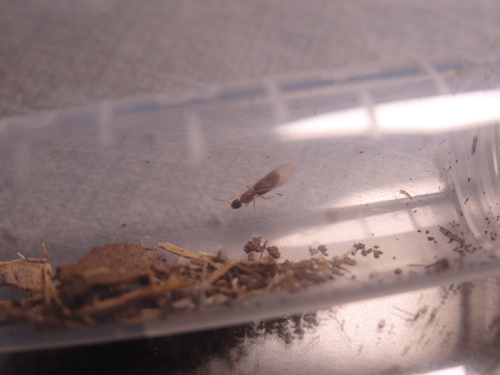
Workers are very small (about 1.3-1.5 mm) and dimorphic in color: the head and gaster (rear) are medium to dark brown or black while the thorax, legs and antennae are very pale, almost translucent yellowish. The body appears delicate and glossy. Antennae are 12-segmented with no distinct club. There is no sting; the abdomen lacks a visible constricted petiole (the small petiole is hidden beneath the overhanging gaster when viewed from above).
- Very small workers (about 1.3-1.5 mm) — much smaller than many common house ants.
- Dark head and gaster contrasted with a pale, almost translucent thorax, legs and antennae.
- Glossy body and smooth appearance; no visible sting or two-segmented petiole from above.
- Sweet-foraging trails in kitchens and near sinks; nests often hidden in potted plants or wall voids.
Lookalikes
Pharaoh ant Monomorium pharaonis
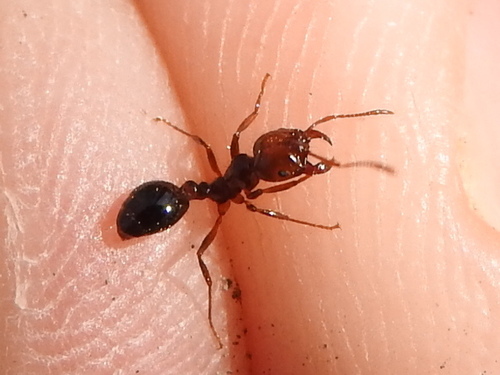
Pharaoh ants are uniformly light yellow to reddish-brown across head and body, whereas ghost ants have a distinctly dark head and gaster with pale thorax and legs.
Odorous house ant Tapinoma sessile
Odorous house ants are more uniformly brown and emit a strong coconut-like odor when crushed; ghost ants have a clear two-tone appearance and are smaller.
↻Life cycle
Egg
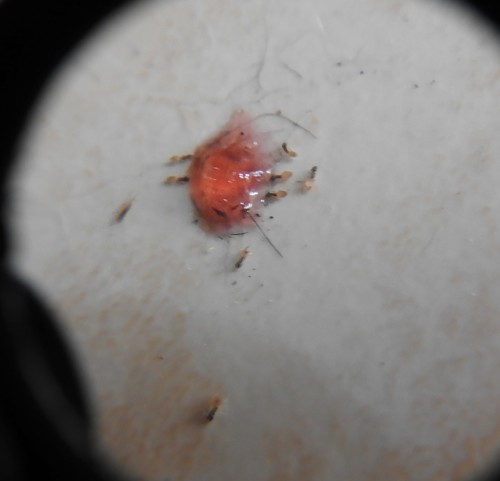
Tiny white eggs laid by the queens of multi-queen colonies and kept in protected nest chambers.
Larva
A legless grub stage fed by adults; larvae develop through several instars and are tended by workers.
Pupa
Pupae are naked (without cocoons), initially white and darkening as they develop into adults; they are tended by workers in the nest.
Adult
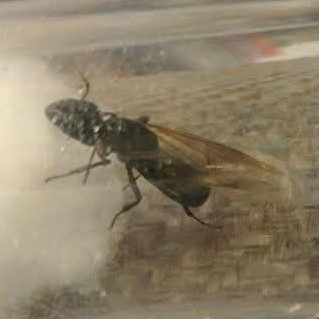
Workers perform foraging and nest maintenance; reproductive males and queens appear seasonally or in nest buddings and can start new colonies.
🍃Diet and predators
Young eat
Regurgitated liquids and protein provided by workers; larvae are fed on insect prey and sugary secretions.
Adults eat
Sugary foods (nectar, honeydew, household sweets), plus proteins and fatty foods when needed.
Predators of the young
Predatory ants, spiders, parasitic wasps and other arthropods that invade nests.
Predators of adults
Spiders, larger ant species, centipedes, some birds and insectivorous lizards in outdoor populations.
🌱Effect on plants and gardens
Ghost ants feed on honeydew-producing insects (aphids, mealybugs) and plant nectars; in that way they can indirectly protect or farm sap-sucking pests, sometimes making those plant pests worse.
How to get rid of ghost ants
Combine sanitation (store food in sealed containers, clean spills immediately), exclusion (seal gaps, repair screens), and baiting with sweet or protein ant baits placed along trails. Locate and treat nests if possible (potted-plant soil, wall voids). Avoid relying only on contact spray knockdowns—these scatter workers and can make control harder. For large or persistent infestations consider a licensed pest professional.
📍Where and when to find it
Look along kitchen counters, sinks and pantries for foraging trails; inspect potted plants, under pots, behind baseboards, inside wall voids and under appliances for nests.
Best time
Year-round indoors; outdoors in warm months. Foraging can occur day or night but is often noticeable where sugary spills are present.
Observation tips
Follow trails back toward dark seams or potted soil to find nests. Photograph against a light background to show the pale legs and dark head for identification.
✨Fun facts
- Despite the name 'ghost ant', the species is very real — its pale legs and small size make it seem to vanish against light surfaces.
- Ghost ants commonly form multiple queens and satellite nests, which helps them spread rapidly through buildings.
- They are strong sugar lovers and often farm honeydew-producing insects like aphids and mealybugs on plants.
?Frequently asked questions
Do ghost ants bite?
They do not have a sting and rarely bite people. Any bites are minor and not medically significant.
Are ghost ants dangerous?
No venomous danger to people, but they contaminate food and can be a persistent nuisance in homes and food-handling areas.
Why do I have ghost ants in my house?
They are attracted to sweet foods, moisture and warm protected nesting sites such as potted-plant soil, wall voids, cabinets and appliances.
How do I get rid of ghost ants?
Use good sanitation, seal entry points, remove food attractants, and use ant baits (sugar-based or protein-based depending on foraging) placed along trails. Locate nests in pots or wall voids if possible. For large infestations consult a pest control professional.
Can ghost ants survive outdoors in cold climates?
They are tropical/subtropical and do poorly in cold climates outdoors but survive year-round indoors and in greenhouses; outdoor populations persist in warm microclimates.
📷Photos of the ghost ant
More bees, wasps & ants
Bites and formic acid
Painful sting
Stinging insect
Can sting
Can sting
Can sting
This guide was written with AI assistance and fact-checked, last updated 2026-10-10. Identification from photos is never certain: don't handle insects you can't identify, and get medical advice for bites, stings or allergic reactions. More about the ghost ant: iNaturalist, Wikipedia.