
Eastern black carpenter ant vs Black garden ant
These two are easy to mix up. Here's how to tell an eastern black carpenter ant from a black garden ant, and whether either one bites or stings.
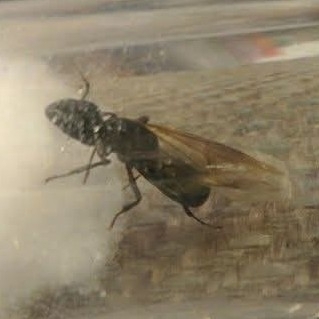
Eastern black carpenter ant
Camponotus pennsylvanicus
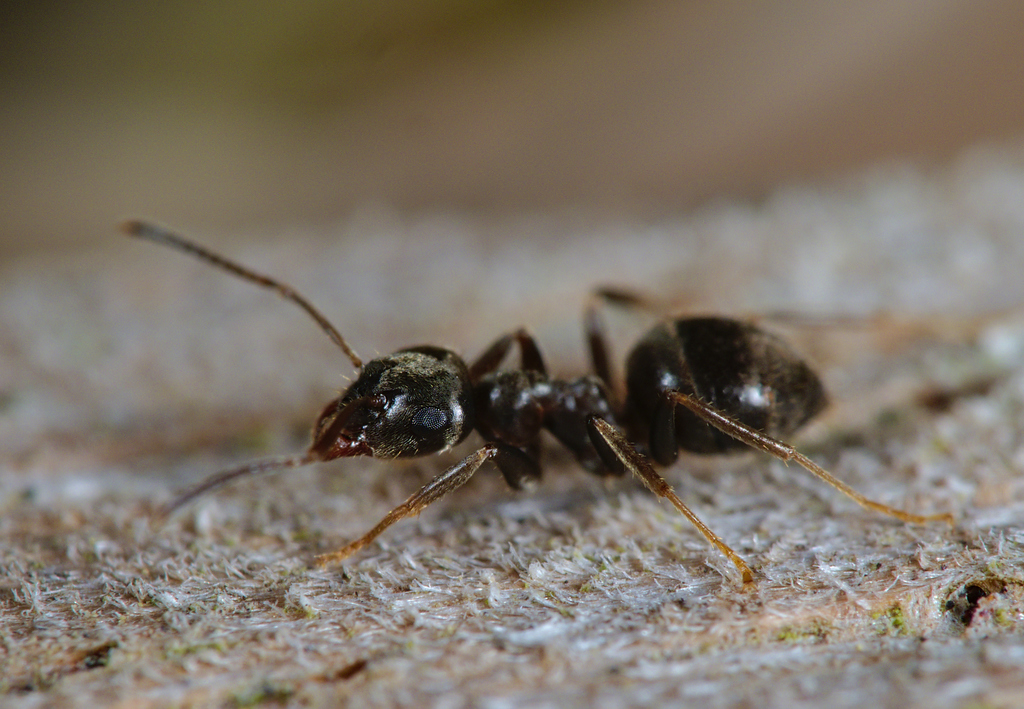
Black garden ant
Lasius niger
≠The key differences
Smaller (3-5 mm), slimmer, and nests in soil rather than excavated wood; worker caste lacks large majors.
⚖︎Side by side
| Eastern black carpenter ant | Black garden ant | |
|---|---|---|
| To humans | Bites and formic acid | Formic acid spray |
| Size | 6-13 mm for workers; queens 15-20 mm | Workers 2.5-5 mm; queens about 7-9 mm |
| Colours | Black, Dark brown | Black, Dark brown |
| Family | Formicidae | Formicidae |
| Habitat | Forests, dead or decaying trees, stumps, and human structures with damp or damaged wood | Gardens, lawns, parks, roadside verges, and urban areas; nests in soil, under paving slabs, in wall cavities and less commonly inside buildings. |
| Range | Eastern North America, broadly across eastern United States and adjacent Canada | Widespread across Europe and parts of temperate Asia; introduced to other regions in human-modified habitats. |
| Active | Active spring through fall; workers forage day and night depending on conditions | Spring to autumn foraging; most visible in warm months after mating flights in summer. Daily activity peaks in warm daylight hours but foraging can occur through day and evening. |
| Pest? | Yes | Yes |
🔍How to spot an eastern black carpenter ant
- Large black workers 6-13 mm long; major workers have noticeably large heads.
- Single petiole node (waist) and smoothly rounded thorax profile typical of Camponotus.
- Excavated galleries in damp or decaying wood with coarse sawdust-like frass (wood fibers, not fecal pellets).
🔍How to spot a black garden ant
- Workers 2.5-5 mm, uniformly dark brown to black and compact-bodied.
- Single petiole (node) between thorax and gaster characteristic of Lasius ants.
- Foraging trails of workers to and from nests, often seeking sugary substances.
- Queens are noticeably larger (7-9 mm) and may be spotted after mating flights in summer.
?Frequently asked questions
What is the difference between an eastern black carpenter ant and a black garden ant?
Smaller (3-5 mm), slimmer, and nests in soil rather than excavated wood; worker caste lacks large majors.
Is an eastern black carpenter ant or a black garden ant more dangerous?
Eastern black carpenter ant: Bites and formic acid. Black garden ant: Formic acid spray. Eastern black carpenter ants do not have a functional stinger but will bite with their mandibles and may spray formic acid, which can cause local skin irritation or a burning sensation. Lasius niger workers do not have a sting but can bite briefly with mandibles and may spray formic acid, which can cause mild skin irritation or a burning sensation.
Identification from photos is never certain: don't handle insects you can't identify, and get medical advice for bites, stings or allergic reactions.