
Eastern black carpenter ant vs Silky field ant
These two are easy to mix up. Here's how to tell an eastern black carpenter ant from a silky field ant, and whether either one bites or stings.
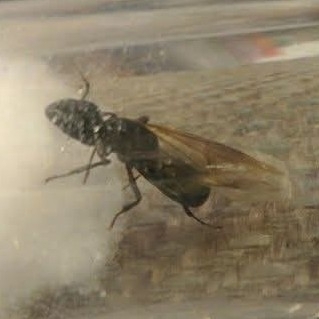
Eastern black carpenter ant
Camponotus pennsylvanicus
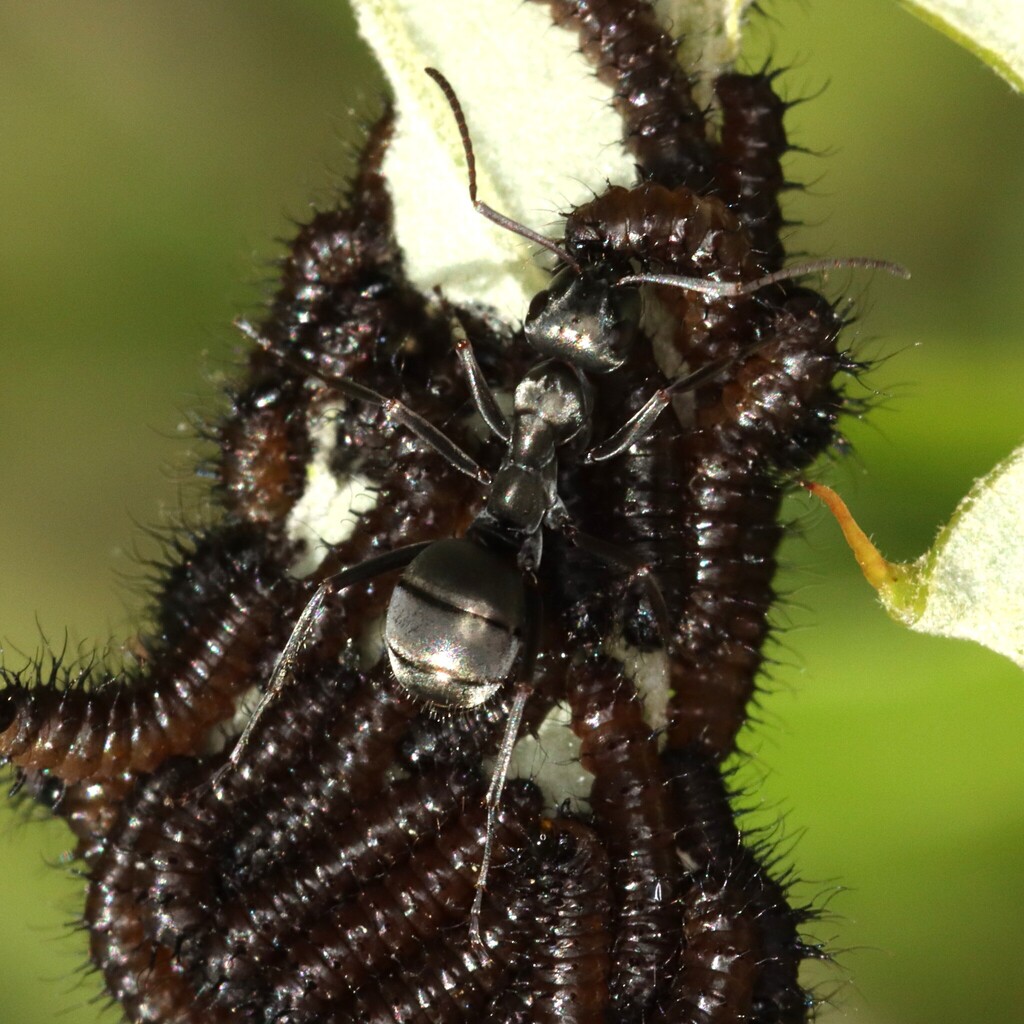
Silky field ant
Formica subsericea
≠The key differences
Carpenter ants are larger (6-13 mm), have an evenly arched thorax profile, long yellowish hairs on the gaster, and nest in wood rather than soil.
⚖︎Side by side
| Eastern black carpenter ant | Silky field ant | |
|---|---|---|
| To humans | Bites and formic acid | Formic acid burn |
| Size | 6-13 mm for workers; queens 15-20 mm | Workers 4-8 mm; queens larger, often 8-12 mm |
| Colours | Black, Dark brown | Black, Dark brown, Brownish-black sheen |
| Family | Formicidae | Formicidae |
| Habitat | Forests, dead or decaying trees, stumps, and human structures with damp or damaged wood | Open fields, lawns, meadows, forest edges, and other sunlit ground with soil for nests; sometimes under rocks or decaying wood |
| Range | Eastern North America, broadly across eastern United States and adjacent Canada | Eastern and central North America, including parts of Canada and the eastern United States |
| Active | Active spring through fall; workers forage day and night depending on conditions | Spring through fall (active daytime foragers); peak activity in warm months |
| Pest? | Yes | No |
🔍How to spot an eastern black carpenter ant
- Large black workers 6-13 mm long; major workers have noticeably large heads.
- Single petiole node (waist) and smoothly rounded thorax profile typical of Camponotus.
- Excavated galleries in damp or decaying wood with coarse sawdust-like frass (wood fibers, not fecal pellets).
🔍How to spot a silky field ant
- Uniform dark brown to black worker ants with a subtle silky sheen and fine short hairs.
- Single petiole node between mesosoma and gaster (typical Formica shape).
- Nests in soil, low mounds, under stones or in lawns; foraging trails often visible on the ground.
- Behavior: tend aphids on plants and forage openly during the day.
?Frequently asked questions
What is the difference between an eastern black carpenter ant and a silky field ant?
Carpenter ants are larger (6-13 mm), have an evenly arched thorax profile, long yellowish hairs on the gaster, and nest in wood rather than soil.
Is an eastern black carpenter ant or a silky field ant more dangerous?
Eastern black carpenter ant: Bites and formic acid. Silky field ant: Formic acid burn. Eastern black carpenter ants do not have a functional stinger but will bite with their mandibles and may spray formic acid, which can cause local skin irritation or a burning sensation. Silky field ants do not have a true sting but will bite with their mandibles and can spray formic acid from the gaster into the bite, causing local burning, redness and temporary irritation.
Identification from photos is never certain: don't handle insects you can't identify, and get medical advice for bites, stings or allergic reactions.