
European paper wasp vs Golden paper wasp
These two are easy to mix up. Here's how to tell an European paper wasp from a golden paper wasp, and whether either one bites or stings.
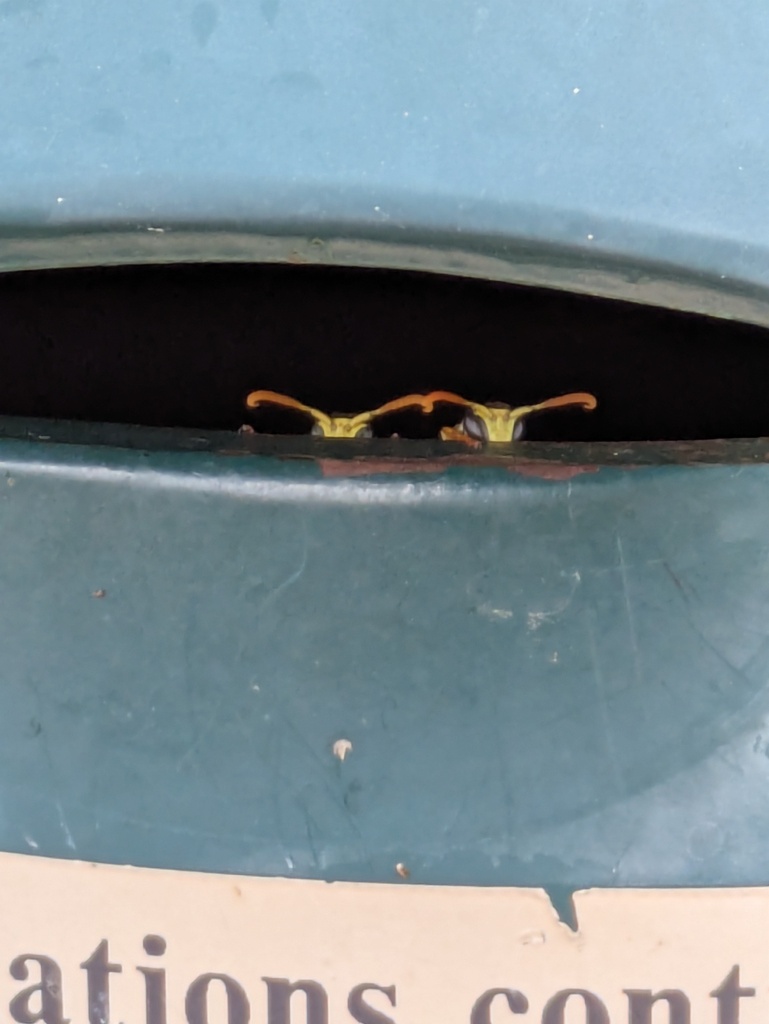
European paper wasp
Polistes dominula
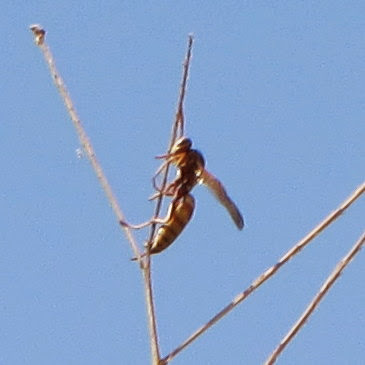
Golden paper wasp
Polistes aurifer
≠The key differences
P. dominula usually has more black-and-white patterning and a different facial mark pattern; P. aurifer is generally more golden-yellow and reddish-brown in western North America.
⚖︎Side by side
| European paper wasp | Golden paper wasp | |
|---|---|---|
| To humans | Painful sting | Painful sting |
| Size | 12-20 mm body length | About 15-20 mm body length |
| Colours | Yellow, Black, White / Pale, Reddish brown (antennae/legs) | Golden yellow, Reddish brown, Dark brown / black, Beige |
| Family | Vespidae | Vespidae |
| Habitat | Human structures (eaves, barns, sheds), shrubs, low trees, and garden areas in urban, suburban and rural landscapes | Open, sunny habitats and human structures in urban, suburban and rural areas; nests under eaves, rafters, porch ceilings, shrubs and tree branches. |
| Range | Native to Europe and parts of Asia; established as an invasive species in North America, South America, South Africa and other regions | Western North America: western United States, parts of western Canada and Mexico (regional limits vary). |
| Active | Active spring through autumn (temperate zones); day-active, most visible in warm daylight hours | Spring to autumn (colony cycle); adults active during warm daylight hours. |
| Pest? | Yes | No |
🔍How to spot an European paper wasp
- Slender body 12-20 mm with narrow waist and long legs that hang during flight.
- Distinct black and yellow banding on abdomen, yellow face and bright orange antennae.
- Small open umbrella-shaped paper nests attached by a single stem, usually without a full outer envelope.
- Compared to native Polistes species in North America, P. dominula is much more extensively black-and-yellow (yellowjacket-like); geographic context helps identification.
🔍How to spot a golden paper wasp
- Golden to yellow thorax and abundant yellow markings on abdomen and legs (compare with darker Polistes species).
- Slender profile with long legs that hang below the body in flight.
- Open, umbrella-like paper comb nests attached by a single stalk under eaves, rafters or vegetation.
- Geographic location: commonly found in western North America; note overlap with introduced species in some areas.
?Frequently asked questions
What is the difference between an European paper wasp and a golden paper wasp?
P. dominula usually has more black-and-white patterning and a different facial mark pattern; P. aurifer is generally more golden-yellow and reddish-brown in western North America.
Is an European paper wasp or a golden paper wasp more dangerous?
European paper wasp: Painful sting. Golden paper wasp: Painful sting. Polistes dominula can deliver painful stings and will defend nests aggressively. Workers can sting repeatedly and will defend nests.
Identification from photos is never certain: don't handle insects you can't identify, and get medical advice for bites, stings or allergic reactions.