
Golden paper wasp
Polistes aurifer · Paper wasps
A medium-sized western North American paper wasp with yellow-golden and reddish-brown markings; builds open paper nests under eaves and is a beneficial predator of garden pests.
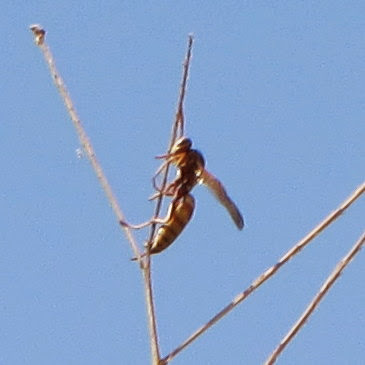
!Is the golden paper wasp dangerous?
Yes, it can be. Workers can sting repeatedly and will defend nests. Stings are painful and may cause local swelling, redness and itching. People with known insect-venom allergies risk severe allergic reactions (anaphylaxis) and should avoid nests and carry epinephrine if prescribed. First aid: move away from the nest, wash the area (paper wasps do not leave a stinger) and apply a cold pack to reduce swelling. If breathing difficulty, swelling of the face or throat, widespread hives or fainting occur, use an epinephrine auto-injector if available and call emergency services.
Pets
Stings can be painful for pets and may cause swelling or allergic reactions. Multiple stings or stings near the face or mouth can be serious; consult a veterinarian for severe signs.
📖Overview
Polistes aurifer is a social paper wasp native to western North America. Colonies are annual: a mated queen founds a small open-comb paper nest in spring, raises workers through summer, and the colony dies back in autumn while new queens overwinter. Adults feed on nectar and sweet liquids; workers hunt caterpillars and other soft-bodied insects to feed larvae. They are usually non-aggressive but will defend their nest and can sting repeatedly if provoked.
🔍How to identify a golden paper wasp
Adults are slender, long-legged wasps with the typical paper-wasp body profile (narrow "waist" or petiole). Coloration is a mix of golden-yellow and reddish-brown to dark brown or black; many individuals have a bright golden or yellow thorax and lighter markings on the abdomen and legs. Wings are folded longitudinally at rest. Nests are umbrella-shaped paper combs without an external envelope when small, attached by a single stalk.
- Golden to yellow thorax and abundant yellow markings on abdomen and legs (compare with darker Polistes species).
- Slender profile with long legs that hang below the body in flight.
- Open, umbrella-like paper comb nests attached by a single stalk under eaves, rafters or vegetation.
- Geographic location: commonly found in western North America; note overlap with introduced species in some areas.
Lookalikes
European paper wasp Polistes dominula
P. dominula usually has more black-and-white patterning and a different facial mark pattern; P. aurifer is generally more golden-yellow and reddish-brown in western North America.
Northern paper wasp Polistes fuscatus
P. fuscatus often has distinct facial stripe patterns and a darker overall coloration; range and subtle pattern differences help separate them.
↻Life cycle
Egg
Laid singly in cells of the paper comb by the queen or workers; hatch in a few days depending on temperature.
Larva (grub)
Larvae are fed chewed prey (caterpillars and other insects) by workers; they grow inside individual cells.
Pupa
Larvae pupate inside capped cells and metamorphose into adults over days to weeks.
Adult
Workers maintain the nest, forage for prey and nectar; reproductive males and new queens appear late season. New queens mate then overwinter; the old colony dies in autumn.
🍃Diet and predators
Young eat
Protein-rich chewed insects and caterpillars provided by workers.
Adults eat
Nectar, sap, fruits and sweet liquids; occasionally prey juices.
Predators of the young
Birds, ants, parasitic wasps and flies that attack brood or raiding predators.
Predators of adults
Birds, spiders, praying mantises and robber flies; humans may destroy nests.
🌱Effect on plants and gardens
Adults visit flowers for nectar and can act as minor pollinators. Workers hunt caterpillars and other soft-bodied arthropods, so the species helps control garden pests.
📍Where and when to find it
Look for open paper comb nests under eaves, porch ceilings, rafters and on shrub or tree branches. Foraging adults visit flowers and hunt on plants for caterpillars.
Best time
Spring through autumn; best to observe during warm daylight hours when adults are active. Early morning and dusk are when nests are least active.
Observation tips
Use a telephoto lens or zoom to photograph nests from a safe distance. Avoid sudden movements near nests and never attempt to remove an occupied nest without protection or professional help.
✨Fun facts
- Paper wasp nests are made from chewed wood fibers mixed with saliva to form a paper-like material.
- Workers catch caterpillars and chew them into a paste to feed larvae; adults mainly drink nectar.
- New queens overwinter alone and begin new colonies the next spring.
?Frequently asked questions
Do Golden paper wasps sting?
Yes. Workers can sting and will defend the nest. They are not typically aggressive away from the nest but can sting repeatedly if handled or threatened.
Are Golden paper wasps dangerous?
Yes, they can be. For most people the sting causes pain, swelling and redness, but people allergic to wasp venom can have severe reactions (anaphylaxis) and should take precautions, and multiple stings can occur if a nest is disturbed.
Why is a paper wasp in my house?
They may enter garages, sheds or porches seeking sheltered places to build nests or chasing prey. Single wasps sometimes wander indoors by accident.
How do I get rid of a paper wasp nest?
Best practice: do not disturb an occupied nest. Hire a licensed pest professional for removal or treatment, or remove small nests at pre-dawn while wearing protective clothing. Seal entry points and reduce sheltered nesting sites to prevent re-colonization.
Where do Golden paper wasps live?
They are found across western North America, nesting in sheltered sites such as eaves, rafters, porch ceilings, overhangs, shrubs and tree branches in warm months.
📷Photos of the golden paper wasp

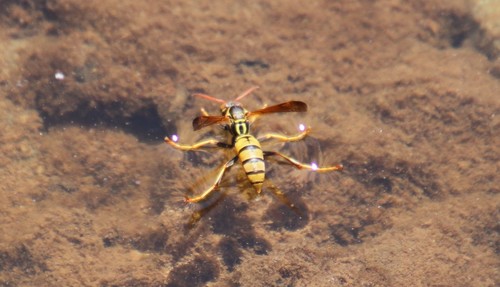
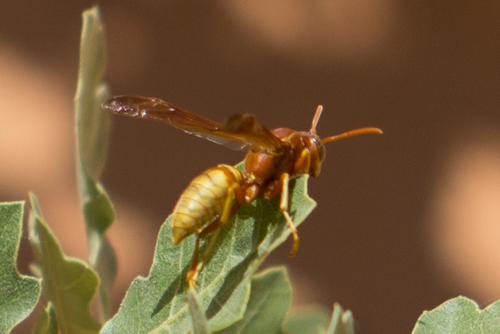

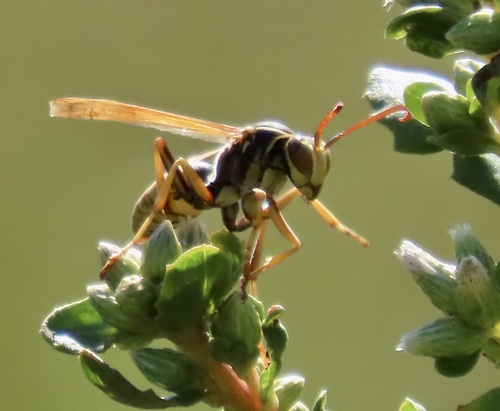
More bees, wasps & ants
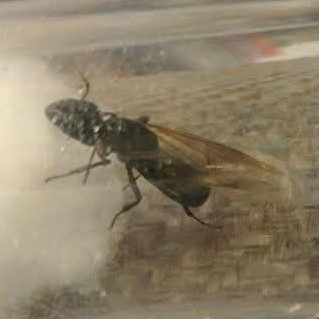
Bites and formic acid
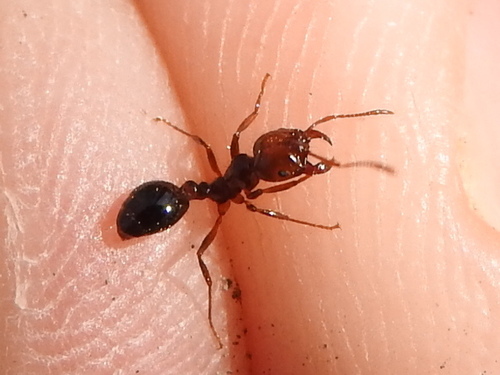
Painful sting
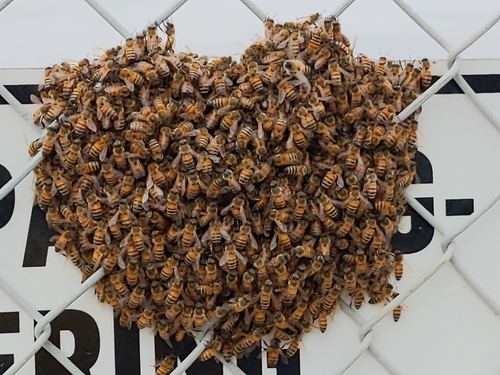
Stinging insect
Can sting
Can sting
Can sting
This guide was written with AI assistance and fact-checked, last updated 2026-10-10. Identification from photos is never certain: don't handle insects you can't identify, and get medical advice for bites, stings or allergic reactions. More about the golden paper wasp: iNaturalist, Wikipedia.