
Pigeon tremex
Tremex columba · Horntails (wood wasps)
A large wood-boring horntail whose larvae develop in dead or dying hardwood; adults are non‑stinging and short‑lived.
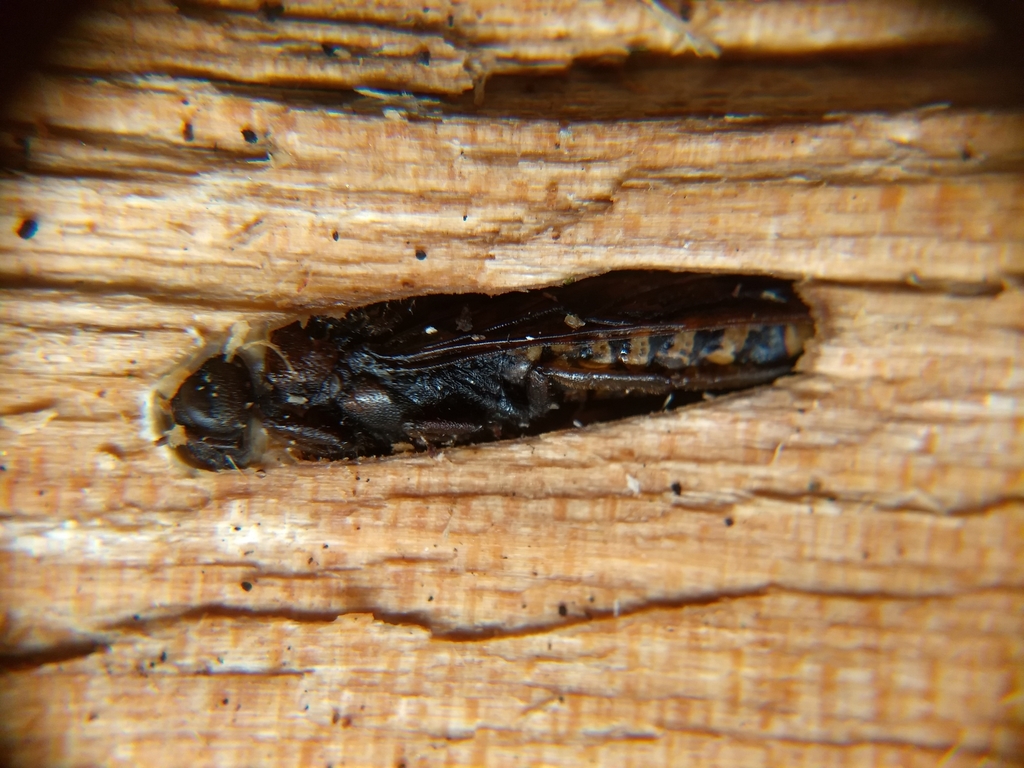
!Is the pigeon tremex dangerous?
No. Adults do not have a venomous sting. Females have a long ovipositor used to lay eggs in wood; it is not a sting but can look alarming. They do not bite or inject venom. If handled roughly a female could cause a minor puncture wound with the ovipositor; treat as a small puncture wound and clean with soap and water.
Pets
Not toxic to pets. Larvae inside wood are not accessible to pets; adults are unlikely to harm or significantly interest dogs or cats.
📖Overview
Tremex columba is a species of horntail (family Siricidae). Adults are wasplike but lack a sting; females have a long ovipositor used to lay eggs into dead or stressed hardwood. Larvae are wood-borers that feed for months or years in the sapwood of weakened, dying or recently cut hardwoods. Adults emerge in the warmer months and are often seen flying around host trees or resting on trunks and logs.
🔍How to identify a pigeon tremex
Adults are robust, elongate wasplike insects typically 20-50 mm long (body only; females larger), with a cylindrical abdomen. The body is reddish-brown to black, and the abdomen usually has yellow bands; legs are often yellowish. Antennae are filiform; wings are clear to slightly smoky. Females carry a visible slender ovipositor at the rear (used for egg-laying), which can be mistaken for a sting but is not used for defense.
- Large, stout wasplike insect 20-50 mm long with a cylindrical body and clear or smoky wings.
- Reddish-brown to black body, usually with yellow bands on the abdomen.
- Females have a long, slender ovipositor projecting from the tip of the abdomen (not a sting).
- Exit holes in wood are round and about 6-10 mm across; frass may be seen as powdery wood debris.
Lookalikes
Giant ichneumon wasp Megarhyssa macrurus
Slender with an extremely long, thread-like ovipositor (often longer than the body) and a thin, waisted abdomen; it is a parasitoid often seen on the same trees, laying eggs onto pigeon tremex larvae inside the wood.
White-horned horntail Urocerus albicornis
A conifer-boring horntail that is mostly black with white bands on the antennae and white leg markings; pigeon tremex has yellow bands on the abdomen and uses hardwoods.
↻Life cycle
Egg
Eggs are laid by the female into cracks or holes in the bark or directly into sapwood using the ovipositor.
Larva (wood-borer)
Larvae are cream-coloured grubs with tiny legs and a hard spine at the tail end that tunnel through sapwood feeding on the wood and fungal-decayed material; this stage can last many months or years.
Pupa
Pupation occurs within the wood in a cell; metamorphosis from grub to adult takes place inside.
Adult (horntail)
Adults emerge through round exit holes in the wood, mate, and females seek suitable wood to lay eggs; adults live only a short time.
🍃Diet and predators
Young eat
Larvae feed on the wood and decayed wood material of dead or dying hardwood trees (sapwood), often in association with wood-decay fungi.
Adults eat
Adults feed little; they may visit flowers for nectar or feed on tree sap and do not feed on wood.
Predators of the young
Larvae are preyed on by woodpeckers and parasitized by specialist parasitoid wasps, notably giant ichneumon wasps (Megarhyssa) that drill through wood to reach them.
Predators of adults
Birds, predatory insects and spiders may capture adults; they are also parasitized or preyed upon by parasitoid wasps.
🌱Effect on plants and gardens
Larvae develop in dead, dying or stressed hardwoods and contribute to wood decay. They are not primary killers of healthy trees but can use recently weakened or cut hardwood.
📍Where and when to find it
Look on standing dead or dying hardwood trees, cut logs, stumps and firewood. Adults may be seen resting on bark or flying near host wood.
Best time
Warm months (local summer); daytime is best for observing adults. Larvae are inside wood year-round.
Observation tips
Check for round emergence holes and fine wood dust on or under logs. Photograph adults from the side to show body shape and the female's ovipositor for identification.
✨Fun facts
- Horntails like Tremex columba are not true stinging wasps: the female's ovipositor is a specialized egg-laying organ, not a defensive stinger.
- Larvae often develop in wood that has been preconditioned by wood-decay fungi; the insect-fungus association helps larvae digest wood.
- Exit holes made when adults emerge are often the most noticeable sign of past infestation in dead or cut timber.
?Frequently asked questions
Are pigeon tremex dangerous to people?
No. They are not venomous and do not sting in the way social wasps do. The female's ovipositor is for laying eggs and not used for injecting venom.
Do pigeon tremex bite or sting?
They do not sting. They are not known to bite people; a female's ovipositor could cause a minor puncture if handled roughly, but this is rare.
Why is one in my house?
Adults are often accidentally attracted to lights or may fly into buildings while searching for mates or suitable wood. If you see one indoors it likely flew in and will not establish there unless there is infested wood inside.
Will they ruin my furniture or wooden house?
They prefer dead, dying or recently cut hardwood. Intact, sound structural timber and finished furniture are generally not attacked. They are more associated with logs, stumps and weakened trees.
How do I get rid of them?
Remove and dispose of infested or recently cut hardwood (burn, chip or bury according to local rules). Store firewood off the ground and dry; replace or treat severely infested timber. For commercial forestry or severe infestations consult a local arborist or pest control professional for targeted treatments.
📷Photos of the pigeon tremex
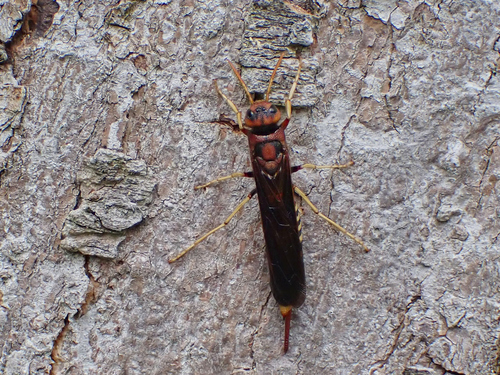
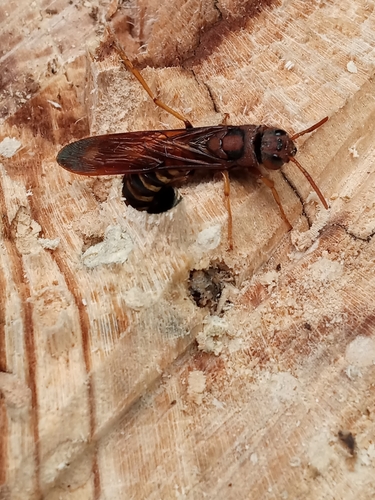
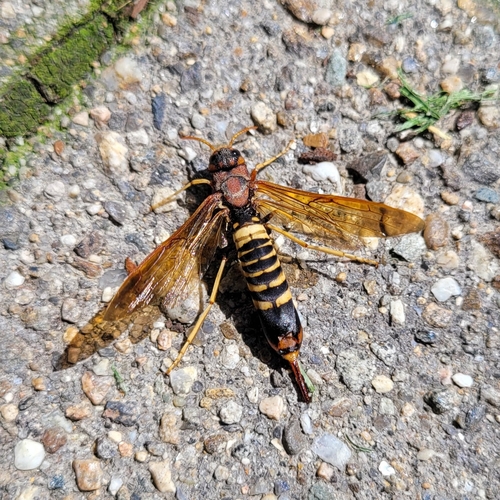
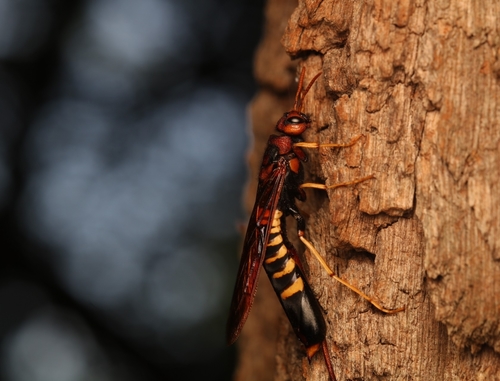
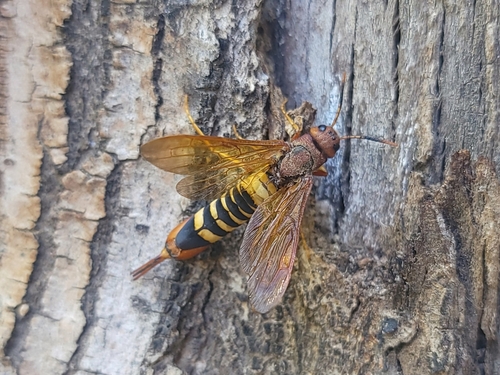
More bees, wasps & ants
Bites and formic acid
Painful sting
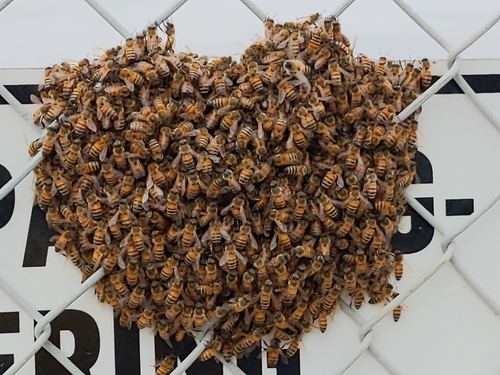
Stinging insect
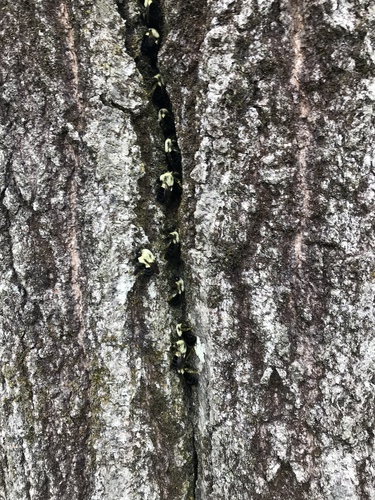
Can sting
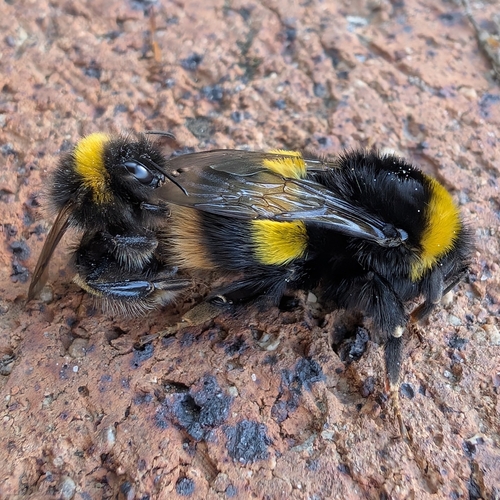
Can sting
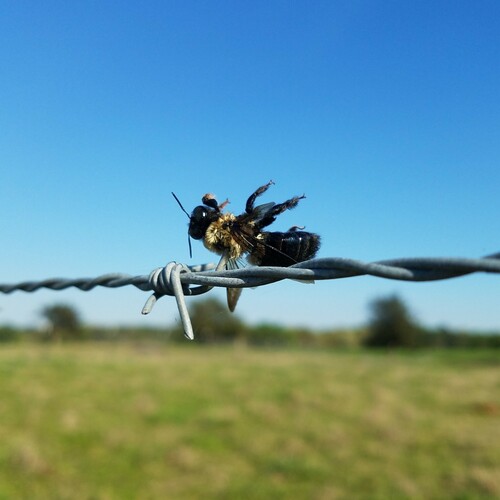
Can sting
This guide was written with AI assistance and fact-checked, last updated 2026-10-10. Identification from photos is never certain: don't handle insects you can't identify, and get medical advice for bites, stings or allergic reactions. More about the pigeon tremex: iNaturalist, Wikipedia.