
European fire ant
Myrmica rubra · Ants
A small reddish ant that delivers a painful sting; native to Europe and Asia and invasive in parts of North America.

!Is the European fire ant dangerous?
Only mildly. Workers do not bite strongly but can sting. The sting is painful and can produce a burning sensation, local swelling and small pustules in some people. Allergic reactions are possible (rarely severe). For stings: clean the area, apply cold compresses to reduce swelling, and seek medical help for widespread symptoms. If someone has trouble breathing, swelling of the face or throat, or feels faint after a sting, call emergency services immediately and use an epinephrine auto-injector if one has been prescribed.
Pets
Stings can be painful to pets and may cause localized swelling or irritation; multiple stings can be more serious for small animals. Monitor pets and contact a veterinarian if they show signs of allergic reaction or distress.
📖Overview
Myrmica rubra is a small, reddish-brown ant species common in temperate Europe and parts of Asia. It nests in soil, grassland, under stones, in rotting wood and at the base of plants. Colonies can be single-queen or multi-queen and often form dense local populations. In areas where it has been introduced (for example northeastern North America) it can become a nuisance, displacing native ants and producing many stinging workers that bother people and pets.
These ants are omnivores and scavengers, feeding on live and dead insects, honeydew from aphids, and other sugary or protein-rich items. Workers will forage actively in warm weather and can enter buildings searching for food or shelter, though they prefer moist ground-level nesting sites outdoors.
🔍How to identify an European fire ant
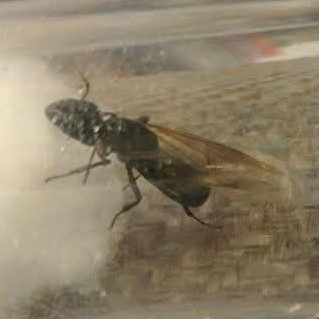
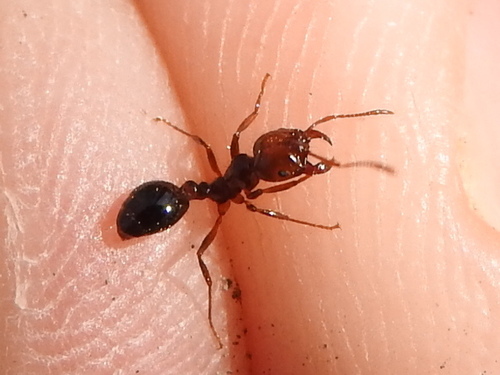
Workers are small, typically 3-5 mm long, uniformly reddish to dark reddish-brown with a darker gaster. The species has a distinctive two-segmented petiole (two nodes) between thorax and gaster and short spines on the thorax (propodeal spines). Antennae are elbowed with 12 segments, thickening into a weak club toward the tip. Queens are larger and darker, and males are winged during mating periods.
- Small workers 3-5 mm, uniform reddish to dark reddish-brown coloration.
- Two-segmented petiole (two distinct nodes) between thorax and gaster.
- Short propodeal spines on the thorax visible under magnification.
- Antennae with 12 segments, gradually thickening toward the tip.
Lookalikes
Other Myrmica ants Myrmica spp.
Many Myrmica species are similar in size and colour; identification often requires examining petiole shape, thoracic spines and microscopic details. M. rubra tends to be uniformly reddish and commonly has multiple nearby nests in dense aggregations.
Red imported fire ant Solenopsis invicta
Both have a two-segmented waist and a painful sting, but fire ant workers vary greatly in size within one colony, have 10-segmented antennae with a two-segmented club and lack the thoracic spines of Myrmica; they build large dome-shaped mounds in sunny open ground in warmer regions.
↻Life cycle
Egg
Queens lay tiny white eggs that hatch into larvae after several days to weeks depending on temperature and food.
Larva
Legless grubs fed and tended by workers; larvae pass through several instars while developing.
Pupa
Pupae are naked (no silk cocoon, as in other Myrmica ants) and pale, gradually darkening before emerging as adult workers, queens or males.
Adult
Fertile queens and males take part in nuptial flights; workers forage, care for brood and maintain the nest.
🍃Diet and predators
Young eat
Fed by workers on regurgitated insect prey and sugary substances (honeydew, nectar) supplied by foraging adults.
Adults eat
Omnivorous: scavenged insects and dead arthropods, honeydew from aphids, nectar and other sweet or protein-rich foods.
Predators of the young
Birds, predatory insects, spiders and other ant species that raid nests.
Predators of adults
Birds, beetles, spiders, parasitic flies and other ant species; also subject to pathogens and parasitoids.
🌱Effect on plants and gardens
Myrmica rubra does not typically feed on plants directly but tends aphids for honeydew, which can increase aphid survival and indirectly affect plant health. It is not a major herbivore or crop pest.
How to get rid of European fire ants
Reduce nesting habitat by removing mulch, wood piles and excessive ground cover near foundations; repair drainage to reduce soil moisture. For small infestations, nest drenching with boiling water can kill many workers and brood (repeat treatments needed). Baits formulated for ants (protein- or sugar-based with suitable active ingredients) can be effective when applied according to label directions. For large or persistent infestations, contact a licensed pest control professional. Avoid stirring or disturbing nests suddenly, which can provoke stings.
📍Where and when to find it
Look for workers on low vegetation, near aphid colonies, along ant trails in lawns and garden soil, and beneath stones or logs. Queens and males are seen during nuptial flights (winged).
Best time
Spring through autumn, especially warm days; daytime foraging is common but they may be active at night in warm conditions.
Observation tips
Photograph workers on a neutral background and include close-ups of the thorax and petiole for identification. Avoid disturbing nests to prevent stings.
✨Fun facts
- Myrmica rubra workers can form dense, multi-queen aggregations, which helps them quickly colonize new areas.
- In introduced areas, these ants have been observed to displace native ant species and alter invertebrate community structure.
- Queens and workers of this species have been used in ecological studies of social insect invasions and community impacts.
?Frequently asked questions
Do European fire ants sting?
Yes. Workers can sting and deliver a painful, burning sensation and sometimes small pustules; allergic reactions are possible but uncommon.
Are European fire ants dangerous?
They are not usually life-threatening to healthy people, but their stings are painful and can cause allergic reactions in some individuals. Take care around nests and seek medical help for severe reactions.
Why are these ants in my house?
They usually nest outside in moist soil, mulch or under debris, but workers may enter houses searching for sweets, protein or shelter—especially in late summer and autumn.
How do I get rid of European fire ants?
Reduce nesting habitat and moisture near your home, use labeled ant baits or repeated nest drenching for small nests, and contact a pest control professional for large or persistent infestations.
Where does Myrmica rubra live?
Native to temperate Europe and Asia; established as an introduced species in parts of North America. It prefers moist, vegetated ground, edges of woods, lawns and gardens.
📷Photos of the European fire ant


More bees, wasps & ants
Bites and formic acid
Painful sting
Stinging insect
Can sting
Can sting
Can sting
This guide was written with AI assistance and fact-checked, last updated 2026-10-10. Identification from photos is never certain: don't handle insects you can't identify, and get medical advice for bites, stings or allergic reactions. More about the European fire ant: iNaturalist, Wikipedia.