
Rusty patched bumble bee
Bombus affinis · Bumble bees
A once-common eastern North American bumble bee with a distinctive rusty patch on the abdomen; now severely declined and legally protected.
!Is the rusty patched bumble bee dangerous?
Only mildly. Rusty patched bumble bees are not aggressive but can sting if handled or trapped against skin. Their sting is similar to other bumble bees: painful for most people but rarely medically serious unless the person is allergic. Bumble bees do not leave their stinger in the skin. For stings: clean the area and apply a cold pack for swelling. Signs of a severe allergic reaction (difficulty breathing, swelling of the face or throat, widespread hives, fainting) are an emergency: use an epinephrine auto-injector if one is prescribed and call emergency services immediately.
Pets
Generally not dangerous to pets. Dogs or cats that bite or step on a bee may be stung and show local pain or swelling; watch for allergic reactions and consult a veterinarian if symptoms are severe.
📖Overview
Bombus affinis is a species of bumble bee native to eastern North America. It nests on or near the ground in grasslands, meadows, and sometimes in urban gardens. Historically widespread and abundant, populations have dropped sharply since the late 20th century due to habitat loss, pesticide exposure, disease and other stressors. Because of this decline it is a conservation priority and is legally protected in parts of its range.
Rusty patched bumble bees are social insects that live in annual colonies started by a single queen each spring. Workers forage for nectar and pollen from a wide range of flowering plants and are important pollinators of wild flowers and crops. The species' ecology, foraging behaviour and nesting are similar to other North American Bombus species, but the distinctive rust-coloured patch on the abdomen is a key field mark for identification.
🔍How to identify a rusty patched bumble bee
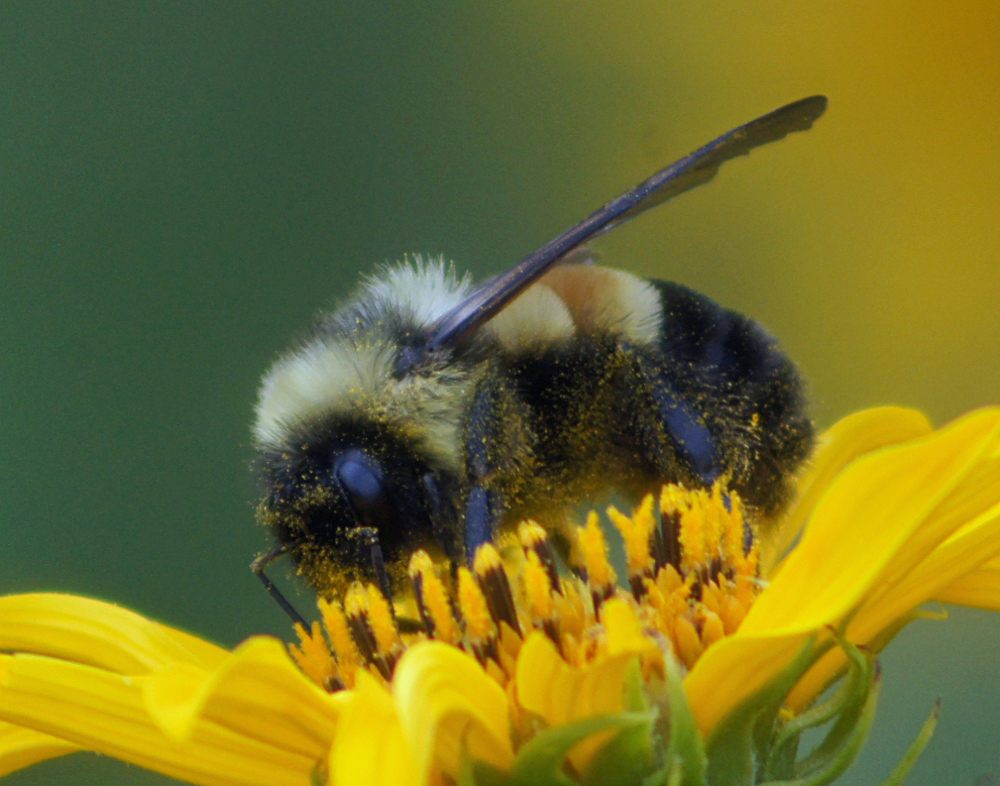
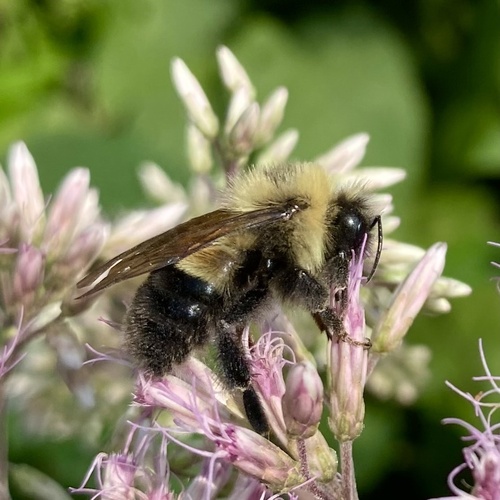
Adults are robust, hairy bumble bees with the usual rounded bumble bee shape. Workers are roughly 10-16 mm in body length; queens are larger, about 20-22 mm. The head is black, and the thorax is yellow on top with a black spot or band between the wing bases. Workers and males usually show a rusty-brown patch on the second abdominal segment (hence the common name), bordered by yellow, with the rear of the abdomen black; queens lack the rusty patch and have yellow front abdominal segments with a black rear. Hair (pile) is dense and gives a fuzzy appearance. Males have longer antennae and often more yellow hairs.
- Look for a rusty or reddish patch on the second abdominal segment of workers and males (queens lack it).
- Black head and yellow thorax with a black spot between the wings; rear of the abdomen black.
- Robust, hairy body typical of bumble bees; queens are noticeably larger than workers.
- In eastern North America, check size and pattern against common species like Bombus impatiens and Bombus vagans (see similar species).
Lookalikes
Common eastern bumble bee Bombus impatiens
Bombus impatiens lacks the rusty abdominal patch and typically has more continuous yellow banding on the abdomen.
Half-black bumble bee Bombus vagans
Bombus vagans has more extensive yellow on the abdomen and no distinct rusty patch; thoracic hair patterns differ.
Brown-belted bumble bee Bombus griseocollis
Bombus griseocollis sometimes shows brownish hairs but usually has different banding and a paler thoracic patch rather than a single rusty abdominal patch.
↻Life cycle
Egg
Laid by the queen inside the nest; tiny, whitish eggs hatch in a few days.
Larva (grub)
Legless, white larvae fed on pollen and nectar by workers; they grow rapidly through several instars.
Pupa
Larvae spin cocoons and pupate; metamorphosis inside the cocoon leads to adult features.
Adult (queen, worker, male)
Queen emerges early, establishes nest and produces workers; workers maintain the nest and forage, later males and new queens are produced for mating and overwintering queens hibernate.
🍃Diet and predators
Young eat
Fed on pollen and nectar brought to the nest by workers
Adults eat
Nectar for energy and pollen for protein; forage on a broad range of flowering plants
Predators of the young
Nest parasites and predators such as some wasps, ants, and vertebrates that can access ground nests
Predators of adults
Birds, robber flies, crab spiders and predatory insects; also susceptible to disease and parasites (e.g., Nosema and tracheal mites)
🌱Effect on plants and gardens
Forages for nectar and pollen from a wide variety of native wildflowers, fruit blossoms and garden plants; an effective pollinator for many crops and native plants.
📍Where and when to find it
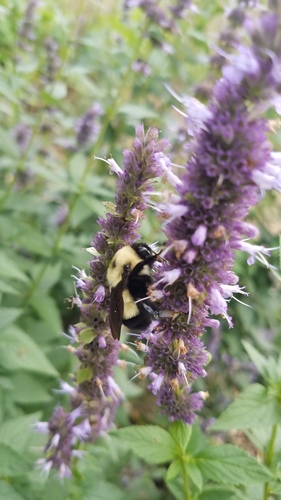
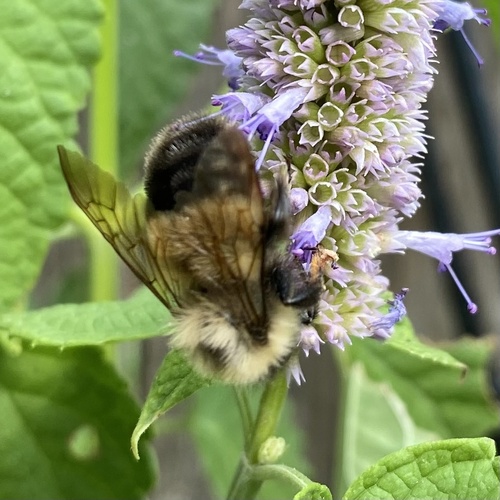
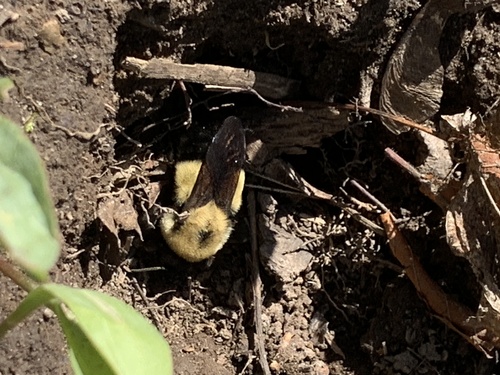
Look for foraging workers on flower heads in meadows, gardens and field edges. Queens are easier to spot in spring when searching for nest sites. Nests are typically on or just below the ground in grassy tussocks, rodent burrows or under plant debris.
Best time
Best observed from spring through late summer (roughly April to September in much of its range), during warm, sunny daytime hours when flowers are open.
Observation tips
Wear bright clothing and move slowly; use a camera with a zoom to avoid disturbing bees. Plant a sequence of native flowers to increase chances of attracting them.
✨Fun facts
- The species takes its common name from a single rust-coloured patch on its abdomen that is easy to notice when present.
- Populations collapsed across much of its range in a few decades, making it one of the best-known recent bumble bee declines.
- Because it forages on many plant species, its decline can affect pollination networks in meadows and agricultural areas.
?Frequently asked questions
Is the rusty patched bumble bee dangerous?
No—like other bumble bees it can sting but generally is not aggressive. Stings are painful but rarely dangerous unless you have a bee allergy.
Does the rusty patched bumble bee sting people?
Yes, it can sting if threatened or trapped against skin, but workers rarely sting unprovoked while foraging.
Why is a rusty patched bumble bee in my yard?
They visit gardens for nectar and pollen. If your yard has native flowers, nesting habitat (undisturbed ground or grass tussocks) and low pesticide use, it can attract them.
How can I help conserve this species?
Plant a variety of native, nectar-rich flowers that bloom from spring to late summer, leave patches of undisturbed ground or grass for nesting, avoid or minimise pesticide use, and support local conservation programs.
How do I get rid of bumble bees in my house?
If a bumble bee enters your home, open windows and doors and gently encourage it out. For nests inside walls or structures, contact a licensed pest control professional—do not try to remove a nest yourself. Note: this species is protected in parts of its range; check local laws before removing nests.
Where does the rusty patched bumble bee live now?
Its range has contracted to scattered populations, mainly in the Upper Midwest of the United States (Minnesota, Wisconsin, Iowa, Illinois), the central Appalachians and southern Ontario; it is much reduced compared with historical records.
📷Photos of the rusty patched bumble bee
More bees, wasps & ants
Bites and formic acid
Painful sting
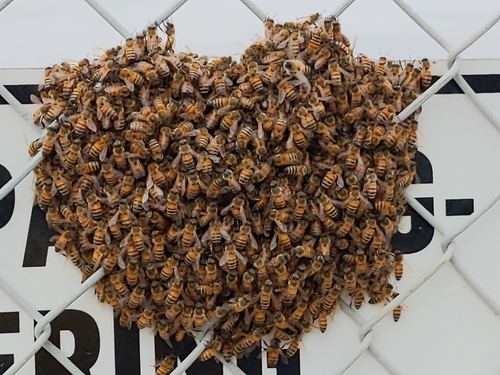
Stinging insect
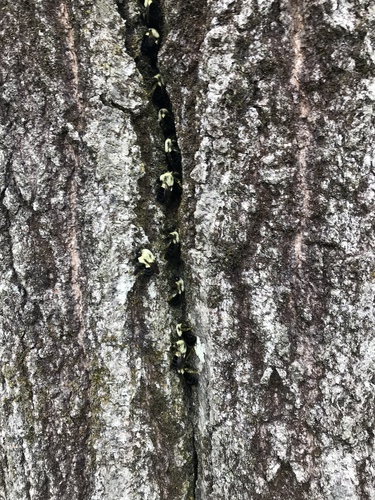
Can sting
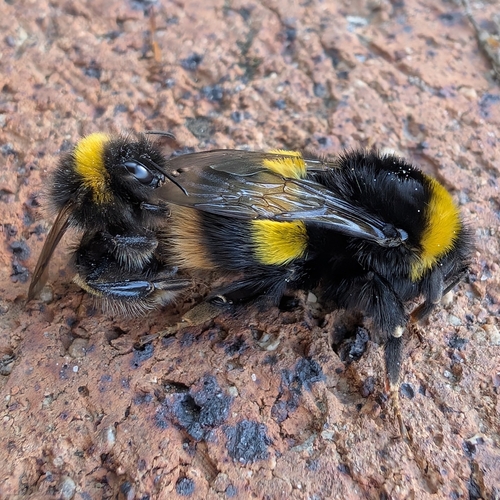
Can sting
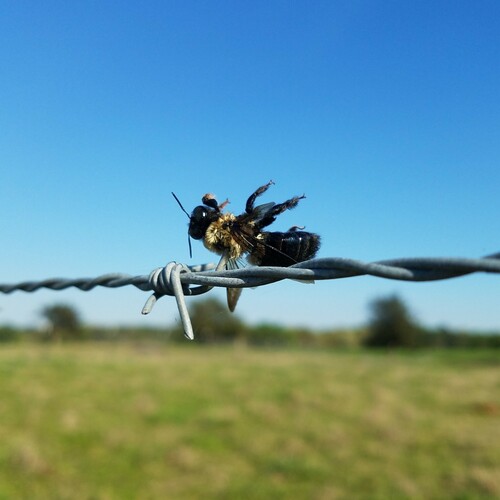
Can sting
This guide was written with AI assistance and fact-checked, last updated 2026-10-10. Identification from photos is never certain: don't handle insects you can't identify, and get medical advice for bites, stings or allergic reactions. More about the rusty patched bumble bee: iNaturalist, Wikipedia.