
Common eastern bumble bee vs Rusty patched bumble bee
These two are easy to mix up. Here's how to tell a common eastern bumble bee from a rusty patched bumble bee, and whether either one bites or stings.
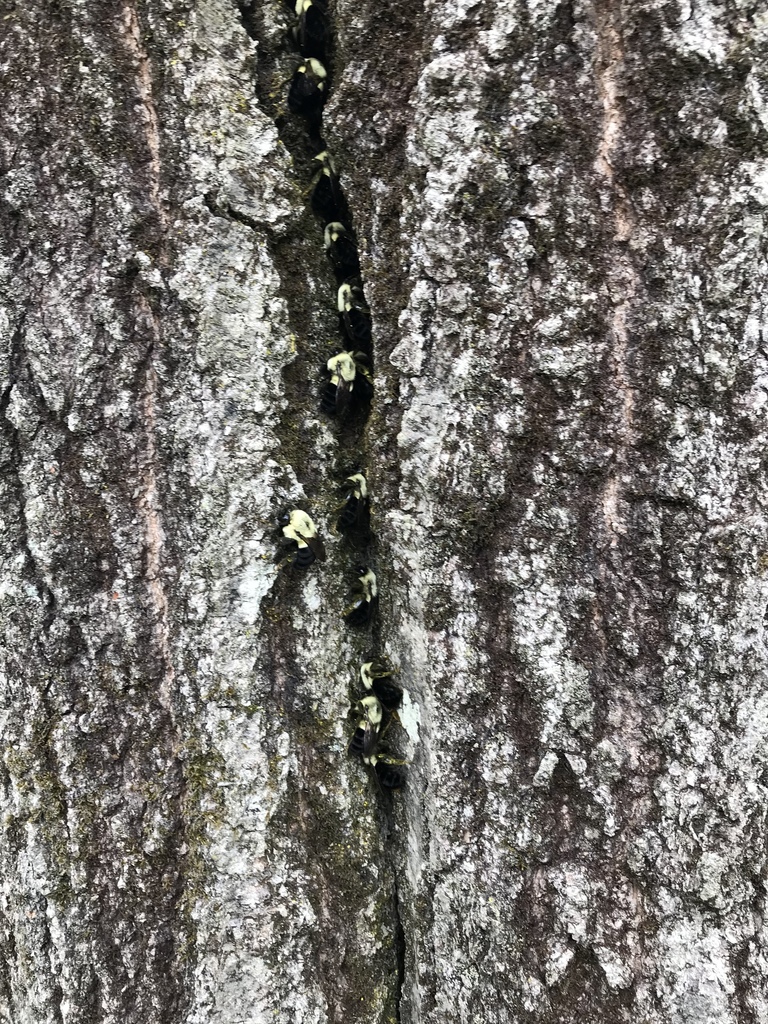
Common eastern bumble bee
Bombus impatiens
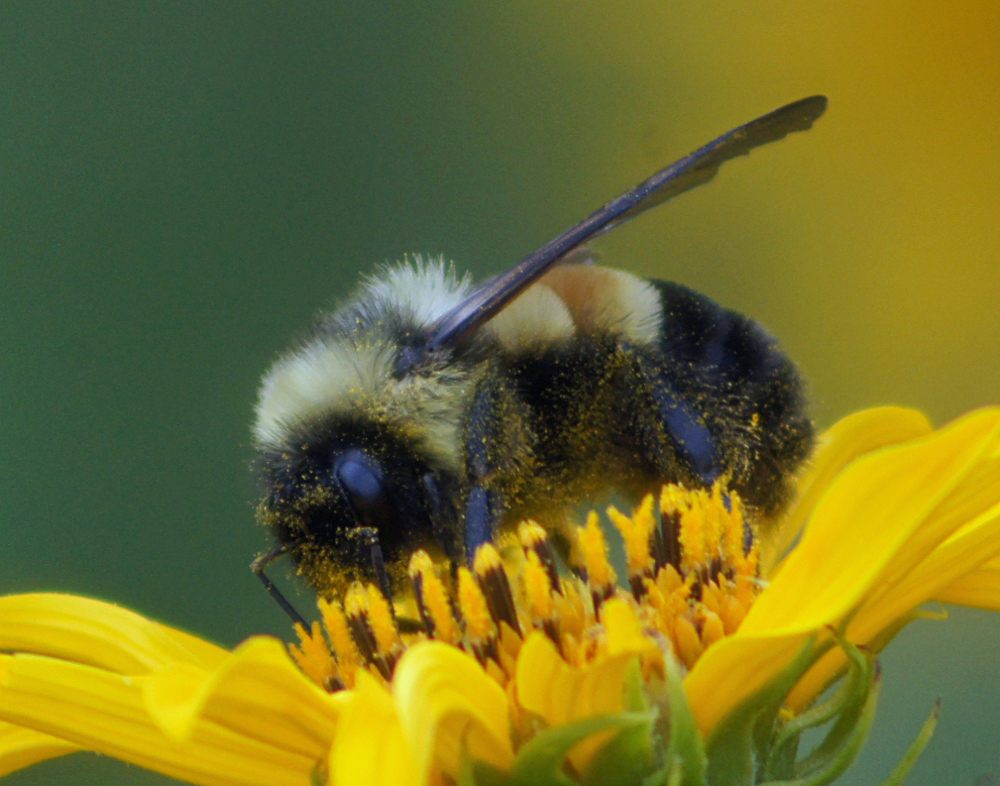
Rusty patched bumble bee
Bombus affinis
≠The key differences
Bombus impatiens lacks the rusty abdominal patch and typically has more continuous yellow banding on the abdomen.
⚖︎Side by side
| Common eastern bumble bee | Rusty patched bumble bee | |
|---|---|---|
| To humans | Can sting | Can sting |
| Size | Queen 18-22 mm; workers 8-16 mm; males 12-17 mm (body length) | Workers 10-16 mm, queens 20-22 mm (body length) |
| Colours | Black, Bright yellow, White (tail) | Black, Yellow, Rusty red, Pale hair (off-white) |
| Family | Apidae | Apidae |
| Habitat | Open and semi-open areas: gardens, meadows, parks, agricultural fields, forest edges; nests in cavities, rodent burrows, compost piles and sheltered cavities. | Grassy meadows, prairies, open woodland edges, marsh margins, and flower-rich urban gardens; nests on or just below ground in cavities or dense grass |
| Range | Eastern and central North America: from southern Canada (Ontario to the Maritimes) through the eastern United States to the Great Plains. Also reared commercially for greenhouse pollination in North America. | Historically across eastern and midwestern North America from southern Ontario and Quebec and New England west to the Dakotas and south to Georgia; now much reduced, with scattered populations mainly in the Upper Midwest (Minnesota, Wisconsin, Iowa, Illinois), the central Appalachians and southern Ontario |
| Active | Spring through fall (roughly April to October depending on latitude); diurnal (active during daylight). | Spring through late summer (roughly April to September depending on latitude); diurnal (active during daylight) |
| Pest? | No | No |
🔍How to spot a common eastern bumble bee
- Yellow thorax and yellow first abdominal segment; the rest of the abdomen is black (no white tail).
- Large, robust, hairy body typical of bumble bees; queens noticeably larger than workers.
- Flight is relatively slow and bumbling compared with smaller bees; often visits open-faced and tubular flowers.
🔍How to spot a rusty patched bumble bee
- Look for a rusty or reddish patch on the second abdominal segment of workers and males (queens lack it).
- Black head and yellow thorax with a black spot between the wings; rear of the abdomen black.
- Robust, hairy body typical of bumble bees; queens are noticeably larger than workers.
- In eastern North America, check size and pattern against common species like Bombus impatiens and Bombus vagans (see similar species).
?Frequently asked questions
What is the difference between a common eastern bumble bee and a rusty patched bumble bee?
Bombus impatiens lacks the rusty abdominal patch and typically has more continuous yellow banding on the abdomen.
Is a common eastern bumble bee or a rusty patched bumble bee more dangerous?
Common eastern bumble bee: Can sting. Rusty patched bumble bee: Can sting. Workers and queens can sting and may do so if handled, stepped on, or if their nest is disturbed. Rusty patched bumble bees are not aggressive but can sting if handled or trapped against skin.
Identification from photos is never certain: don't handle insects you can't identify, and get medical advice for bites, stings or allergic reactions.