
Eastern black carpenter ant vs Florida carpenter ant
These two are easy to mix up. Here's how to tell an eastern black carpenter ant from a Florida carpenter ant, and whether either one bites or stings.
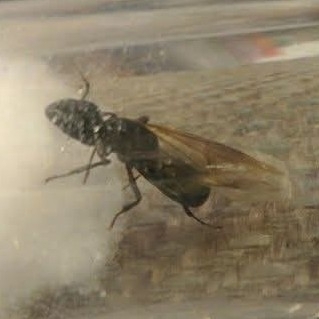
Eastern black carpenter ant
Camponotus pennsylvanicus
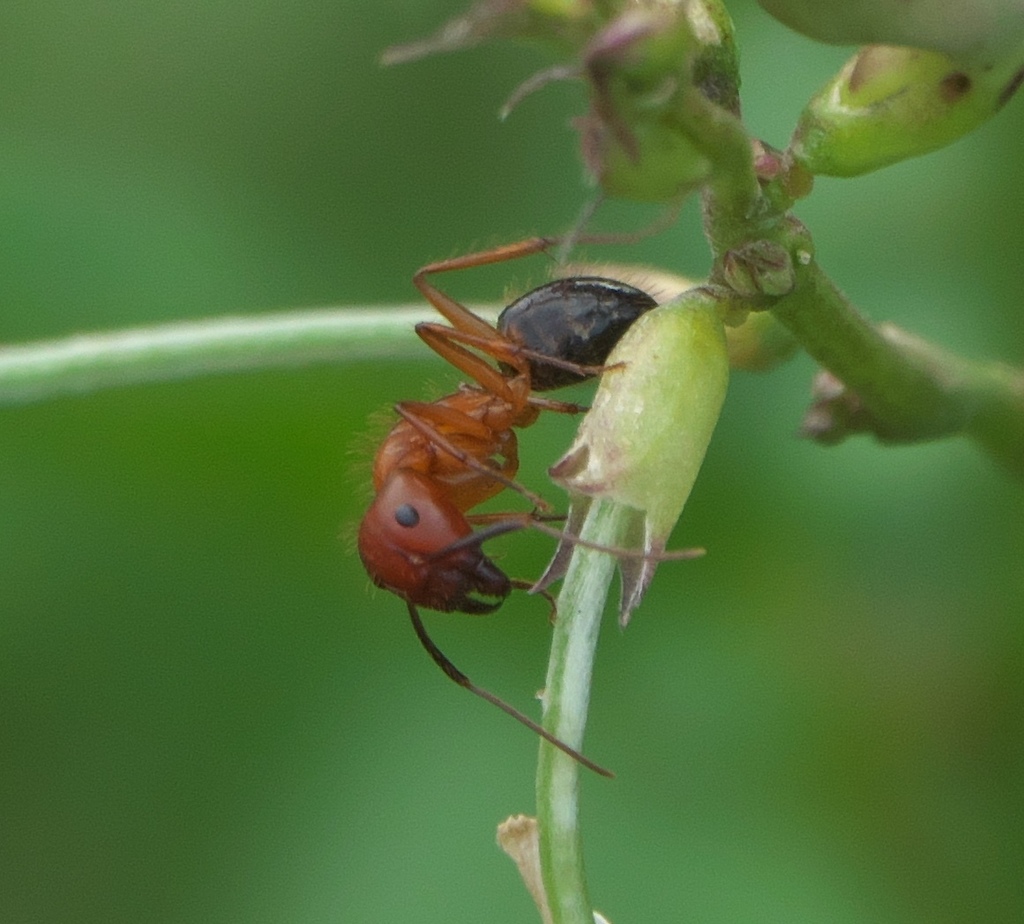
Florida carpenter ant
Camponotus floridanus
≠The key differences
Similar size and habits, but has a reddish-orange head and thorax with a black abdomen and occurs mainly in the southeastern US, especially Florida.
C. pennsylvanicus is generally uniformly dark black to dark brown and occurs farther north; C. floridanus more often shows reddish/orange tones on the head and thorax.
⚖︎Side by side
| Eastern black carpenter ant | Florida carpenter ant | |
|---|---|---|
| To humans | Bites and formic acid | Bites, formic acid |
| Size | 6-13 mm for workers; queens 15-20 mm | Workers 6-13 mm; majors up to 14 mm, queens much larger (18-20 mm) |
| Colours | Black, Dark brown | Reddish-brown, Dark brown, Black, Golden hairs |
| Family | Formicidae | Formicidae |
| Habitat | Forests, dead or decaying trees, stumps, and human structures with damp or damaged wood | Moist forests, tree cavities, rotten logs, stumps, and man-made structures with decayed wood; also forages in yards and inside homes. |
| Range | Eastern North America, broadly across eastern United States and adjacent Canada | Southeastern United States, especially Florida and neighboring Gulf and Atlantic coastal states. |
| Active | Active spring through fall; workers forage day and night depending on conditions | Active year-round in warm climates; peak foraging in spring through fall; often most active at night or in cooler parts of the day. |
| Pest? | Yes | Yes |
🔍How to spot an eastern black carpenter ant
- Large black workers 6-13 mm long; major workers have noticeably large heads.
- Single petiole node (waist) and smoothly rounded thorax profile typical of Camponotus.
- Excavated galleries in damp or decaying wood with coarse sawdust-like frass (wood fibers, not fecal pellets).
🔍How to spot a Florida carpenter ant
- Large size for an ant: workers generally 6-13 mm, with majors larger and big-headed.
- Reddish to orange-brown head and thorax with a darker brown or black gaster in many specimens.
- Smooth, shiny body with sparse golden hairs on the mesosoma and gaster.
- Tendency to nest in wood galleries and presence of smooth, clean galleries or small piles of frass (wood shavings mixed with feces).
?Frequently asked questions
What is the difference between an eastern black carpenter ant and a Florida carpenter ant?
Similar size and habits, but has a reddish-orange head and thorax with a black abdomen and occurs mainly in the southeastern US, especially Florida. C. pennsylvanicus is generally uniformly dark black to dark brown and occurs farther north; C. floridanus more often shows reddish/orange tones on the head and thorax.
Is an eastern black carpenter ant or a Florida carpenter ant more dangerous?
Eastern black carpenter ant: Bites and formic acid. Florida carpenter ant: Bites, formic acid. Eastern black carpenter ants do not have a functional stinger but will bite with their mandibles and may spray formic acid, which can cause local skin irritation or a burning sensation. Workers do not have a functional sting but will bite and can spray or apply formic acid, which may cause local pain, itching or mild irritation.
Identification from photos is never certain: don't handle insects you can't identify, and get medical advice for bites, stings or allergic reactions.