
Buff-tailed bumblebee vs Garden bumblebee
These two are easy to mix up. Here's how to tell a buff-tailed bumblebee from a garden bumblebee, and whether either one bites or stings.
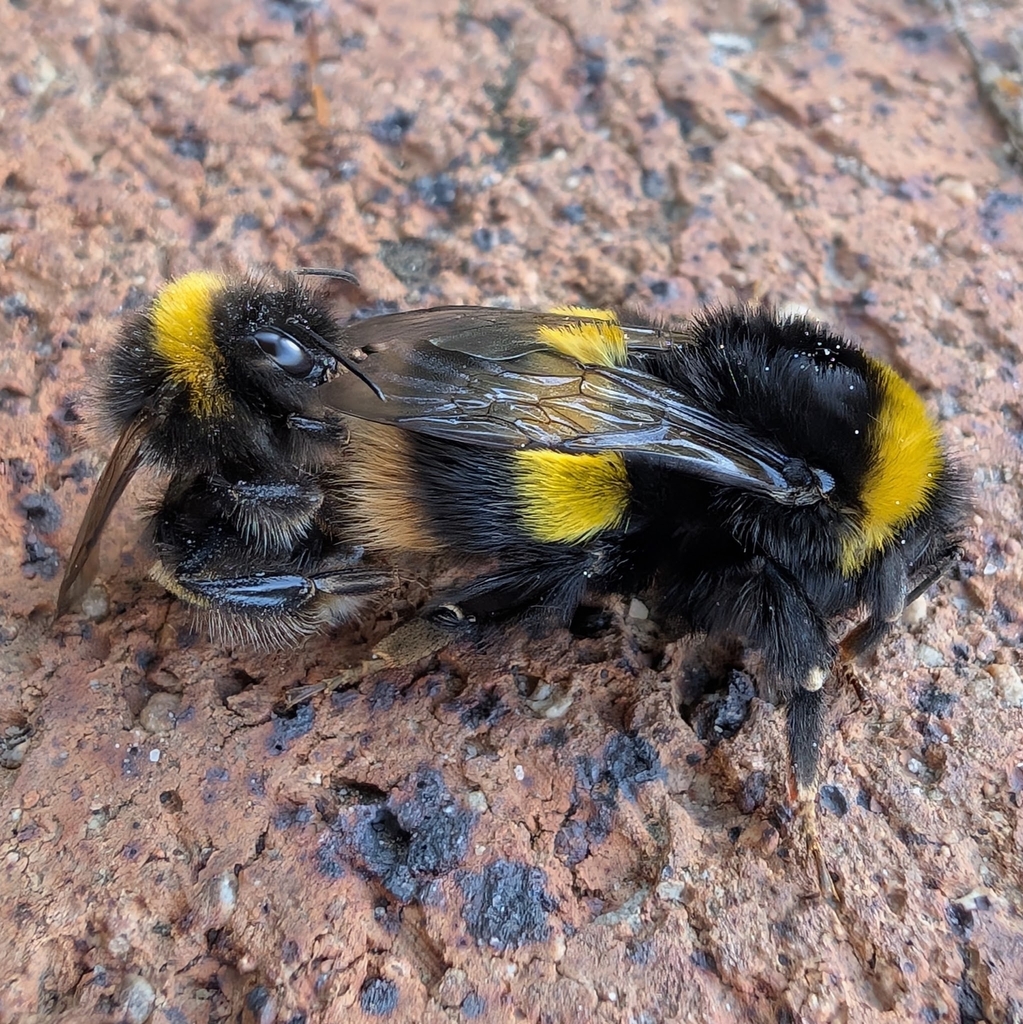
Buff-tailed bumblebee
Bombus terrestris
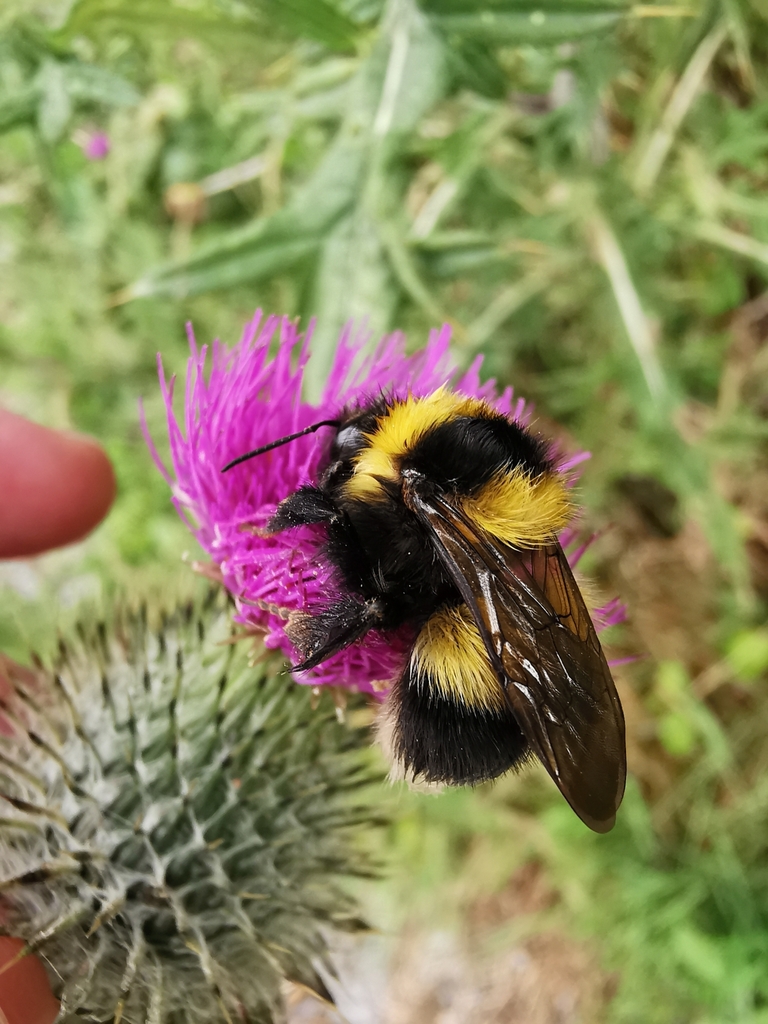
Garden bumblebee
Bombus hortorum
≠The key differences
Longer face and tongue, and an extra yellow band at the rear of the thorax (three yellow bands in total) with a clean white tail.
B. terrestris is stockier with a broader yellow banding and usually a buff or orange tail rather than the often white tail and longer face of B. hortorum.
⚖︎Side by side
| Buff-tailed bumblebee | Garden bumblebee | |
|---|---|---|
| To humans | Can sting | Can sting |
| Size | Queen 20-23 mm; worker 12-18 mm; male 14-18 mm | Workers and males 12-18 mm body length; queens 18-22 mm |
| Colours | Black, Bright yellow, Buff (pale tan), White | Black, Pale yellow, White, Golden brown (pile on some individuals) |
| Family | Apidae | Apidae |
| Habitat | Open countryside, farmland, gardens, hedgerows, forest edges, and urban green spaces; nests in tussocks, old rodent burrows, compost heaps, wall cavities and buildings. | Gardens, meadows, hedgerows, woodland edges and other flower-rich habitats; nests in cavities at or just below ground level (old mouse nests, compost heaps, tussocks). |
| Range | Native across much of Europe and parts of western Asia; also introduced to New Zealand, Japan, Tasmania and other regions for pollination services, where it has established in some areas. | Native across Europe and temperate Asia; introduced to New Zealand. Common in garden-rich landscapes and countryside. |
| Active | Active spring to autumn (typical northern hemisphere: March to October), most numerous in late spring and early summer; diurnal (day-active). | Mainly spring to early autumn (April to September in temperate Europe); diurnal (active in daylight). |
| Pest? | No | No |
🔍How to spot a buff-tailed bumblebee
- Buff or pale white tail combined with a single broad yellow band on the thorax and a second yellow abdominal band.
- Stout, furry body typical of bumblebees (not slender like honeybees).
- Size differences: queens much larger than workers; males may show pale hair on face and longer hairs.
- Geographic context: common in Europe; check local field guides for separation from closely related buff-tailed species.
🔍How to spot a garden bumblebee
- Long, narrow head and very long proboscis compared with many other bumblebees.
- Three pale yellow bands (collar, thorax band, abdominal band) with a mostly black thorax and often a white tail.
- Slender, elongated body compared with stockier bumblebee species like Bombus terrestris.
- Frequently seen visiting deep tubular flowers (e.g., foxglove, honeysuckle).
?Frequently asked questions
What is the difference between a buff-tailed bumblebee and a garden bumblebee?
Longer face and tongue, and an extra yellow band at the rear of the thorax (three yellow bands in total) with a clean white tail. B. terrestris is stockier with a broader yellow banding and usually a buff or orange tail rather than the often white tail and longer face of B. hortorum.
Is a buff-tailed bumblebee or a garden bumblebee more dangerous?
Buff-tailed bumblebee: Can sting. Garden bumblebee: Can sting. Females (workers and queens) can sting and inject venom, but they are not aggressive and rarely sting unless handled or their nest is disturbed. Garden bumblebees can sting but are not aggressive and rarely do so unless handled, crushed or the nest is threatened.
Identification from photos is never certain: don't handle insects you can't identify, and get medical advice for bites, stings or allergic reactions.