
Buff-tailed bumblebee vs Red-tailed bumblebee
These two are easy to mix up. Here's how to tell a buff-tailed bumblebee from a red-tailed bumblebee, and whether either one bites or stings.
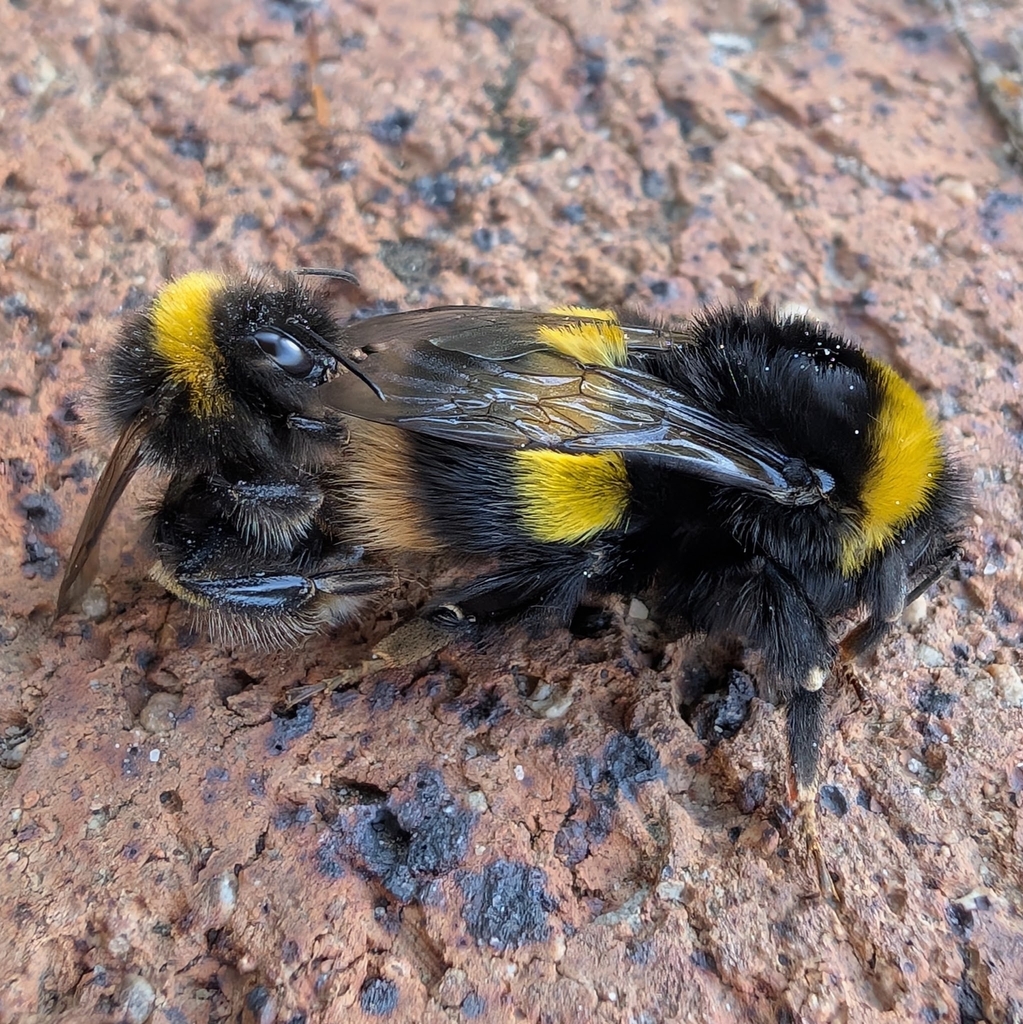
Buff-tailed bumblebee
Bombus terrestris
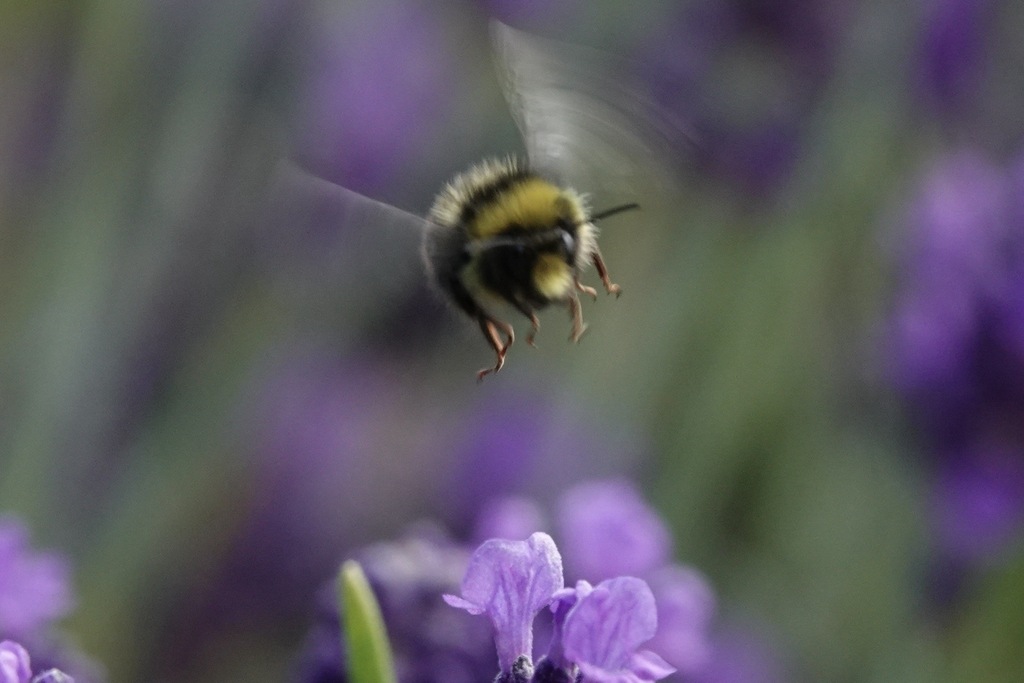
Red-tailed bumblebee
Bombus lapidarius
≠The key differences
Buff-tailed bumblebee has a pale buff or cream tail and one or two yellow bands on the thorax/abdomen; B. lapidarius has a red tail and usually no broad yellow band across the thorax.
⚖︎Side by side
| Buff-tailed bumblebee | Red-tailed bumblebee | |
|---|---|---|
| To humans | Can sting | Painful sting |
| Size | Queen 20-23 mm; worker 12-18 mm; male 14-18 mm | Queen 18-22 mm; worker 12-18 mm; male 14-18 mm (body length) |
| Colours | Black, Bright yellow, Buff (pale tan), White | Black, Red, Yellow |
| Family | Apidae | Apidae |
| Habitat | Open countryside, farmland, gardens, hedgerows, forest edges, and urban green spaces; nests in tussocks, old rodent burrows, compost heaps, wall cavities and buildings. | Gardens, meadows, hedgerows, roadside verges, open woodland and agricultural land; nests underground or in cavities such as old rodent burrows, compost heaps or wall crevices. |
| Range | Native across much of Europe and parts of western Asia; also introduced to New Zealand, Japan, Tasmania and other regions for pollination services, where it has established in some areas. | Widespread across most of Europe and parts of western Asia. |
| Active | Active spring to autumn (typical northern hemisphere: March to October), most numerous in late spring and early summer; diurnal (day-active). | Spring to early autumn (typically April to September in temperate regions); active during daylight hours. |
| Pest? | No | No |
🔍How to spot a buff-tailed bumblebee
- Buff or pale white tail combined with a single broad yellow band on the thorax and a second yellow abdominal band.
- Stout, furry body typical of bumblebees (not slender like honeybees).
- Size differences: queens much larger than workers; males may show pale hair on face and longer hairs.
- Geographic context: common in Europe; check local field guides for separation from closely related buff-tailed species.
🔍How to spot a red-tailed bumblebee
- Glossy black thorax and abdomen with a distinct red or orange-red tail on females.
- Lack of broad, pale yellow banding across the thorax and first abdominal segment that some other bumblebees have.
- Males often show extra yellow hairs on the thorax—check underside and face for yellow patches.
- Body hair relatively short and shiny compared with fuzzier bumblebee species.
?Frequently asked questions
What is the difference between a buff-tailed bumblebee and a red-tailed bumblebee?
Buff-tailed bumblebee has a pale buff or cream tail and one or two yellow bands on the thorax/abdomen; B. lapidarius has a red tail and usually no broad yellow band across the thorax.
Is a buff-tailed bumblebee or a red-tailed bumblebee more dangerous?
Buff-tailed bumblebee: Can sting. Red-tailed bumblebee: Painful sting. Females (workers and queens) can sting and inject venom, but they are not aggressive and rarely sting unless handled or their nest is disturbed. Red-tailed bumblebees can sting, but only if handled, trapped against skin or defending a nest.
Identification from photos is never certain: don't handle insects you can't identify, and get medical advice for bites, stings or allergic reactions.