
Great golden digger wasp vs Great black wasp
These two are easy to mix up. Here's how to tell a great golden digger wasp from a great black wasp, and whether either one bites or stings.
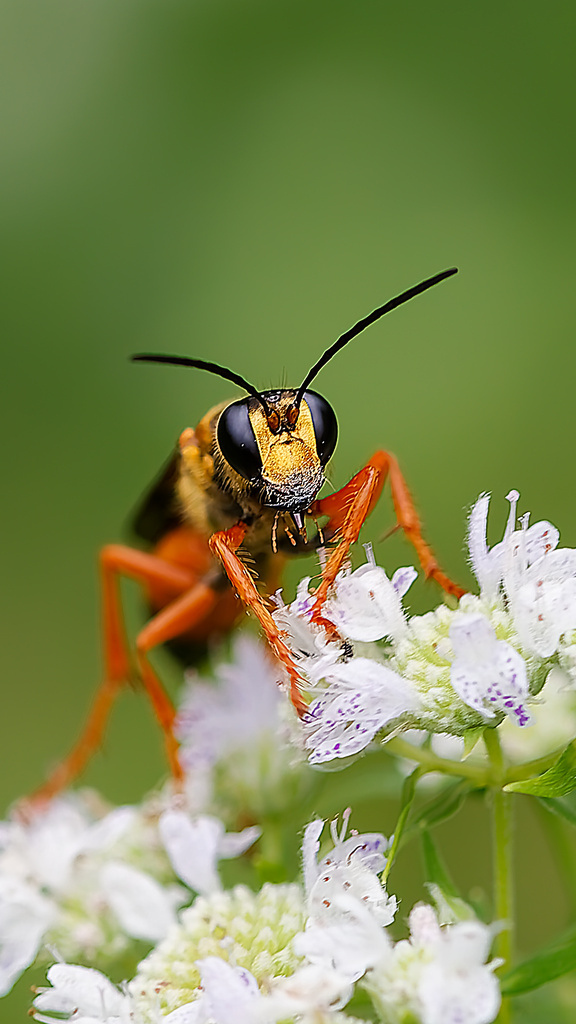
Great golden digger wasp
Sphex ichneumoneus
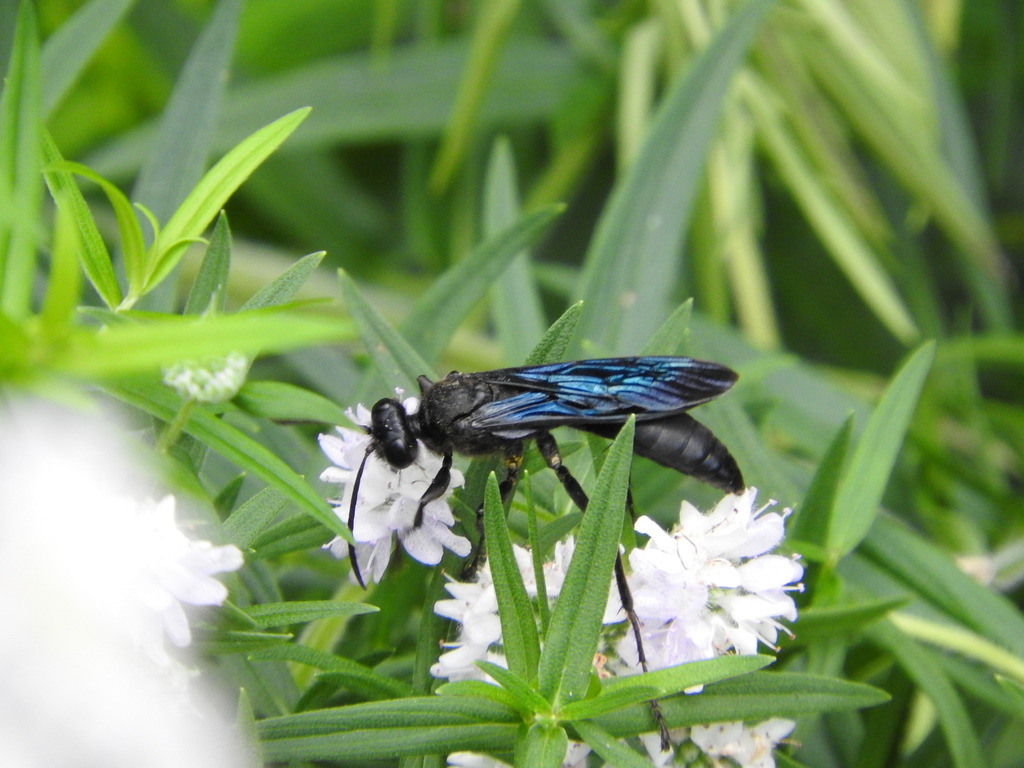
Great black wasp
Sphex pensylvanicus
≠The key differences
Close relative of similar size and shape, but entirely black with bluish wings and no orange; both dig burrows and hunt katydids.
Sphex ichneumoneus has yellow or orange markings on the legs and parts of the thorax, whereas Sphex pensylvanicus is mostly all black.
⚖︎Side by side
| Great golden digger wasp | Great black wasp | |
|---|---|---|
| To humans | Painful sting | Can sting |
| Size | 15-25 mm body length | 18-30 mm body length (about 2-3 cm) |
| Colours | Orange, Black, Dark brown (wings/translucent) | Black, Dark brown (legs), Smoky wing |
| Family | Sphecidae | Sphecidae |
| Habitat | Open, sunny areas with patches of bare or sandy soil: fields, road edges, sand dunes, lawns, gardens and gravelly banks. | Open, sunny sites with bare or sandy soil: lawns, waste ground, field edges, paths and gravelly banks. |
| Range | Widespread in eastern and central North America; also reported across much of the continent where suitable habitat exists. | Eastern and central North America: southern Canada through much of the United States, commonly found in suitable open habitats. |
| Active | Late spring through summer (regional peak varies). Active during daylight, especially warm sunny hours. | Late spring to early fall (typically June to September); active during daytime, especially warm sunny hours. |
| Pest? | No | No |
🔍How to spot a great golden digger wasp
- Large orange and black wasp with a narrow, thread-like waist and long legs.
- Bright orange thorax and anterior abdomen contrasted with a darker posterior abdomen and legs.
- Solitary behaviour: females digging burrows in bare sandy soil and carrying crickets or katydids.
- Visit to open flowers for nectar during warm daylight hours.
🔍How to spot a great black wasp
- Large, uniformly glossy black body with smoky wings and no bright yellow or white markings.
- Ground-nesting activity: females excavating burrows in bare or sandy soil.
- Seen carrying limp crickets or katydids under the body when provisioning nests.
- Solitary behavior—individual nest burrows rather than large colonies.
?Frequently asked questions
What is the difference between a great golden digger wasp and a great black wasp?
Close relative of similar size and shape, but entirely black with bluish wings and no orange; both dig burrows and hunt katydids. Sphex ichneumoneus has yellow or orange markings on the legs and parts of the thorax, whereas Sphex pensylvanicus is mostly all black.
Is a great golden digger wasp or a great black wasp more dangerous?
Great golden digger wasp: Painful sting. Great black wasp: Can sting. Females can sting if handled, trapped against skin, or accidentally pinched. Solitary and not aggressive; females will sting if handled, trapped against skin, or the nest is disturbed.
Identification from photos is never certain: don't handle insects you can't identify, and get medical advice for bites, stings or allergic reactions.