
Great black wasp
Sphex pensylvanicus · Digger wasps
A large, solitary black digger wasp that provisions underground burrows with paralyzed crickets and katydids for its larvae.
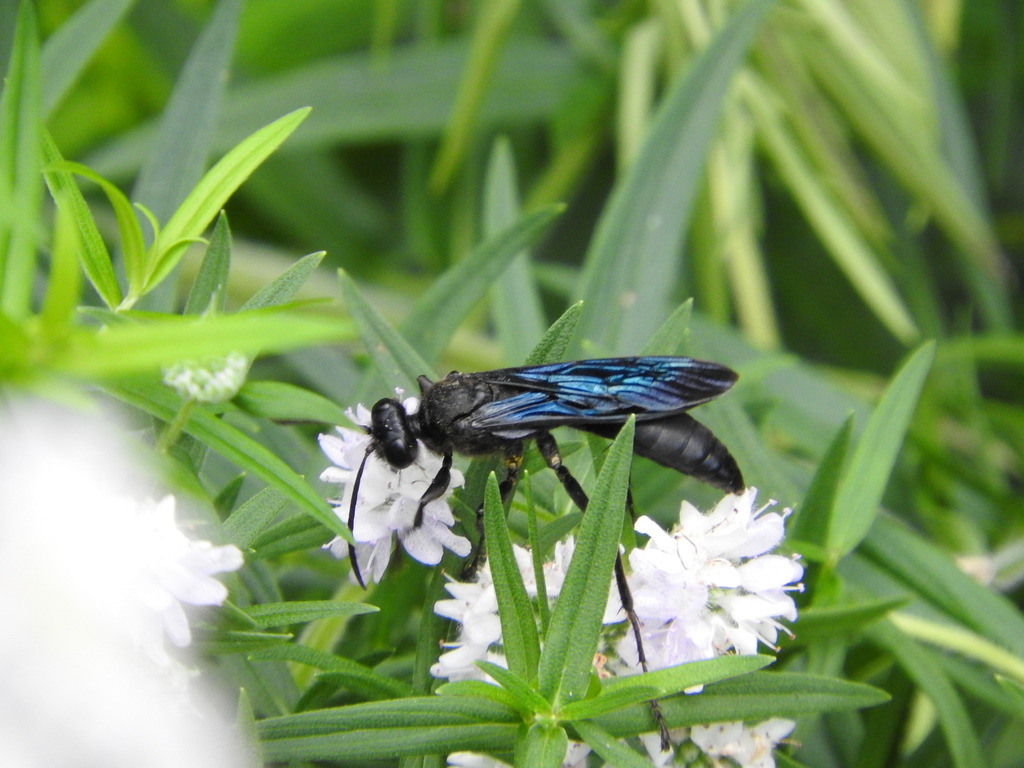
!Is the great black wasp dangerous?
Only mildly. Solitary and not aggressive; females will sting if handled, trapped against skin, or the nest is disturbed. The sting is typically painful but not medically dangerous for most people. Wash the site and use a cold pack for pain and swelling. If someone has trouble breathing, swelling of the face or throat, dizziness or widespread hives, use an epinephrine auto-injector if one is prescribed and call emergency services.
Pets
Unlikely to attack pets unless grabbed or cornered. A sting can be painful to small pets; watch for signs of allergic reaction and seek veterinary care if symptoms are severe.
📖Overview
Sphex pensylvanicus is a solitary ground-nesting wasp common across much of eastern and central North America. Females excavate burrows in bare or sparsely vegetated soil, hunt and paralyze orthopteran insects (crickets and katydids), and place them in brood cells as food for their developing larvae. Adults are nectar feeders and are often seen visiting flowers. They are not social and do not form colonies or defend territory like social yellowjackets or hornets.
🔍How to identify a great black wasp
Adults are large, robust wasps with a glossy black body. The abdomen and thorax are evenly black and often shiny. Legs may show reddish or brownish tones in some individuals. Wings are dark and smoky with a bluish iridescent sheen. Males are generally similar to females but somewhat slimmer and may have longer antennae.
- Large, uniformly glossy black body with smoky wings and no bright yellow or white markings.
- Ground-nesting activity: females excavating burrows in bare or sandy soil.
- Seen carrying limp crickets or katydids under the body when provisioning nests.
- Solitary behavior—individual nest burrows rather than large colonies.
Lookalikes
Great golden digger wasp Sphex ichneumoneus
Sphex ichneumoneus has yellow or orange markings on the legs and parts of the thorax, whereas Sphex pensylvanicus is mostly all black.
Ammophila wasps Ammophila spp.
Ammophila are slender thread-waisted wasps with a narrow petiole and often different color patterns (red or orange abdomen); Sphex pensylvanicus is more robust and uniformly dark.
↻Life cycle
Egg
Female lays a single egg in each brood cell inside her underground burrow, placed on or near the paralyzed prey.
Larva
Larvae hatch and feed on the provided paralyzed crickets or katydids until they are ready to pupate.
Pupa
Larvae pupate within the sealed brood cell and develop into adults; pupation may last through cooler months in some regions.
Adult
Adults emerge, feed on nectar, mate, and females excavate and provision nests; adults are the seasonally visible stage.
🍃Diet and predators
Young eat
Carnivorous: fed paralyzed orthopterans (crickets and katydids) provided by the female.
Adults eat
Nectar and sometimes other sugary liquids (e.g., sap, honeydew).
Predators of the young
Nest parasites (some flies and wasps), predators that can invade nests; fungal or microbial pathogens in the nest.
Predators of adults
Birds, larger predatory insects and spiders.
🌱Effect on plants and gardens
Adults visit flowers for nectar and can act as incidental pollinators. Larvae are carnivorous feeders on orthopteran prey and do not feed on plants.
📍Where and when to find it
Look on flowers for adults feeding on nectar; watch bare or sandy soil, gravel banks, garden paths and sunny lawns for females digging burrows. You may spot them carrying paralyzed crickets to a nest.
Best time
June to September during warm, sunny daytime hours.
Observation tips
Photograph from a distance and avoid blocking flight paths to nests. If you see a wasp carrying prey, follow at a respectful distance to locate the nest entrance.
✨Fun facts
- Females are skilled hunters that can carry prey larger than themselves back to the nest.
- When provisioning, Sphex wasps often meticulously inspect the nest and may adjust prey placement before sealing the cell.
- Females often drag paralyzed katydids to the nest by grasping the prey's antennae in their jaws.
?Frequently asked questions
Are great black wasps dangerous?
Only mildly. They are solitary and not aggressive toward people. Females can sting if handled or trapped; the sting is painful but not life-threatening for most people. People with insect venom allergies should be cautious.
Do great black wasps sting people?
Yes, females have a sting and will use it defensively if provoked or if their nest is disturbed.
Why is a great black wasp in my yard or on my porch?
They visit flowers for nectar and search for bare soil to dig nest burrows. You may see them on sunny lawns, gravel, garden beds, or paths where they nest or find prey.
How can I get rid of them?
They are beneficial predators and pollinators; the recommended approach is to leave them alone. To discourage nesting near homes, cover small bare patches of soil with mulch or vegetation. Nests are single burrows rather than colonies, so they rarely need treatment; if removal is necessary, contact a pest professional.
Are they social wasps like yellowjackets?
No. Great black wasps are solitary: each female builds and provisions her own nest without workers or a colony.
📷Photos of the great black wasp
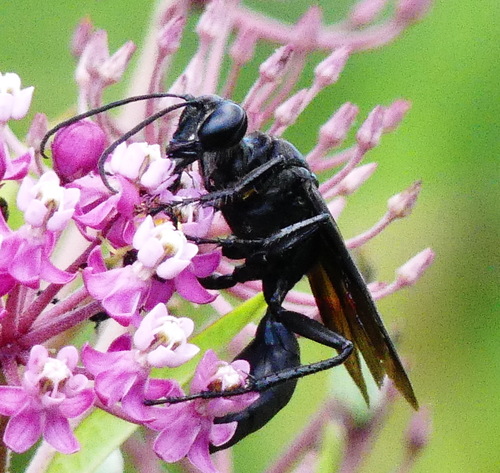
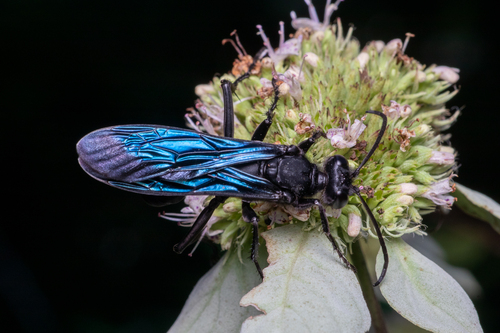
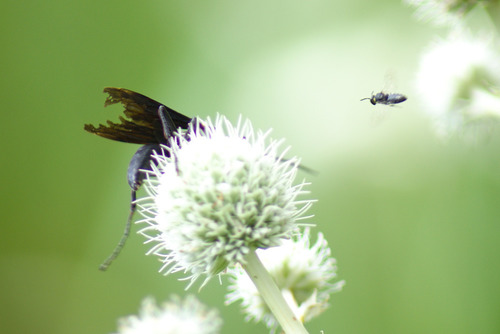
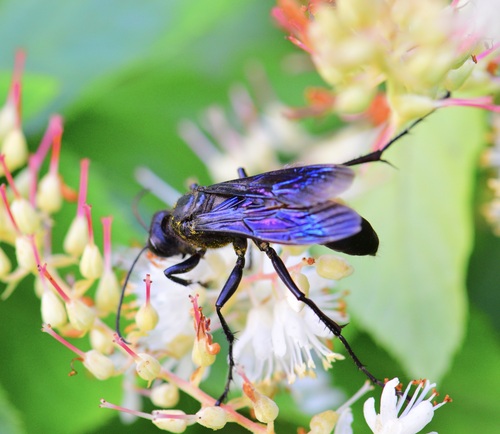
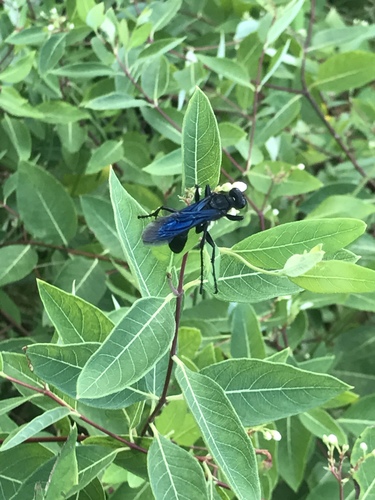
More bees, wasps & ants
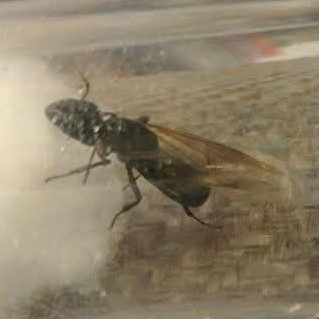
Bites and formic acid
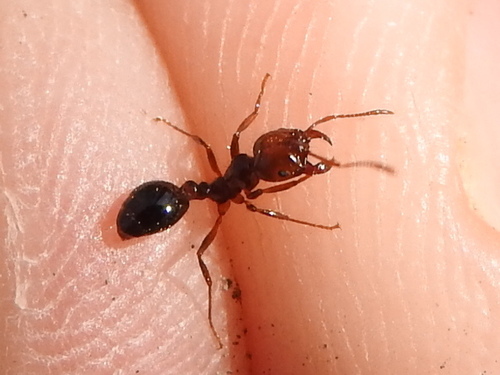
Painful sting
Stinging insect
Can sting
Can sting
Can sting
This guide was written with AI assistance and fact-checked, last updated 2026-10-10. Identification from photos is never certain: don't handle insects you can't identify, and get medical advice for bites, stings or allergic reactions. More about the great black wasp: iNaturalist, Wikipedia.