
Pavement ant
Tetramorium immigrans · Ants
Small, dark brown ants that nest under pavement, sidewalks and foundations and commonly forage indoors for sweets and proteins.
!Is the pavement ant dangerous?
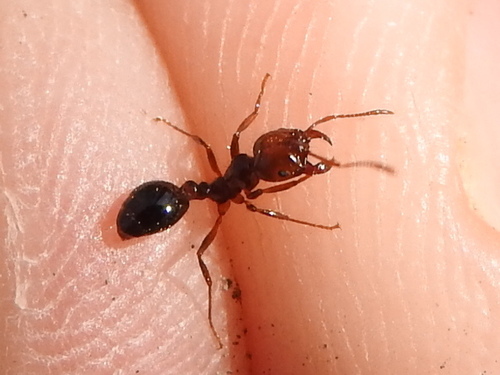
No. Pavement ants do not have dangerous venom. Workers can pinch with their mandibles and have a tiny sting that rarely penetrates human skin, causing at most a brief, mild irritation for most people. Bites and stings are rarely medically significant. Clean the area if skin is broken and seek medical care if an allergic reaction occurs.
Pets
Generally not dangerous to pets. Large numbers can annoy pets or occasionally get into pet food. If pets have allergic sensitivity, watch for itching or swelling; consult a veterinarian if severe.
📖Overview
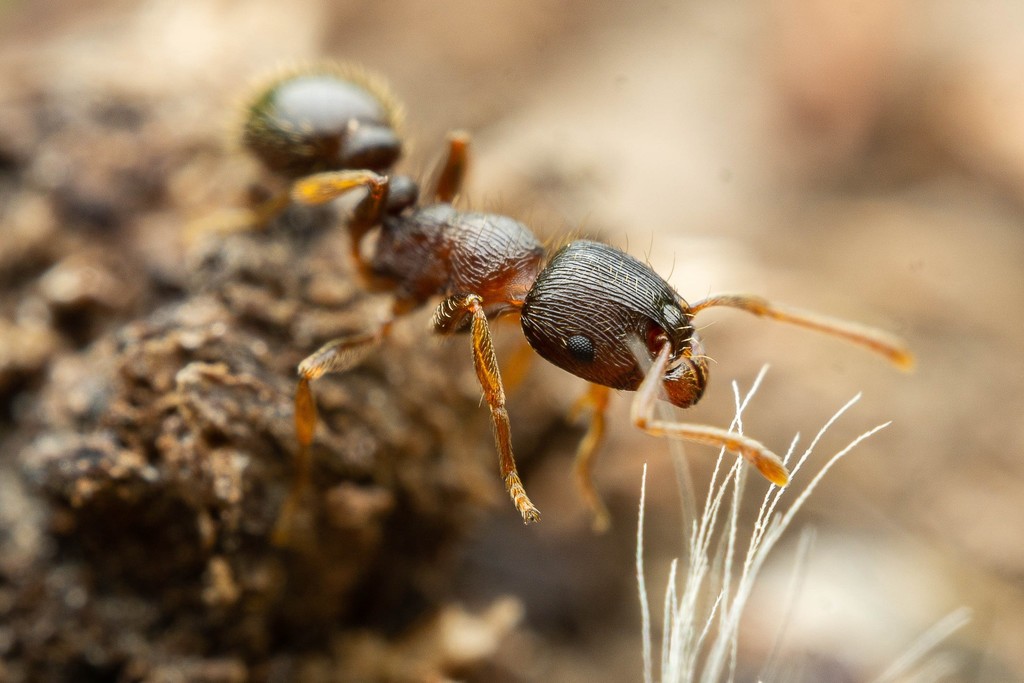
Tetramorium immigrans, commonly called the pavement ant, is a small, ground‑nesting ant originally from Eurasia and now widespread in temperate urban and suburban areas worldwide. They build colonies in cracks in pavement, under stones, under building foundations and in lawns. Pavement ants forage widely for sugary and protein foods and are a frequent nuisance pest in homes, restaurants and other buildings.
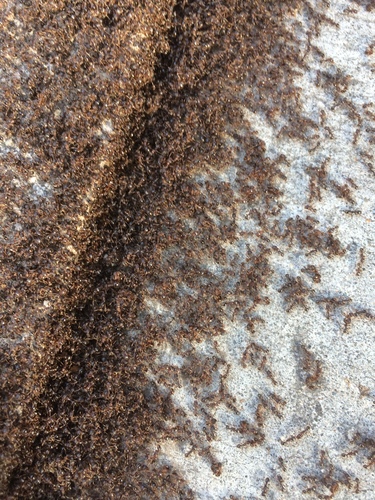
Colonies vary in size from a few hundred to many thousand workers; some populations form single‑queen (monogyne) colonies, while others can have multiple queens. They are most active in warm months and can be seen forming characteristic trails from nest entrances to food sources on sidewalks and along foundations.
🔍How to identify a pavement ant
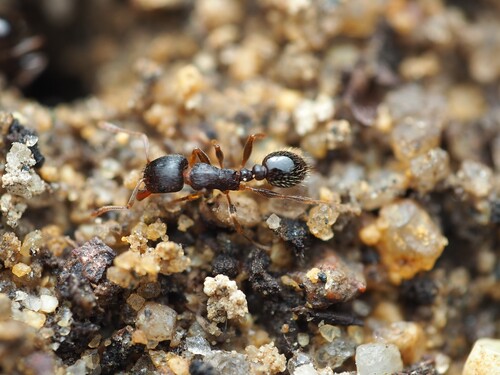
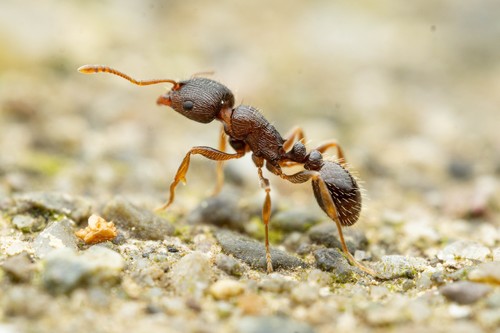
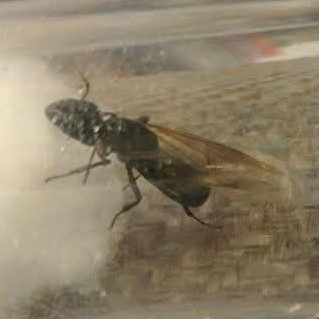
Workers are small (about 2.5-4 mm), uniformly brown to dark brown with a slightly darker head and gaster (abdomen). The head and thorax have fine sculpturing (parallel ridges) and the mesosoma (middle section) has two short spines near the rear. The petiole (waist) has two distinct nodes. Antennae have 12 segments with a three‑segmented club. Queens are larger (6-8 mm) and winged or have wing scars if mated.
- Small workers 2.5-4 mm, uniformly brown to dark brown with a slightly darker gaster.
- Two petiole nodes (two-segmented waist) and two short spines on the rear of the mesosoma.
- Head and thorax show fine parallel sculpturing; antennae with 12 segments and a 3-segmented club.
- Nests in cracks in pavement, along foundations and under stones; look for worker trails at nest entrances.
Lookalikes
Tetramorium caespitum (old-world pavement ant) Tetramorium caespitum
Very similar and historically confused with T. immigrans; microscopic examination of sculpturing and genetic tests are used by specialists. In many regions T. immigrans is the introduced taxon.
Little black ant Monomorium minimum
Smaller (about 1.5-2 mm), shiny jet black and smooth, lacking the ridged sculpturing and the pair of spines at the rear of the thorax seen in pavement ants.
Yellow‑brown garden ant Lasius neoniger
Larger, smoother body with different petiole shape and lacking the two mesosoma spines; usually found in lawns rather than pavement cracks.
↻Life cycle
Egg
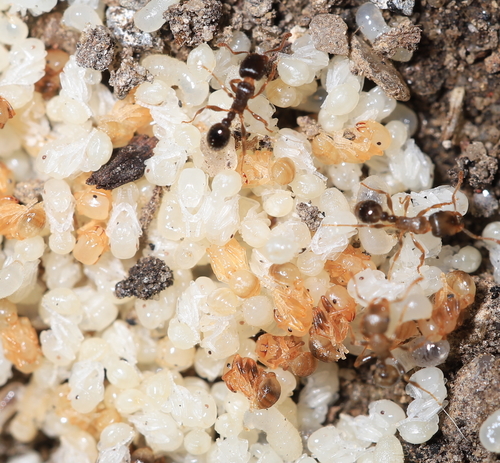
Tiny, oval, white eggs laid by the queen; eggs hatch into larvae in about 1-2 weeks depending on temperature and colony nutrition.
Larva
Legless, grub‑like larvae that are fed and cared for by workers. Larval development takes days to weeks depending on resources and temperature.
Pupa
Pupae may be enclosed in a thin cocoon; during this stage the ant transforms into the adult form.
Adult
Workers (sterile females) forage, care for brood and nest; reproductives (winged males and queens) leave for mating flights, after which queens start new colonies or join existing ones.
🍃Diet and predators
Young eat
Fed by workers on regurgitated liquids, sugars and protein-rich prey or insect parts.
Adults eat
Omnivorous: collect sweets (nectar, honeydew, sugary foods), proteins (insects, meats), and oils; in buildings they forage for crumbs, spilled drinks and pet food.
Predators of the young
Predators include spiders, other ant species, small mammals and parasitoids.
Predators of adults
Birds, larger ants, spiders, centipedes and insectivorous mammals prey on workers.
🌱Effect on plants and gardens
Pavement ants do not feed on living plants and are not major agricultural pests. They can tend aphids or other sap‑feeding insects, indirectly promoting plant pests in small cases.
How to get rid of pavement ants
Use a combination of sanitation (remove food sources, store food in sealed containers), exclusion (seal cracks and entry points around foundations and windows), and baits (sugar or protein baits with slow‑acting insecticides such as borax or commercial ant baits) placed along trails. For outdoor nests: pouring boiling water into visible nest cracks can kill some workers and queens but may not eliminate large colonies. For heavy or persistent infestations, consider a licensed pest control professional. Avoid spraying random contact insecticides indoors as they can repel workers and cause colonies to relocate.
📍Where and when to find it
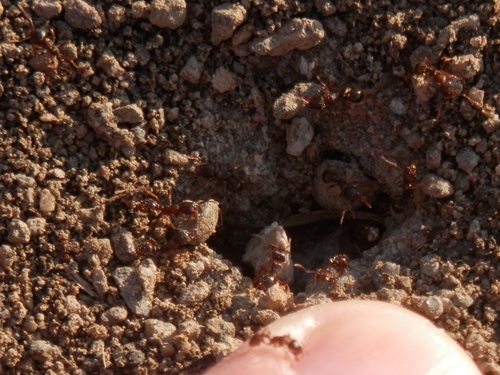
Look for worker trails on sidewalks, curbs, driveways and along building foundations; nests in cracks in pavement, under stones, under concrete slabs and in lawns. Inside buildings they appear along baseboards, in kitchens and near food sources.
Best time
Spring through early fall; daytime in warm weather but may forage at night if hot.
Observation tips
Follow worker trails back to their entry point to locate nests or where to place baits. Photograph ants with a macro lens or phone close to the ground; use indirect light to show body sculpturing.
✨Fun facts
- Pavement ants often create long foraging trails between nest entrances and food sources that can be seen on sidewalks and curbs.
- They commonly nest under pavement and can exploit tiny cracks—hence the common name.
- Pavement ant colonies can be flexible in social structure: some populations have a single queen while others have multiple queens, which affects colony size and behavior.
?Frequently asked questions
Do pavement ants bite?
Workers can pinch with their mandibles and have a tiny sting that rarely penetrates skin. Any irritation is brief and not dangerous for most people.
Are pavement ants harmful to my house?
They are mostly a nuisance: they forage for food indoors and can contaminate food. They rarely damage structures but may nest in wall voids or insulation in some cases.
Why are pavement ants in my house?
They are attracted to accessible food (sugary and protein items), crumbs, spills and pet food. Indoor access is often through gaps around foundations, doors or utility lines.
How can I get rid of pavement ants?
Combine sanitation and exclusion with baits placed on trails. Use slow‑acting sugar or protein baits (borax or commercial ant baits) so workers carry poison back to the colony. For large infestations, hire a pest control professional.
Will crushing a trail of pavement ants stop them?
Crushing a few ants only removes workers and may scatter the trail pheromones. It does not remove the colony; baiting and nest treatment are more effective.
📷Photos of the pavement ant
More bees, wasps & ants
Bites and formic acid
Painful sting
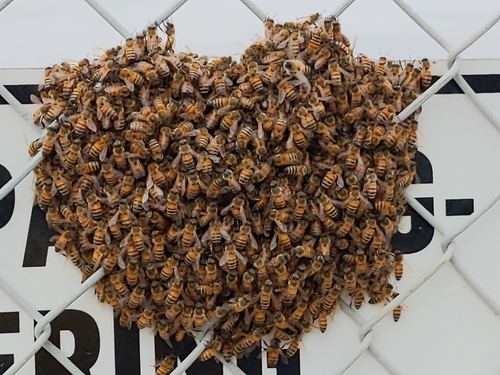
Stinging insect
Can sting
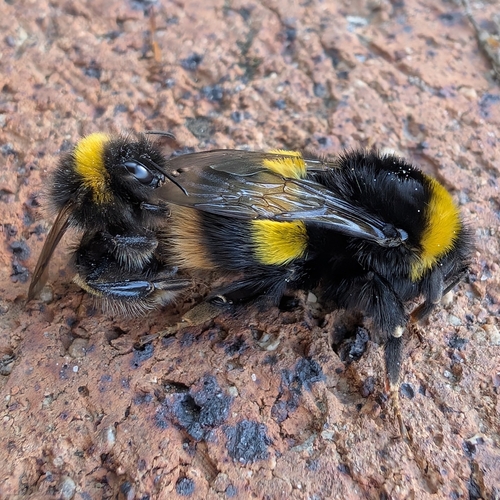
Can sting
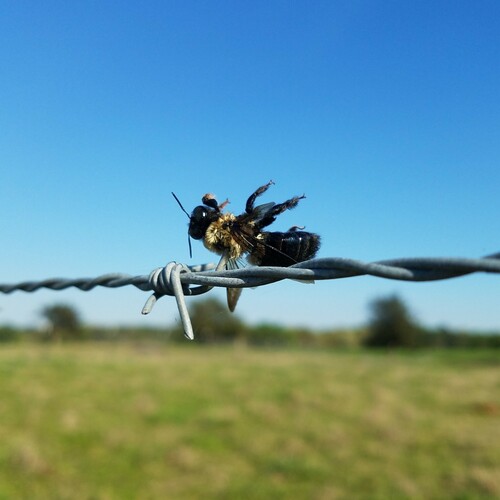
Can sting
This guide was written with AI assistance and fact-checked, last updated 2026-10-10. Identification from photos is never certain: don't handle insects you can't identify, and get medical advice for bites, stings or allergic reactions. More about the pavement ant: iNaturalist, Wikipedia.