
Blue mud dauber
Chalybion californicum · Mud daubers
A slender, metallic blue wasp that nests in mud and provisions nests with spiders; generally non-aggressive and beneficial around homes.
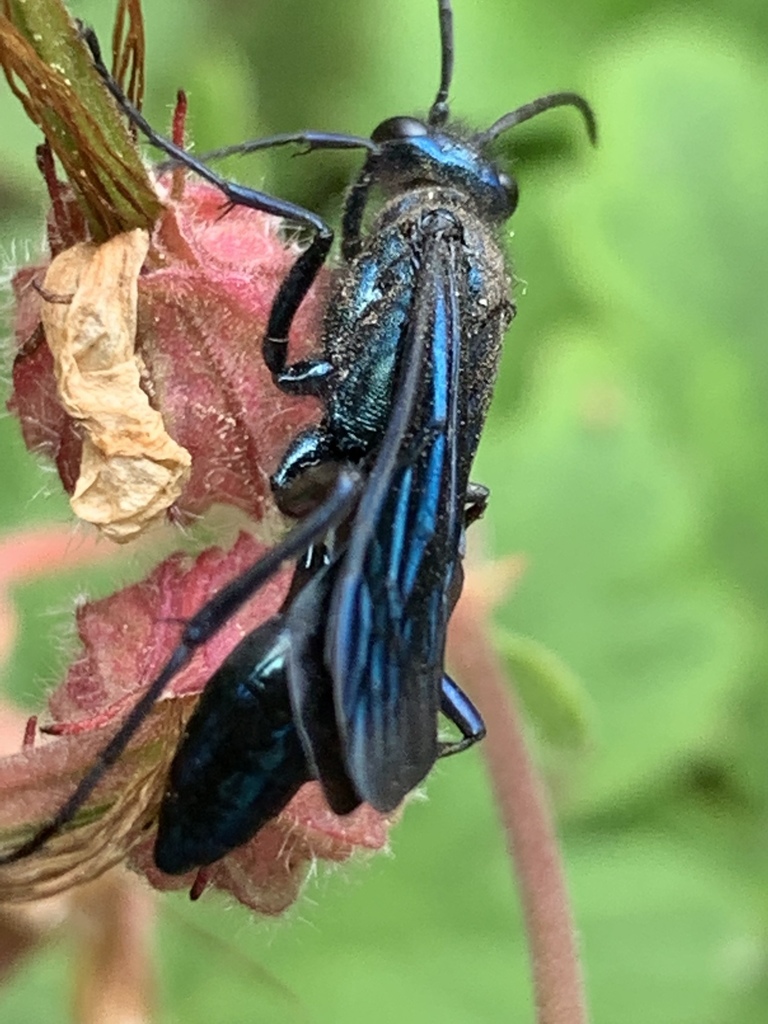
!Is the blue mud dauber dangerous?
Only mildly. Blue mud daubers are solitary and not aggressive. Females can sting if directly handled or crushed; stings are typically mild and similar to other solitary wasp stings. For localized stings: wash, apply a cold pack, and use an antihistamine or topical steroid if needed. If signs of a severe allergic reaction appear (difficulty breathing, swelling of the face or throat, dizziness or widespread hives), use an epinephrine auto-injector if available and call emergency services immediately.
Pets
Generally not a threat to pets. A bite/sting could cause localized pain or swelling if a pet disturbs or catches a wasp; allergies in pets are rare but possible—seek veterinary care for severe reactions.
📖Overview
Chalybion californicum is a solitary mud-dauber wasp widespread in North America. Females build or refurbish small mud cells in sheltered sites (eaves, garages, rock crevices), capture spiders to provision each cell, lay a single egg, and seal the cell. Adults feed on nectar and visit flowers. They are solitary (no colony, no workers) and are usually non-aggressive toward people unless handled or trapped.
🔍How to identify a blue mud dauber
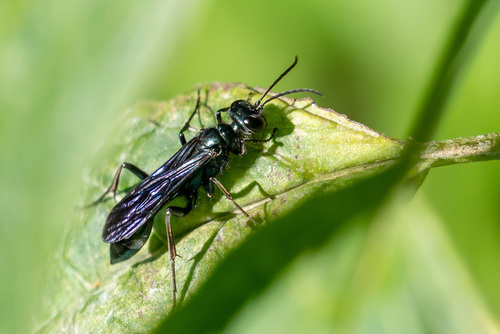
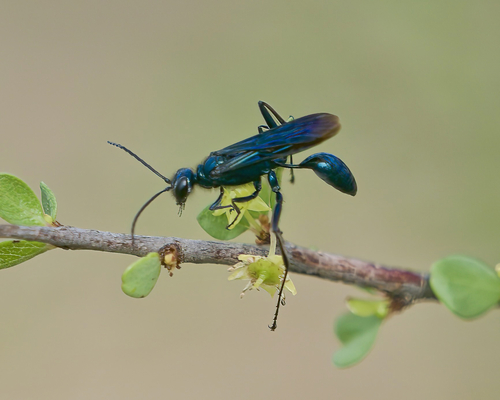
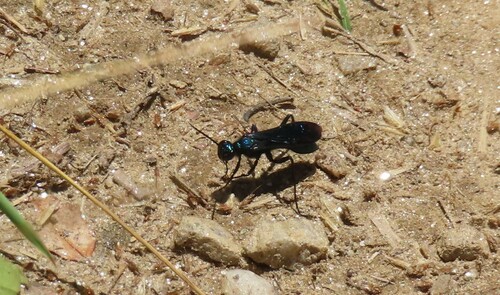
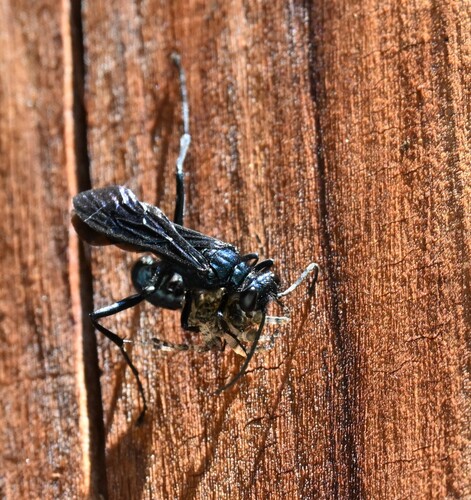
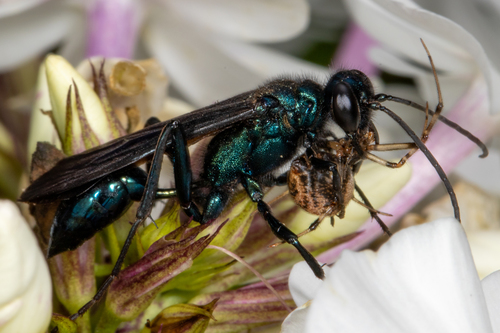
Adults are slender, elongated wasps 10-20 mm long with a metallic blue to blue-black body and narrow 'waist'. The thorax and abdomen are glossy blue; legs are dark. Wings are smoky with a bluish iridescence. Females and males look similar, though males may have slimmer abdomens. They differ from larger, bulkier paper wasps by their narrow profile and metallic sheen.
- Metallic blue, slender body 10-20 mm long with a narrow 'waist'.
- Builds small mud cells or reuses cells in sheltered locations (eaves, garages, rock crevices).
- Visits flowers for nectar; often seen carrying spiders to a nest.
- Unlike social paper wasps, they are solitary and do not form large colonies or paper combs.
Lookalikes
Black and yellow mud dauber Sceliphron caementarium
Sceliphron caementarium is yellow-and-black and builds clustered tubular mud cells; Chalybion californicum is metallic blue and often reuses or refurbishes old mud cells.
Other Chalybion species Chalybion spp.
Other species in the genus are similar in color but differ in size, regional range, and small structural details visible to specialists.
↻Life cycle
Egg
A single egg is laid on a paralyzed spider inside a mud cell.
Larva
Larvae hatch and feed on the stored paralyzed spiders until fully grown.
Pupa
Larvae pupate inside the sealed mud cell and metamorphose into adults.
Adult
Adults emerge, feed on nectar, find mud and nesting sites, and reproduce; solitary behavior, each female builds or reuses nests.
🍃Diet and predators
Young eat
Paralyzed spiders provided by the mother (various small spiders).
Adults eat
Flower nectar, honeydew and sometimes water.
Predators of the young
Parasitic wasps and flies that invade mud nests, ants that may raid nests, and nest-destroying birds or rodents.
Predators of adults
Birds, larger predatory insects, spiders (occasionally) and mantids.
🌱Effect on plants and gardens
Adults visit flowers for nectar and can act as incidental pollinators. Larvae consume spiders, which reduces spider numbers but is beneficial for gardeners because these wasps help control pest spiders.
📍Where and when to find it
Look under eaves, inside garages, sheds, rock overhangs, under bridges, and on vertical sheltered surfaces where mud cells are attached. Adults visit flowers and sometimes carry spiders to nests.
Best time
Spring through early fall; warm, sunny daytime hours are best for observing adults.
Observation tips
Photograph from a distance to avoid disturbing them. Check for small mud tubes or clustered cells in sheltered corners to find nests; approach at dusk if you must inspect active nests.
✨Fun facts
- Many blue mud daubers reuse or refurbish old mud nests rather than building new ones from scratch.
- They are valuable biological control agents because each nest removes several spiders from the local area.
- Despite their shiny blue appearance, blue mud daubers are solitary and do not defend a colony like social wasps.
?Frequently asked questions
Are blue mud daubers dangerous?
No, they are not aggressive and rarely sting people. Stings are possible if the wasp is handled or trapped against skin; reactions are usually mild.
Do blue mud daubers sting?
Yes, females have a sting but use it mainly to paralyze spiders. They seldom sting people unless provoked.
Why is a blue mud dauber in my house or garage?
They seek sheltered sites with overhangs, eaves, garages or crevices to build mud cells and need nearby mud and water to make the nests.
How do I get rid of blue mud daubers?
Best approach: remove mud nests (wear gloves) and seal entry/sheltered spots to prevent re-nesting. Reduce nearby mud and standing water. Insecticides are rarely necessary; if nests are active and removal is needed, wait until dusk when wasps are less active, or contact pest control if you have allergies.
Do they eat spiders or make webs?
Females capture and paralyze spiders to provision their nest cells; they do not spin webs.
Are they good for my garden?
Yes. Adults pollinate while feeding on nectar and their larvae reduce local spider populations, which can help control pest species.
📷Photos of the blue mud dauber
More bees, wasps & ants
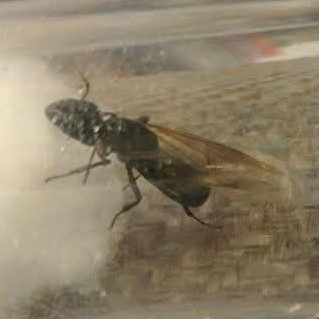
Bites and formic acid
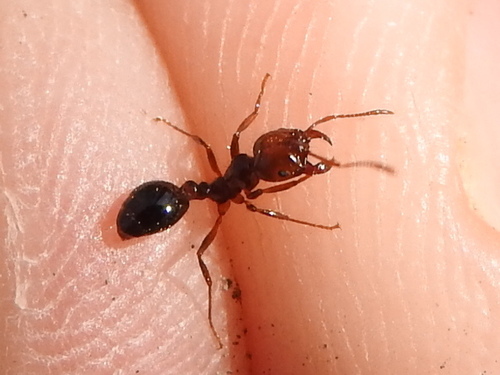
Painful sting
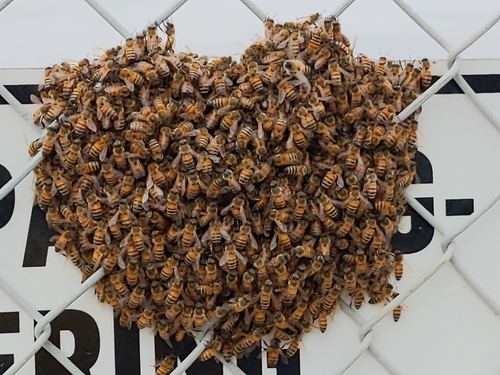
Stinging insect
Can sting
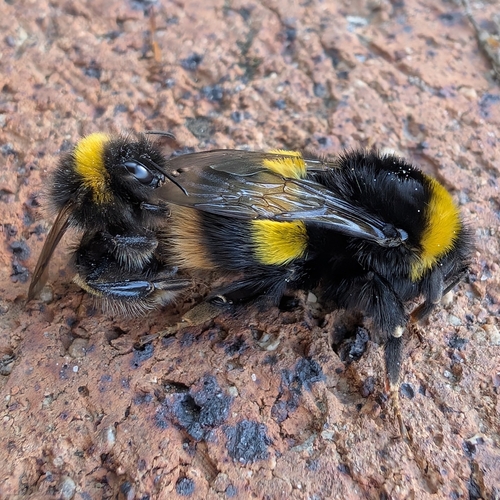
Can sting
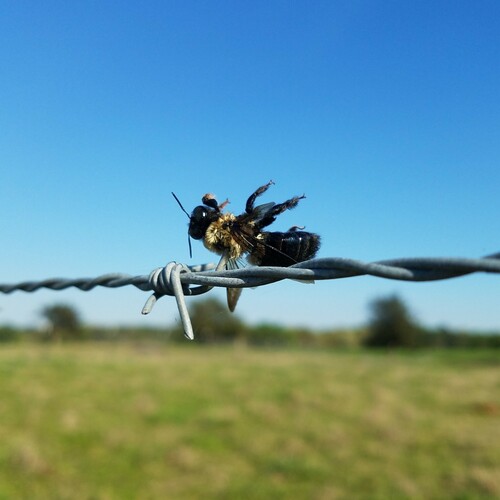
Can sting
This guide was written with AI assistance and fact-checked, last updated 2026-10-10. Identification from photos is never certain: don't handle insects you can't identify, and get medical advice for bites, stings or allergic reactions. More about the blue mud dauber: iNaturalist, Wikipedia.