
Black and yellow mud dauber vs Blue mud dauber
These two are easy to mix up. Here's how to tell a black and yellow mud dauber from a blue mud dauber, and whether either one bites or stings.
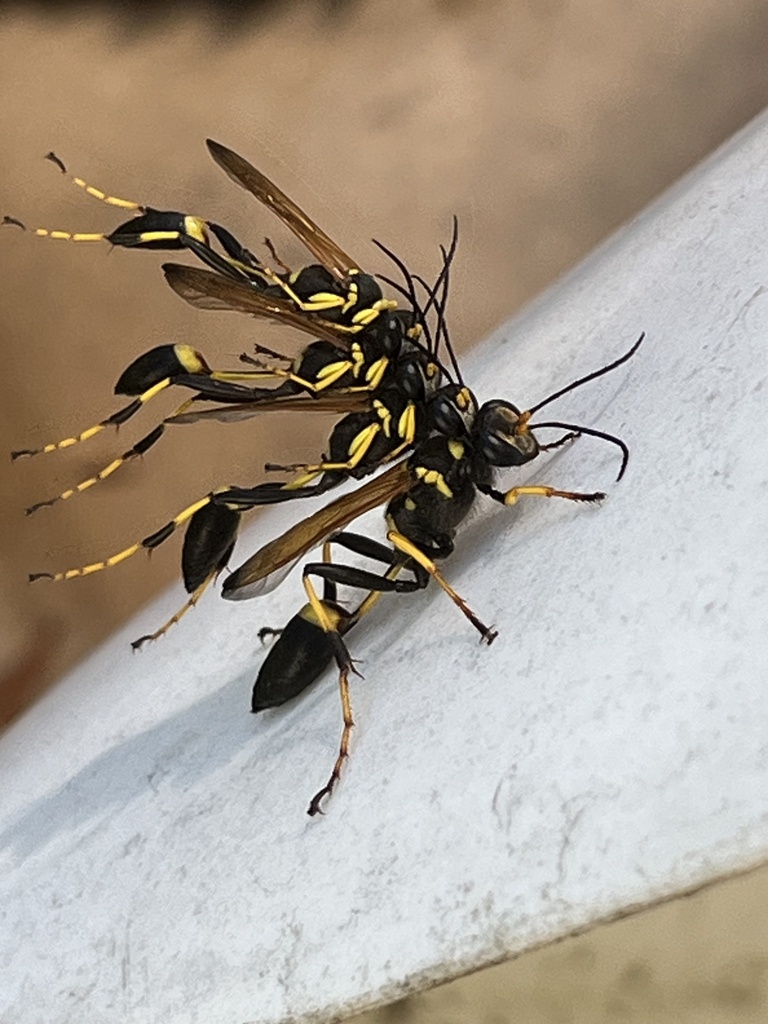
Black and yellow mud dauber
Sceliphron caementarium
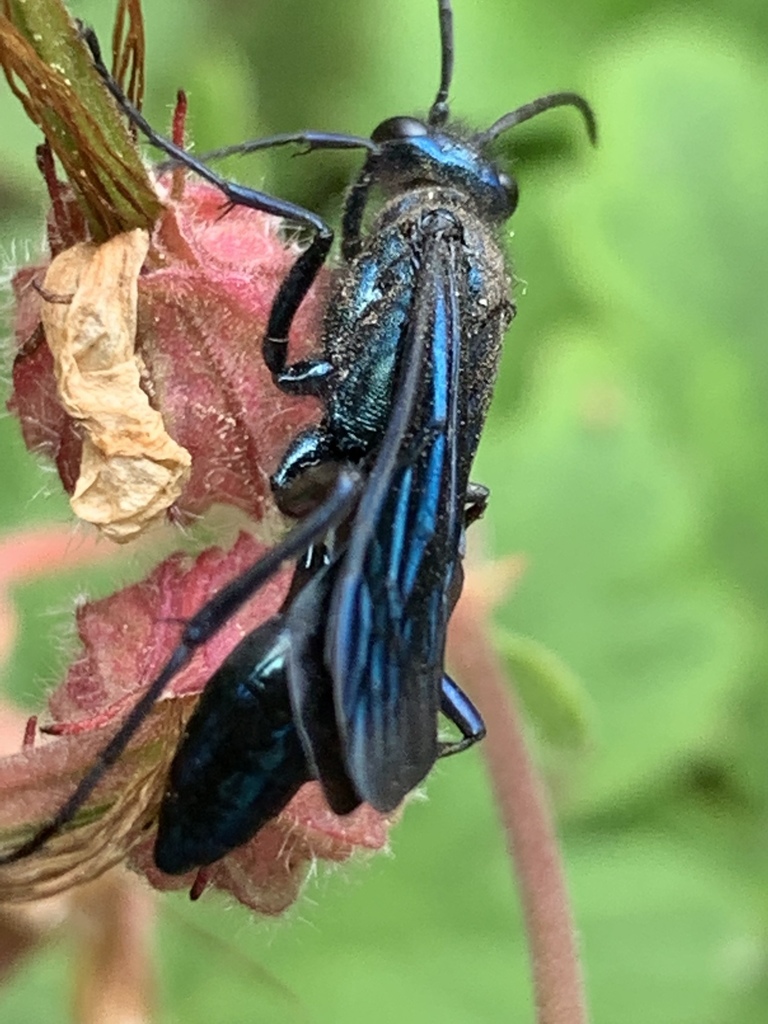
Blue mud dauber
Chalybion californicum
≠The key differences
Chalybion californicum is metallic blue-black rather than black-and-yellow and often uses reused mud cells; Sceliphron is more distinctly banded yellow and black.
Sceliphron caementarium is yellow-and-black and builds clustered tubular mud cells; Chalybion californicum is metallic blue and often reuses or refurbishes old mud cells.
⚖︎Side by side
| Black and yellow mud dauber | Blue mud dauber | |
|---|---|---|
| To humans | Mild sting | Can sting |
| Size | About 20-28 mm body length | 10-20 mm body length |
| Colours | Black, Yellow, Brown (wings) | Metallic blue, Blue-black, Dark brown (legs) |
| Family | Sphecidae | Sphecidae |
| Habitat | Human structures, cliffs, rock overhangs, tree trunks, sheltered outdoor surfaces in urban, suburban and rural areas | Open and semi-sheltered sites near buildings, cliffs, rock outcrops, woodpiles and gardens; they need mud sources and sheltered nooks for nests. |
| Range | Native to North and Central America (from southern Canada through the United States and Mexico); introduced to parts of Europe, Pacific islands and other regions | Widespread across North America from southern Canada through the United States into northern Mexico; introduced to Hawaii. |
| Active | Warm months (spring through early fall); diurnal (active during daylight) | Spring to early fall in temperate zones; most active during warm daylight hours. |
| Pest? | No | No |
🔍How to spot a black and yellow mud dauber
- Slender, thread-waisted body with a narrow petiole between thorax and abdomen
- Black body with yellow markings, a long yellow thread-like waist and largely yellow legs
- Mud tubular nests made of smooth, cylindrical cells attached to sheltered vertical surfaces
- Solitary behaviour—no paper-comb nests or large colonies like social wasps
🔍How to spot a blue mud dauber
- Metallic blue, slender body 10-20 mm long with a narrow 'waist'.
- Builds small mud cells or reuses cells in sheltered locations (eaves, garages, rock crevices).
- Visits flowers for nectar; often seen carrying spiders to a nest.
- Unlike social paper wasps, they are solitary and do not form large colonies or paper combs.
?Frequently asked questions
What is the difference between a black and yellow mud dauber and a blue mud dauber?
Chalybion californicum is metallic blue-black rather than black-and-yellow and often uses reused mud cells; Sceliphron is more distinctly banded yellow and black. Sceliphron caementarium is yellow-and-black and builds clustered tubular mud cells; Chalybion californicum is metallic blue and often reuses or refurbishes old mud cells.
Is a black and yellow mud dauber or a blue mud dauber more dangerous?
Black and yellow mud dauber: Mild sting. Blue mud dauber: Can sting. Females can sting but are not aggressive; stings are typically mild and brief. Blue mud daubers are solitary and not aggressive.
Identification from photos is never certain: don't handle insects you can't identify, and get medical advice for bites, stings or allergic reactions.