
Blue-winged scoliid wasp
Scolia dubia · Scoliid wasps
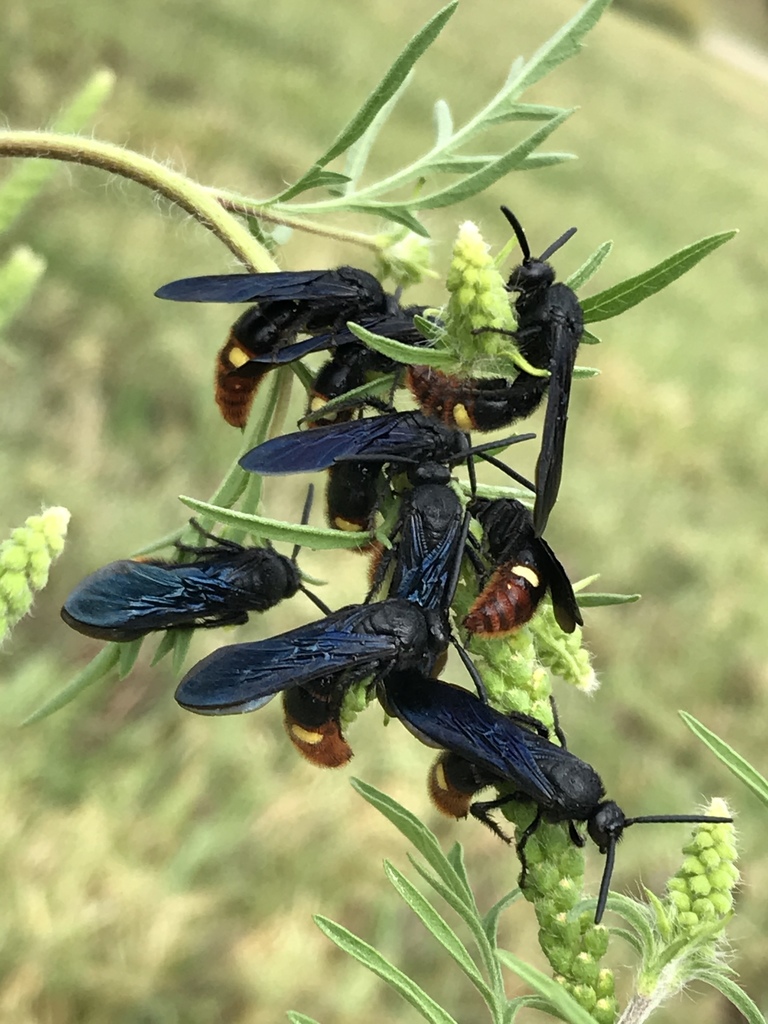
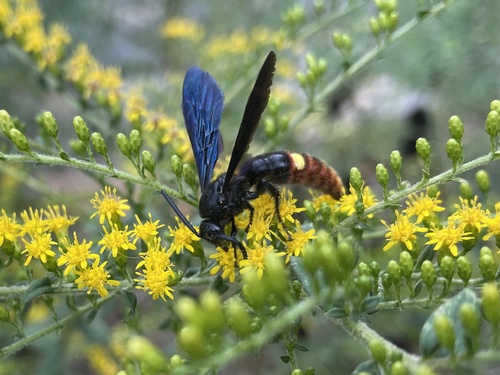
A solitary, robust wasp with metallic blue-black wings and a reddish-brown rear abdomen marked with two yellow spots that parasitizes scarab beetle grubs and visits flowers for nectar.
!Is the blue-winged scoliid wasp dangerous?
Only mildly. Scolia dubia is capable of stinging. Solitary scoliids are not aggressive but a sting can be painful and may cause local swelling or allergic reactions in sensitive people. Avoid handling the wasp. If stung, wash the area (wasps do not leave a stinger behind), apply a cold pack to reduce swelling, and take an antihistamine if needed. If signs of a severe allergic reaction appear, such as difficulty breathing, swelling of the face or throat, widespread hives, or fainting, use an epinephrine auto-injector if one is available and call emergency services immediately.
Pets
Stings can be painful to pets. Small animals could be more affected if stung multiple times; watch for swelling or allergic signs and consult a veterinarian if concerned.
📖Overview
Scolia dubia is a solitary parasitic wasp common across much of North America. Females search soil for scarab beetle larvae (white grubs), sting and paralyze a host, lay an egg on it, and seal the burrow; the developing wasp larva consumes the paralyzed grub. Adults feed on nectar and pollen and are often seen visiting flowers, so they are useful incidental pollinators. They are not social and do not form colonies or defend nests like yellowjackets.
🔍How to identify a blue-winged scoliid wasp
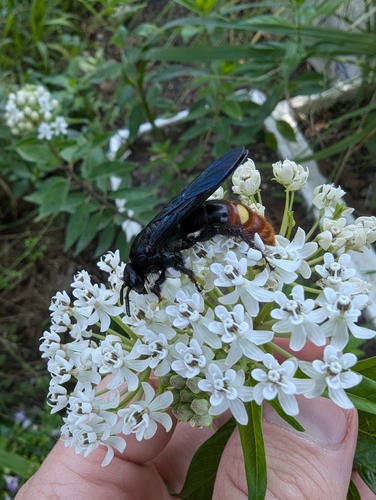
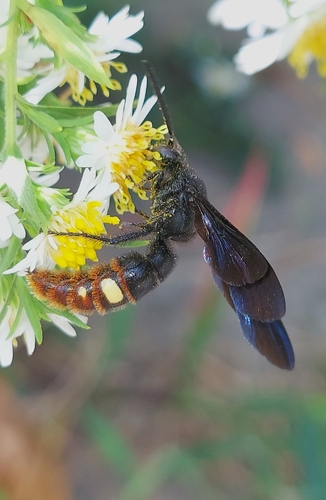
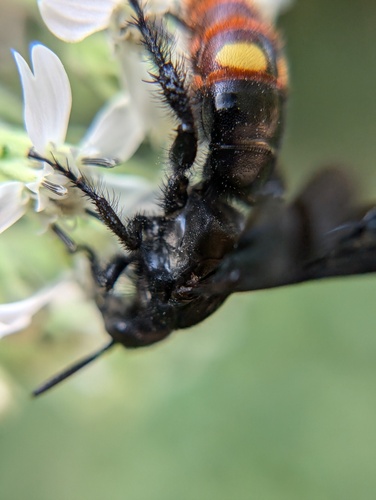
Adults are stout and hairy with a glossy black or very dark brown body and the rear half of the abdomen reddish-brown to rusty orange, marked with two prominent yellow spots. The wings are characteristically dark with a blue or bluish-black iridescent sheen when viewed in light. Males are slightly smaller and sometimes have different abdominal markings or extra pale spots. Antennae are threadlike; the wasp lacks the narrow 'waist' seen in many other wasp families, giving it a compact appearance.
- Look for a compact, robust wasp with a black body, the rear half of the abdomen reddish-brown and two bright yellow spots on it.
- Wings are dark with a distinctive blue to blue-black iridescent sheen in sunlight.
- Females often seen on ground searching for grubs; adults commonly visit flowers during the day.
- No large social nest or paper combs nearby — solitary behavior (no colony nest material).
Lookalikes
Yellowjacket Vespula spp.
Yellowjackets are social, have narrow waists and bold yellow-and-black markings; Scolia dubia is solitary, stouter, and has a dark body with a reddish-brown, yellow-spotted rear abdomen and blue-tinged wings.
Mud dauber Sceliphron spp. and related genera
Mud daubers are slender with a very narrow waist and build mud nests; Scolia dubia is more robust, hairier and does not build mud nests.
↻Life cycle
Egg
Laid on or near a paralyzed scarab beetle larva in an underground burrow prepared by the female.
Larva (grub-eating)
The wasp larva feeds on the living, paralyzed beetle grub, consuming it over days to weeks as it grows.
Pupa
After finishing feeding, the larva pupates in the host burrow and transforms into the adult inside a cocoon.
Adult (nectar-feeding)
Emerging adults feed on nectar and mate; females then search for hosts to repeat the cycle.
🍃Diet and predators
Young eat
Parasitic on scarab beetle larvae (white grubs), especially green June beetle and Japanese beetle grubs.
Adults eat
Nectar and sometimes pollen from a variety of flowering plants.
Predators of the young
Ground-dwelling predators and parasitoids that encounter the buried larvae or cocoons; exact predators vary and are not well documented.
Predators of adults
Birds, spiders, robber flies and other insectivores may take adults.
🌱Effect on plants and gardens
Adults visit a variety of flowering plants for nectar and can act as incidental pollinators. Larvae do not feed on plants; they parasitize scarab beetle grubs, which are often lawn and turf pests.
📍Where and when to find it
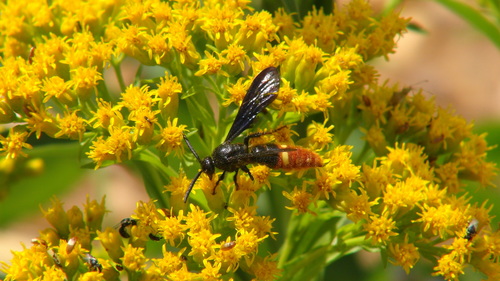
Adults on flowers, especially in sunny open areas; females walking on soil looking for grubs. Look in lawns, pastures, gardens and edges of wooded areas.
Best time
Late spring through summer on warm, sunny afternoons.
Observation tips
Photograph them on flowers from a short distance; watch females walking on soil to spot host-seeking behavior. Use a macro lens and avoid sudden movements to prevent provoking a defensive sting.
✨Fun facts
- Females are beneficial in lawns because they hunt white grubs—many of which are turf pests—and use them as food for their offspring.
- Despite their striking colors and size, scoliid wasps are solitary and much less likely to sting than social wasps unless handled or restrained.
- The metallic blue sheen on the wings can be quite visible in sunlight and helps distinguish them from other black-and-red wasps.
?Frequently asked questions
Do blue-winged scoliid wasps sting people?
Yes, they can sting if handled or trapped against the skin. They are not aggressive but the sting can be painful; treat stings like other wasp stings, and call emergency services for signs of a severe allergic reaction.
Are blue-winged scoliid wasps useful?
Yes. Adults pollinate flowers while feeding on nectar, and females help control turf pests by parasitizing scarab beetle grubs.
Why is a scoliid wasp in my yard or garden?
They visit flowers for nectar and females search lawns and loose soil for scarab grubs to provision their offspring, so they're commonly seen in gardens, lawns and meadows.
How can I get rid of them?
Because they are solitary and beneficial, control is rarely necessary. To reduce encounters, avoid disturbing them and manage the lawn grubs that attract females. If a safety concern exists, contact a pest professional — do not spray flowering plants where adults feed.
Where do scoliid wasps live and nest?
They do not build communal nests. Females lay eggs on paralyzed beetle larvae in underground burrows; adults rest on vegetation, flowers or low branches.
📷Photos of the blue-winged scoliid wasp
More bees, wasps & ants
Bites and formic acid
Painful sting
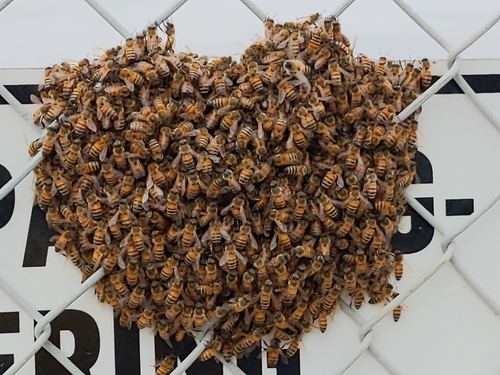
Stinging insect
Can sting
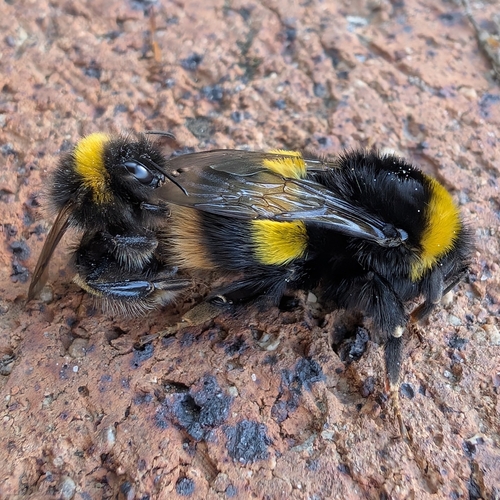
Can sting
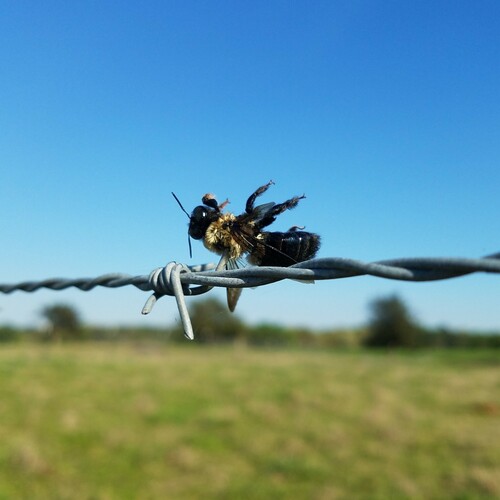
Can sting
This guide was written with AI assistance and fact-checked, last updated 2026-10-10. Identification from photos is never certain: don't handle insects you can't identify, and get medical advice for bites, stings or allergic reactions. More about the blue-winged scoliid wasp: iNaturalist, Wikipedia.