
Dark rover ant
Brachymyrmex patagonicus · Rover ants
A very small, dark brown invasive ant that forms large, multi-queen colonies and is a common household nuisance in warm regions.

!Is the dark rover ant dangerous?
No. Dark rover ants do not have a harmful sting and are not known to transmit serious diseases. They can contaminate food and surfaces in homes. For bites: workers are tiny and rarely bite people; if a bite occurs it causes little or no pain and no medical treatment is normally needed. For contamination concerns, discard food they contact and clean surfaces with household disinfectant.
Pets
Generally not dangerous to pets. Large numbers can irritate animals by crawling on them or contaminating pet food; clean up spilled food and store pet food in sealed containers.
📖Overview
Brachymyrmex patagonicus is a tiny, inconspicuous ant species native to South America that has become an invasive, widespread nuisance in warm urban and suburban areas. Colonies are often multi-queen (polygynous) and may contain many small satellite nests, which helps the species spread and persist in buildings and landscaped areas. They forage for sweets, honeydew and protein and are frequently found trailing along baseboards, windowsills, irrigation lines and plant stems.
These ants are not aggressive and do not have a medically significant sting or venom. They are primarily a nuisance pest because they contaminate food, invade structures and can be difficult to control due to frequent nest relocation and multiple queens. Management focuses on sanitation, exclusion and baiting strategies suited to small sugar-feeding ants.
🔍How to identify a dark rover ant
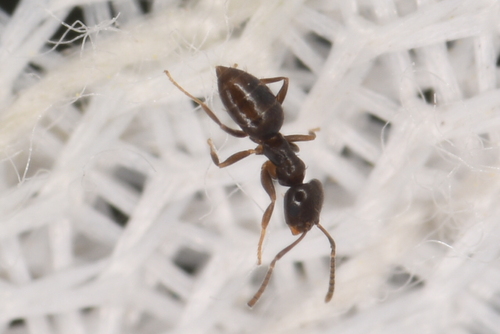
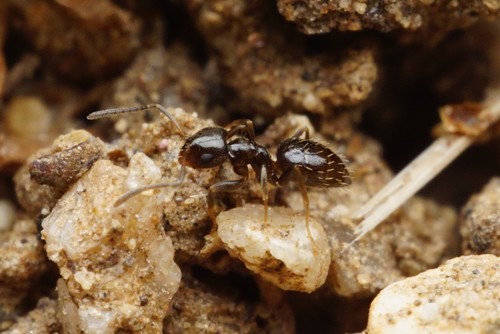
Workers are very small (about 1.3-2.5 mm long), uniformly dark brown to nearly black, with a slightly shiny body and a rounded gaster. Antennae are 9-segmented and legs are relatively short. They lack the pronounced spines or sculpturing seen on many other ants; overall appearance is plain and glossy. Because of their small size and uniform dark colour, they can be mistaken for other small brown ants but their tiny size and smooth, shining gaster are helpful ID clues.
- Very small workers 1.3-2.5 mm long — smaller than pavement ants and about the size of pharaoh ants.
- Uniform dark brown, slightly shiny body without strong sculpturing; a single node in the waist.
- Often travel in slow, diffuse trails near baseboards, irrigation lines, landscaping mulch and potted plants.
- Nests are small and scattered; look under stones, in soil, under bark and inside wall voids near moisture sources.
Lookalikes
Pharaoh ant Monomorium pharaonis
Pharaoh ants are similar in size but pale yellow to light brown with a darker abdomen and a two-segmented waist; dark rover ants are uniformly dark brown with a one-segmented waist.
Odorous house ant Tapinoma sessile
Slightly larger (about 2.4-3.3 mm) and dark brown to black, with a waist node hidden under the abdomen; it gives off a rotten-coconut smell when crushed, which dark rover ants do not.
↻Life cycle
Egg
Tiny white eggs laid by queens inside nests or protected cavities.
Larva
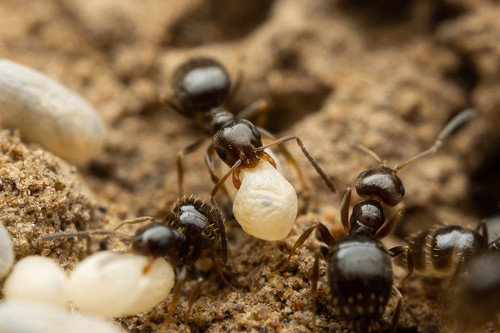
Grublike, legless larvae are fed and cared for by nurse workers.
Pupa
Pupae develop inside the nest; metamorphosis from larva to adult occurs within the pupal case.
Adult
Workers forage for food and care for brood; colonies have multiple queens and can form many small nests.
🍃Diet and predators
Young eat
Feed on regurgitated liquids and protein-rich foods provided by workers; exact natural diet not extensively documented.
Adults eat
Primarily sweets (nectar, honeydew, household sweet foods) plus small amounts of protein (insects, meat scraps) and oily foods.
Predators of the young
Predatory insects, spiders and other ants that raid nests.
Predators of adults
Other ant species, spiders, centipedes, and insectivorous birds/small predators in natural settings.
🌱Effect on plants and gardens
They tend to farm honeydew-producing insects (aphids, scale) and so can indirectly encourage those pests on ornamental plants. They do not directly damage healthy plant tissues.
How to get rid of dark rover ants
Reduce attractants: keep counters and floors free of crumbs and sticky residues, store food in sealed containers, clean pet feeding areas, remove honeydew sources by controlling aphids/scale. Seal entry points (cracks, gaps around pipes and doors). For active infestations use sugar-based baits (commercial ant baits formulated for sweet feeders) placed where ants forage; it may take several days for bait to eliminate nests because workers feed it to other colony members. In severe cases consult a licensed pest-control professional who can use targeted baits and residual treatments. Avoid broad-spectrum sprays as colonies often fragment and reappear.
📍Where and when to find it
Look along baseboards, near sinks, around window sills, in potted plants, under stones and mulch, and along irrigation lines. Check wall voids and other protected indoor spaces for nesting.
Best time
Best observed year-round in warm climates; activity often peaks on warm, humid days and during daylight hours but they also forage at night.
Observation tips
Follow foraging trails back toward entry points or nest sites, place a small drop of sugar water to attract workers for closer photos, and use a macro lens or close-up setting because workers are very small.
✨Fun facts
- Dark rover ants are tiny but form large, multi-queen colonies that can quickly become household pests.
- They often nest in wall voids and other protected indoor spaces, making control more challenging than for species with a single, obvious nest.
- Because they prefer sweets and honeydew, heavy ornamental plantings with sap-sucking pests can encourage infestations.
?Frequently asked questions
Are dark rover ants dangerous?
No — they are not venomous or aggressive toward people. They are primarily a nuisance because they contaminate food and invade structures.
Do dark rover ants bite or sting?
They rarely bite and do not have a medically significant sting. Any bite would be minor and cause little or no pain.
Why are dark rover ants in my house?
They enter homes seeking food (especially sweets) moisture and nesting sites. Nearby honeydew-producing insects on plants or moist landscaping can attract them.
How do I get rid of dark rover ants?
Remove food sources and honeydew producers, seal entry points, maintain cleanliness, and use sugar-based ant baits where ants are active. For large or persistent infestations contact a pest-control professional.
Where do dark rover ants live?
Native to South America; now established in warm regions worldwide including the southern United States and Caribbean. They nest in soil, under debris, in mulch, plant pots and inside buildings (wall voids, under flooring).
📷Photos of the dark rover ant

More bees, wasps & ants
Bites and formic acid
Painful sting
Stinging insect
Can sting
Can sting
Can sting
This guide was written with AI assistance and fact-checked, last updated 2026-10-10. Identification from photos is never certain: don't handle insects you can't identify, and get medical advice for bites, stings or allergic reactions. More about the dark rover ant: iNaturalist, Wikipedia.