
American pelecinid wasp
Pelecinus polyturator · Pelecinid wasps
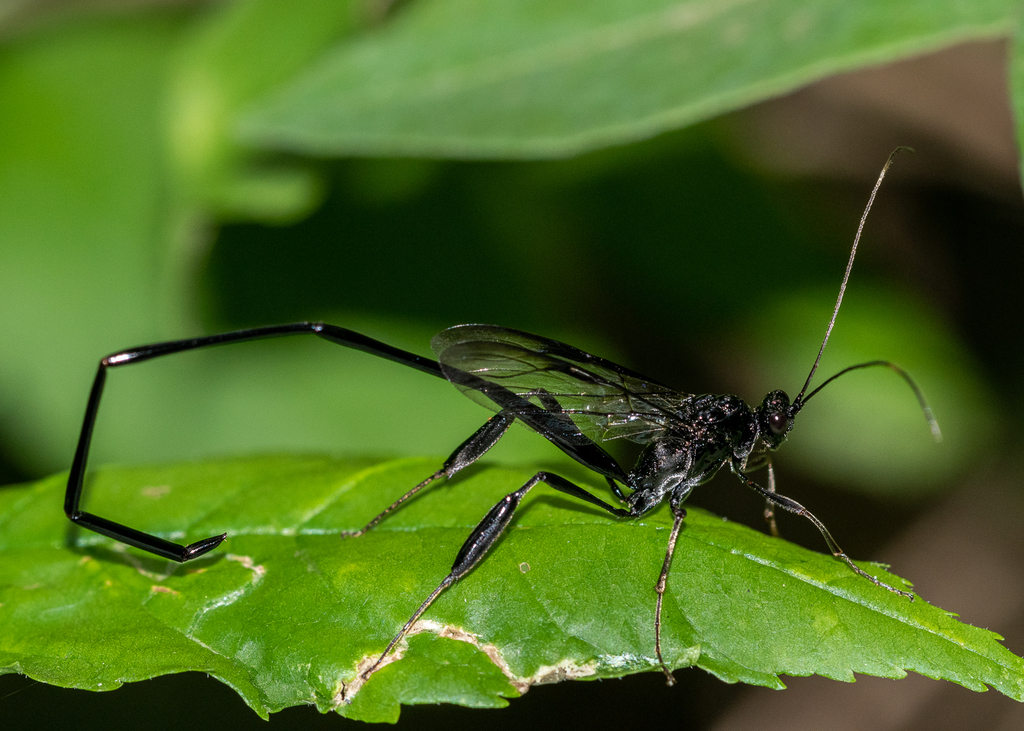
A glossy black wasp with a very long, tail-like abdomen; females are solitary parasitoids of scarab beetle larvae and are harmless to people.
!Is the American pelecinid wasp dangerous?
No. Not considered dangerous. The long tail is the greatly elongated abdomen used to lay eggs in the soil, not a stinger. They are not aggressive; a female grabbed roughly may at most give a pin-prick, which needs only washing. No medical treatment is normally required.
Pets
Harmless to pets. Pets may momentarily investigate or snap at one, but the wasp has no meaningful defensive sting and serious injury is unlikely.
📖Overview
Pelecinus polyturator is a distinctive solitary wasp best known for the females' extremely slender, elongate abdomen. Females search soil for scarab beetle larvae (grubs) and lay a single egg into a host; the wasp larva develops as a parasitoid. Adults are usually encountered on vegetation, near gardens or forest edges. They are not aggressive toward people and do not use the long abdomen as a stinger — it is the greatly elongated abdomen, used to probe the soil and lay eggs. Males are much smaller and lack the long tail.
🔍How to identify an American pelecinid wasp
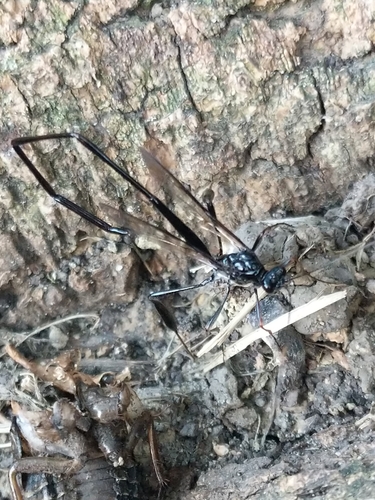
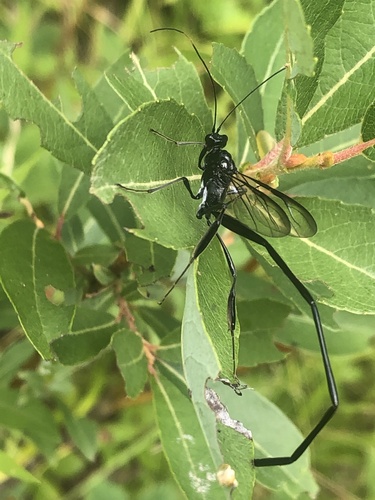
Adults are glossy black and smooth-bodied. Females have a narrow, threadlike metasoma (posterior abdomen) that projects backward like a long tail; in flight or at rest it is often held curved. Males are shorter, with a more typical wasp-like abdomen. Wings are clear to slightly smoky. Legs are slender and adapted for walking on vegetation. There is no obvious sting apparatus visible like that of social stinging wasps.
- Females have an extremely long, threadlike abdomen that projects backward like a tail.
- Glossy black body with smooth, slender form and clear to slightly smoky wings.
- Size difference: females far longer than males; males lack the long tail.
- Found on vegetation, near sandy or loose soil where scarab grubs occur.
Lookalikes
Giant ichneumon wasp Megarhyssa macrurus
Giant ichneumons have a hair-thin ovipositor that trails far behind a normal-sized abdomen, and are usually brown and yellow; the pelecinid female is all glossy black and the long tail is the abdomen itself.
American pelecinid wasp vs Long-tailed giant ichneumon wasp →
Thread-waisted wasps Ammophila spp.
Ammophila have a long, thin waist but end in a short, swollen abdomen that is often orange-banded; the pelecinid female abdomen is long and slender along its whole length.
↻Life cycle
Egg
A single egg is laid into a scarab beetle larva (usually a June beetle grub) in the soil, using the female's long abdomen to reach it.
Larva
The wasp larva feeds on the beetle grub host, developing as a parasitoid until it completes growth.
Pupa
After consuming the host, the wasp larva pupates in the soil or host remains and later emerges as an adult.
Adult
Adults are free-living, feed on nectar, and mate; females search out hosts in soil to continue the cycle.
🍃Diet and predators
Young eat
Parasitic on scarab beetle larvae (grubs) in soil
Adults eat
Nectar and other sugary plant exudates
Predators of the young
Soil predators and parasitoids that attack insect larvae; birds or mammals that dig may incidentally eat hosts
Predators of adults
Birds, spiders and predatory insects
🌱Effect on plants and gardens
Adults may visit flowers for nectar but do not damage plants; they are neutral or beneficial because their larvae reduce populations of scarab beetle grubs that can harm lawns and crops.
📍Where and when to find it
Adults on low vegetation, flowers or tree trunks near areas of loose soil or lawns. Females may be seen probing the ground with the long abdomen when searching for grubs.
Best time
Warm months (spring to early fall in temperate zones), daytime when adults visit flowers or search soil.
Observation tips
Photograph from the side to show the long metasoma. Approach slowly — they are easily disturbed and will fly away. Look for females near recent lawn digging or areas known to have scarab grubs.
✨Fun facts
- The female's tail-like abdomen looks dramatic but is an egg-carrying structure used to find and reach beetle larvae underground.
- Pelecinus polyturator helps control scarab beetle populations, making it beneficial for gardens and lawns.
- Males are rarely seen in North America; many northern populations appear to consist almost entirely of females.
?Frequently asked questions
Is the American pelecinid wasp dangerous to people?
No. It is not aggressive and females do not sting people; their long tail is used to lay eggs, not to inject venom.
Do pelecinid wasps bite or sting?
They are not known to sting people in any meaningful way; at most a female grabbed roughly might give a harmless pin-prick.
Why is this wasp in my yard or garden?
Females search soil for scarab beetle grubs to lay eggs on, so gardens, lawns and areas with loose soil and grub populations attract them.
How can I get rid of pelecinid wasps?
They are beneficial parasitoids and generally do not need control. If you prefer not to have them, avoid attracting scarab grubs by managing lawn health and reducing loose, grub-friendly soil; otherwise, gently shoo adults away.
Where does Pelecinus polyturator live?
From southern Canada through the eastern and central United States and Central America south to Argentina, typically in woodlands, fields and gardens with soil containing scarab larvae.
Will these wasps harm my pets or children?
No. They lack a defensive sting that harms humans or pets and are considered harmless.
📷Photos of the American pelecinid wasp



More bees, wasps & ants
Bites and formic acid
Painful sting
Stinging insect
Can sting
Can sting
Can sting
This guide was written with AI assistance and fact-checked, last updated 2026-10-10. Identification from photos is never certain: don't handle insects you can't identify, and get medical advice for bites, stings or allergic reactions. More about the American pelecinid wasp: iNaturalist, Wikipedia.