
Red paper wasp
Polistes carolina · Paper wasps
A medium-sized reddish paper wasp of eastern North America that builds small umbrella-shaped combs in sheltered spots and will sting if its nest is threatened.
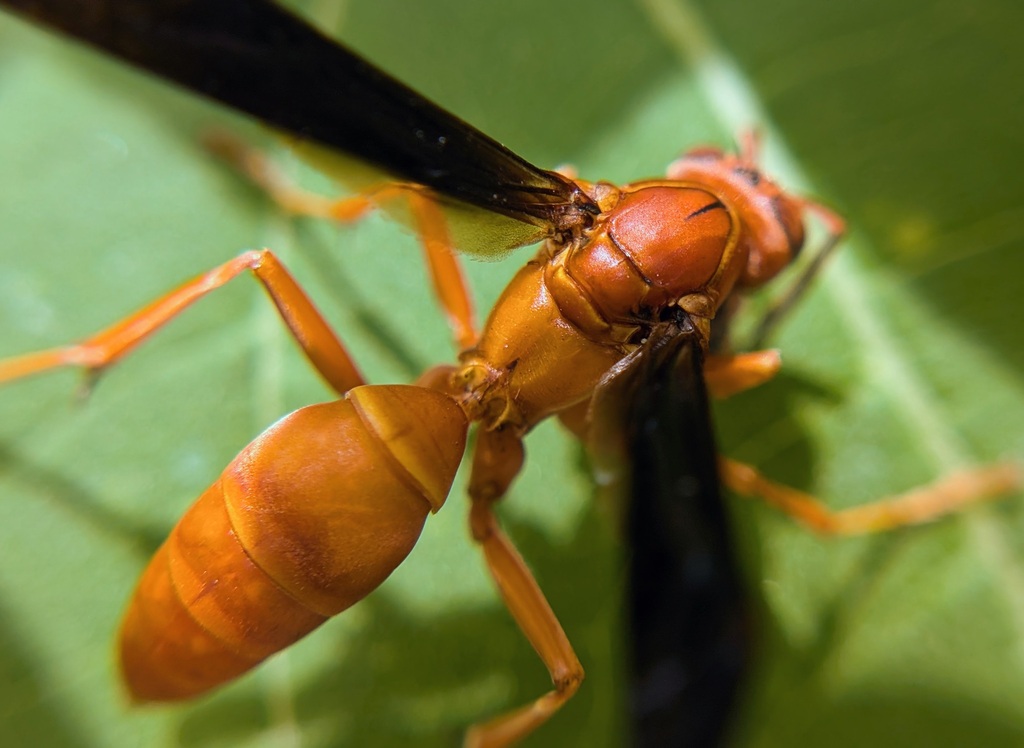
!Is the red paper wasp dangerous?
Only mildly. Polistes carolina can sting repeatedly when defending a nest. For most people stings are painful but not dangerous. First aid: move away from the nest to avoid further stings (paper wasps do not leave their stinger in the skin), clean the site with soap and water, apply a cold pack to reduce swelling, and use oral antihistamines or topical hydrocortisone for itching. If someone has signs of a severe allergic reaction (trouble breathing, swelling of the face or throat, dizziness), use their epinephrine auto-injector if they have one and call emergency services.
Pets
Wasps can sting pets that disturb a nest. Reactions are usually local swelling and pain; allergic reactions are possible. Keep pets away from nest sites and consult a veterinarian if your pet shows severe signs such as difficulty breathing, collapse, or excessive swelling.
📖Overview
Polistes carolina is a social paper wasp found across the eastern and southern United States. Colonies are annual: a fertilized queen founds a nest in spring, workers rear the brood through summer, and new reproductives disperse in late summer or fall. Nests are modest, open umbrella-shaped combs made of chewed plant fibers (paper) and usually built in sheltered, dry locations. Adults feed on nectar while provisioning larvae with chewed insects and spiders.
🔍How to identify a red paper wasp
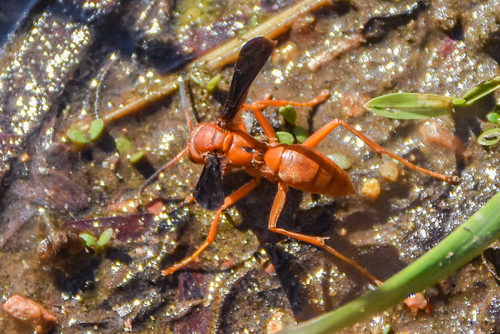
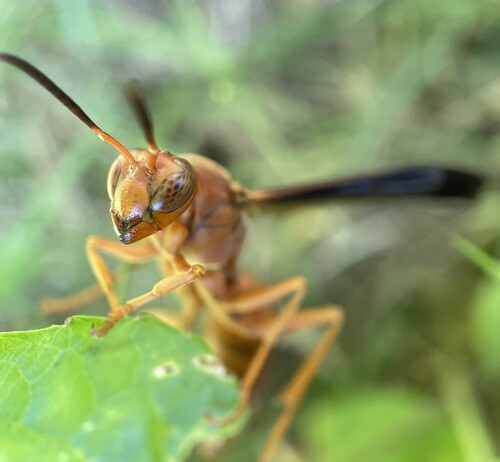
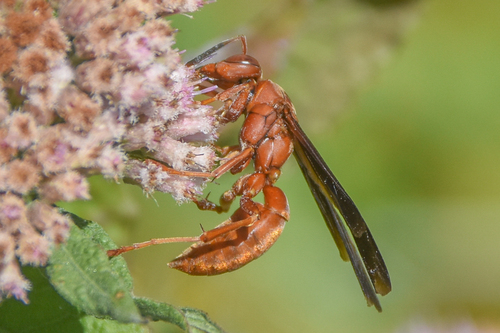
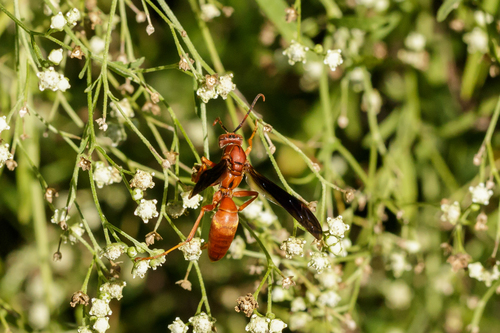
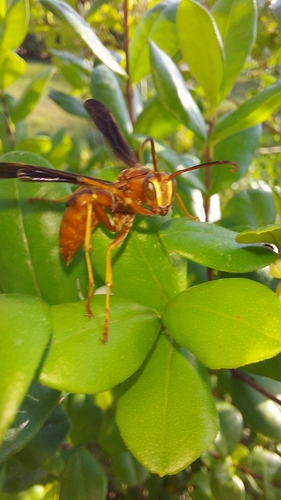
Adults are elongate, wasp-like with a narrow 'wasp waist' and long legs that dangle in flight. Polistes carolina is distinctive for its almost entirely reddish-brown body with few or no yellow markings. The wings are dark and smoky. Nests are exposed single combs (often under eaves, porch ceilings, tree branches, or inside sheltered cavities) usually lacking a full paper envelope or having only a partial covering.
- Almost entirely reddish-brown body with dark, smoky wings and few or no yellow markings.
- Elongated body with narrow waist and long legs that hang during flight.
- Builds a single exposed umbrella-shaped comb made of papery material, often without a full outer envelope.
- Found on sheltered vertical surfaces such as eaves, porch ceilings, tree branches or inside cavities.
Lookalikes
Northern paper wasp Polistes fuscatus
Polistes fuscatus is dark brown with variable yellow markings and often a yellow-and-black face; P. carolina is overall reddish-brown.
European paper wasp Polistes dominula
P. dominula has bold black-and-yellow banded abdomen and a different facial pattern; it is also invasive in North America and tends to nest in more urban locations.
↻Life cycle
Egg
Laid singly in individual cells of the paper comb by the queen or workers; hatch in several days depending on temperature.
Larva (grub)
Legless, grub-like larvae are fed chewed insect prey by adults and grow through several instars over about 1-2 weeks.
Pupa
Larvae spin a silk cap in their cell and pupate; metamorphosis into adults takes another 1-2 weeks.
Adult (queen and workers)
Adults emerge and perform colony tasks: workers forage and care for brood, the queen lays eggs. New queens and males are produced late season and disperse to mate; fertilized queens overwinter in sheltered sites.
🍃Diet and predators
Young eat
Fed by adults on chewed insects and spiders (protein-rich prey).
Adults eat
Feed on flower nectar, sap, and other sugary liquids; sometimes take honeydew or sweet human foods.
Predators of the young
Birds, ants, parasitic wasps, and some predatory insects may attack larvae or nests.
Predators of adults
Birds, praying mantises, spiders and robber flies; humans destroy nests.
🌱Effect on plants and gardens
Adults visit flowers for nectar and can act as incidental pollinators. Workers capture caterpillars and other soft-bodied insects to feed their larvae, so they help reduce pest insects.
How to get rid of red paper wasps
If a nest is in a high-traffic area or poses a sting risk, contact a licensed pest control professional for removal, especially if anyone in the household is allergic. Very small early-season nests can sometimes be removed at night with protective clothing, but professional removal is safest. Prevent nesting by sealing gaps, screening attic vents and under-eave cavities, and reducing sheltered ledges. Avoid swatting or spraying active nests with water; sudden disturbance increases stinging risk.
📍Where and when to find it
Look for nests under eaves, porch ceilings, in attics or hollow trees; adults visit flowers and hunt on foliage for caterpillars and spiders.
Best time
Late spring through early autumn, daytime foraging; dusk and dawn when returning to or leaving the nest are good times to approach carefully.
Observation tips
Use a telephoto lens or long zoom to photograph nests; keep a safe distance and avoid sudden movements. Early-season nests are smaller and easier to remove if necessary.
✨Fun facts
- Paper wasp nests are made by chewing plant fibers mixed with saliva to create a papery pulp.
- Workers recognize nestmates using chemical cues and can show remarkable cooperation in nest building and brood care.
- Unlike hornets and some other Vespidae, paper wasps' nests are usually open combs rather than fully enclosed paper spheres.
?Frequently asked questions
Do paper wasps sting?
Yes. Polistes carolina will sting to defend their nest. They are not aggressive away from the nest but can sting repeatedly when threatened.
Are red paper wasps dangerous?
For most people their sting is painful but not dangerous. People with venom allergies risk severe reactions and should avoid nests and seek emergency care if stung and symptoms develop.
Why are they in my house or on my porch?
They look for sheltered, dry sites to build nests such as eaves, porch ceilings, attic vents, and cavities. Food sources like flowers, open sugary drinks, or nearby insects also attract them.
How do I get rid of a nest?
If the nest is small and early in the season you can remove it at dusk or dawn wearing protective clothing, but the safest option is to hire a licensed pest control professional, especially if anyone is allergic.
Are they beneficial?
Yes. Adults pollinate flowers while feeding on nectar, and workers reduce pest insect numbers by hunting caterpillars and other soft-bodied prey for their larvae.
📷Photos of the red paper wasp
More bees, wasps & ants
Bites and formic acid
Painful sting
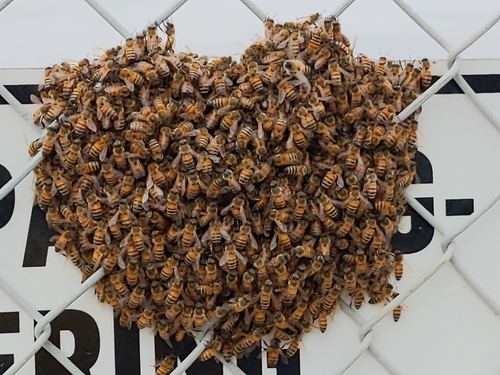
Stinging insect
Can sting
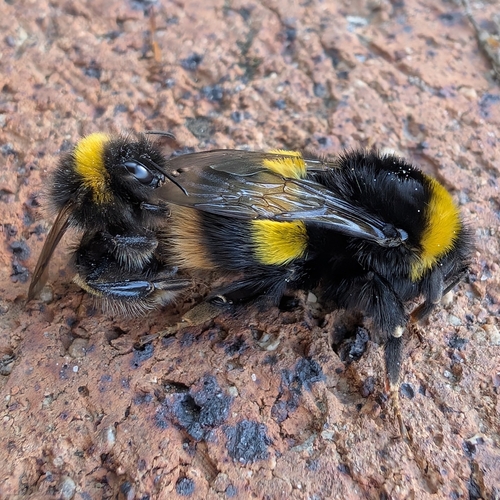
Can sting
Can sting
This guide was written with AI assistance and fact-checked, last updated 2026-10-10. Identification from photos is never certain: don't handle insects you can't identify, and get medical advice for bites, stings or allergic reactions. More about the red paper wasp: iNaturalist, Wikipedia.