
Common thread-waisted wasp
Ammophila procera · Thread-waisted wasps
A solitary ground-nesting wasp that provisions its nest with paralyzed caterpillars for its larvae; not aggressive but can deliver a painful sting if handled.
!Is the common thread-waisted wasp dangerous?
Only mildly. Adults can sting and the sting is painful but these solitary wasps are not aggressive toward people. Stings are much less medically significant than those of social wasps (hornets, yellowjackets) but can cause swelling, pain and allergic reactions in sensitive individuals. First aid: wash the area with soap and water, apply a cold pack to reduce swelling and take an oral antihistamine or pain reliever as needed. For signs of anaphylaxis (difficulty breathing, swelling of the face or throat, widespread hives, fainting), call emergency services immediately and use an epinephrine auto-injector if one is available.
Pets
Generally not a threat to pets unless a pet bites or steps on a wasp; stings can be painful and may cause localized swelling. Larger pets may have mild systemic reactions; seek veterinary care if symptoms are severe.
📖Overview
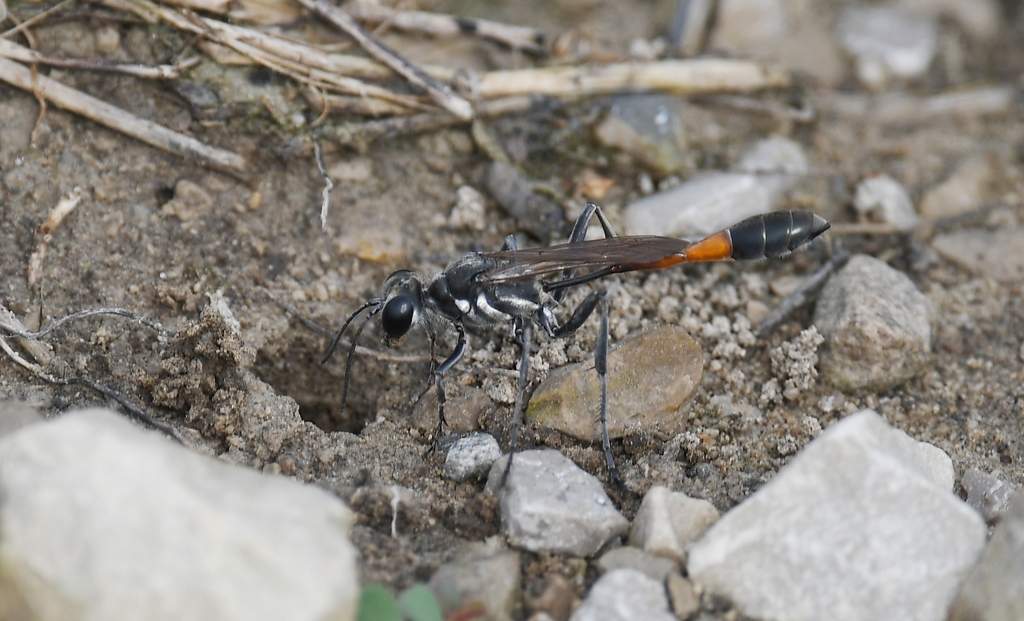
Ammophila procera is a solitary, ground-nesting wasp that hunts caterpillars to provision individual brood cells. Adults forage for nectar and visit flowers, while females dig or reuse small burrows in loose soil or sand where they place paralyzed prey and lay a single egg. They are active in warm months and are common in open, sunny habitats such as fields, gardens and sandy banks.
These wasps are not social and do not defend nests cooperatively, so they rarely sting people unless directly handled, stepped on or provoked while protecting a brood. Females show remarkable nest-handling behaviour, often camouflaging or sealing their burrows after provisioning them.
🔍How to identify a common thread-waisted wasp
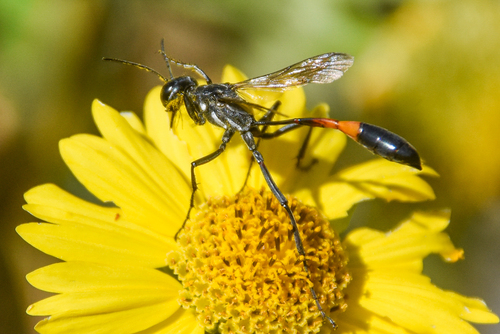
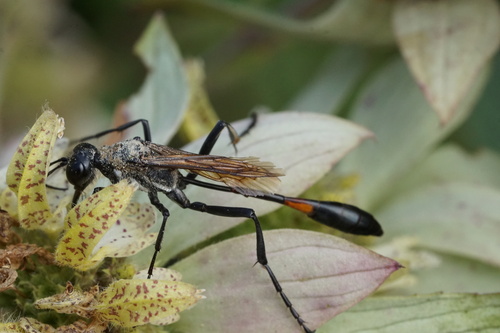
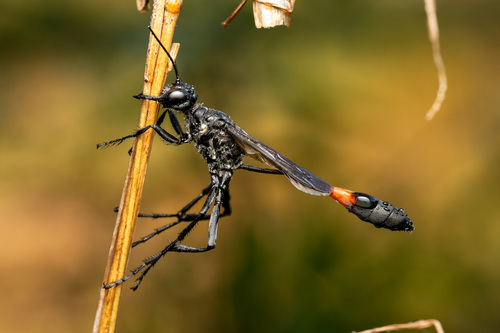
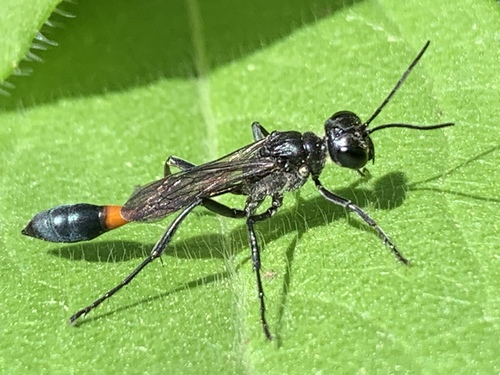
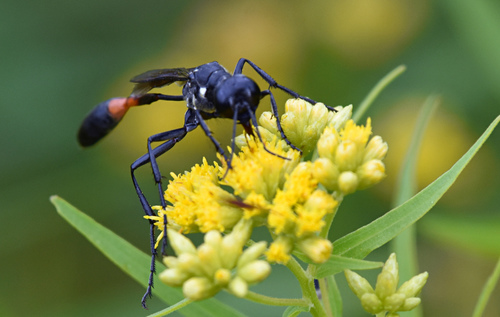
Adult Ammophila procera are slender, with a very narrow "thread" or petiole between thorax and abdomen. Typical individuals are mostly black with an orange-red band near the base of the abdomen and silvery hairs on the thorax. Legs and antennae are typically dark. Females look much like males but may be slightly larger. Wings are clear to slightly smoky and fold back along the body when at rest.
- Very narrow, elongated "thread-waist" (petiole) between thorax and abdomen
- Mostly black body with red-orange on the posterior abdomen or tail region
- Slender, elongated body about 20-30 mm long and long legs that hang during flight
- Diurnal activity and frequent visits to flowers or hunting flights near bare soil
Lookalikes
Ammophila urnaria Ammophila urnaria
Usually smaller, with a shorter, stouter waist and more extensive red on the abdomen; close examination is often needed.
Gold-marked thread-waisted wasp Eremnophila aureonotata
Black with patches of golden-silvery hairs on the thorax and an all-black abdomen, lacking the red-orange band of A. procera.
↻Life cycle
Egg
A single egg is laid on or near a paralyzed caterpillar placed in the brood cell.
Larva (grub)
Larvae feed on the stored paralyzed caterpillars provided by the mother until fully grown.
Pupa
After consuming the provisions, the larva pupates in a cell or cocoon inside the burrow and develops into an adult.
Adult
Adults emerge, feed on nectar, mate, and females dig or reuse burrows to provision new offspring.
🍃Diet and predators
Young eat
Paralyzed caterpillars (various moth and butterfly larvae) provided by the female
Adults eat
Nectar, sometimes honeydew and plant exudates
Predators of the young
Parasitic flies and wasps, ants, predatory beetles and small mammals that dig up nests
Predators of adults
Birds, spiders, robber flies and larger predatory insects
🌱Effect on plants and gardens
Adults visit flowers for nectar and act as incidental pollinators. Females hunt caterpillars and other lepidopteran larvae, reducing populations of herbivorous pests in gardens and crops.
📍Where and when to find it
Watch sunny, open areas with loose or sandy soil. Look for wasps flying low hunting or carrying caterpillars to small burrows; check flowers for adults feeding on nectar.
Best time
Late spring through late summer; daytime, especially mid-morning to afternoon when it is warm and sunny.
Observation tips
Approach slowly and keep a distance while photographing. Focus on flowers and bare ground edges where females dig nests; a telephoto or zoom helps capture natural behaviour without disturbance.
✨Fun facts
- Females carry paralyzed caterpillars back to their burrows one or several at a time to feed their larvae.
- Some Ammophila species perform elaborate nest-sealing and camouflage behaviour after provisioning a cell.
- Despite their fearsome appearance, these wasps are solitary hunters and do not form stinging colonies.
?Frequently asked questions
Do thread-waisted wasps sting?
Yes, they can sting, particularly if handled or trapped against the skin. They are not aggressive and rarely sting unprovoked.
Are Ammophila procera dangerous to humans?
Not generally. Stings are painful but usually not medically serious unless you are allergic. Treat stings with basic first aid and seek emergency care for severe allergic reactions.
Why is a thread-waisted wasp in my yard or garden?
They hunt caterpillars (garden pests) and need loose soil for nesting, so gardens and sunny patches with bare ground attract them.
How can I get rid of thread-waisted wasps?
They are beneficial predators; removal is usually unnecessary. To discourage nesting, reduce bare, sandy patches or compact soil, and seal small ground holes near structures. If nests must be removed, wear protective clothing and use a licensed pest professional.
Will they destroy my plants?
No. Adults feed on nectar and larvae eat caterpillars, so they help protect plants rather than harm them.
📷Photos of the common thread-waisted wasp
More bees, wasps & ants
Bites and formic acid
Painful sting
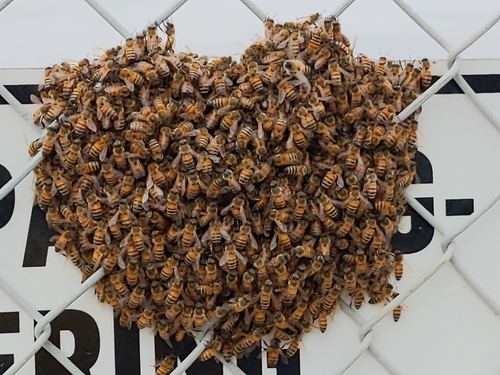
Stinging insect
Can sting
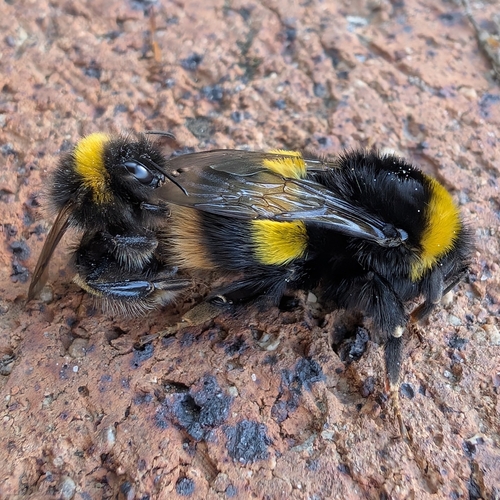
Can sting
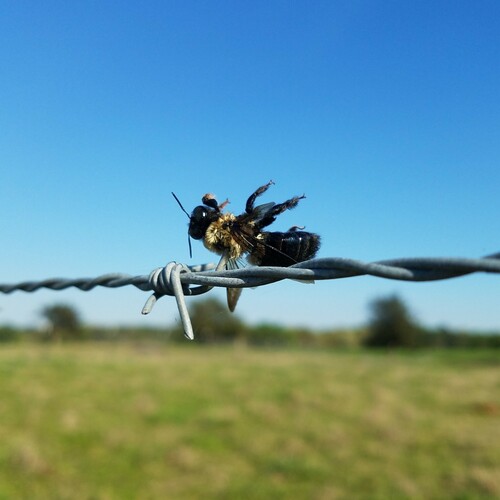
Can sting
This guide was written with AI assistance and fact-checked, last updated 2026-10-10. Identification from photos is never certain: don't handle insects you can't identify, and get medical advice for bites, stings or allergic reactions. More about the common thread-waisted wasp: iNaturalist, Wikipedia.