
Red velvet ant
Dasymutilla occidentalis · Velvet ants (mutillid wasps)
A wingless, fuzzy red-and-black female wasp whose sting is famously painful; a solitary parasitoid of ground-nesting bees and wasps.
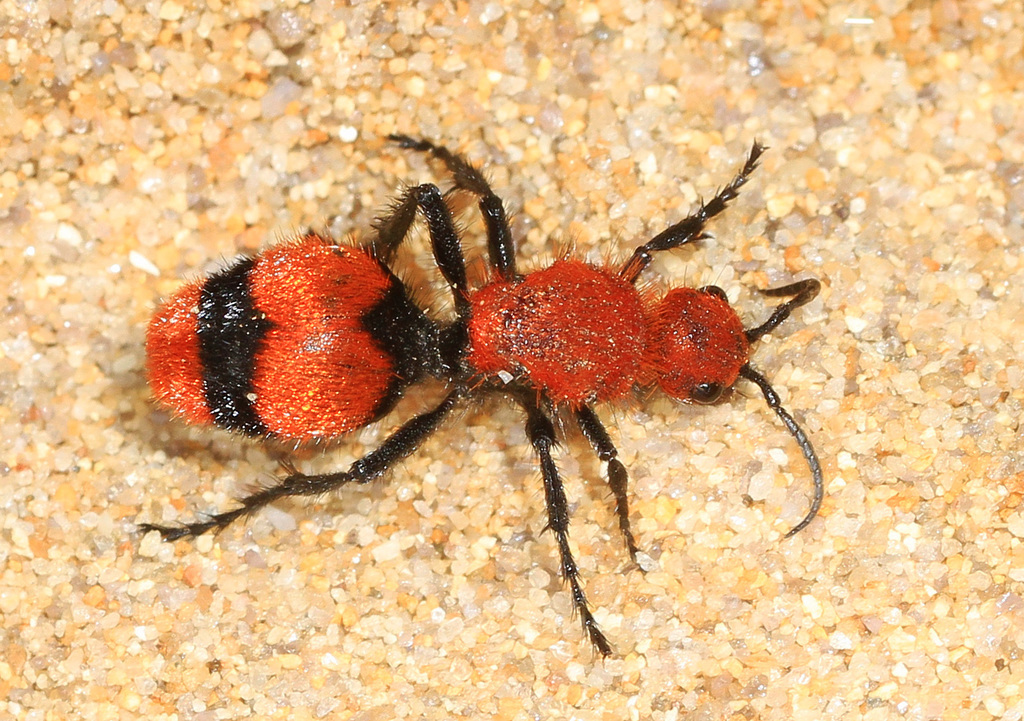
!Is the red velvet ant dangerous?
Yes, it can be. Females can deliver a very painful sting. Stings are not known to be deadly for healthy adults but can cause severe pain, swelling, and in rare cases allergic reactions. If stung: move to a safe place, clean the area with soap and water, apply a cold pack to reduce swelling, take over-the-counter pain relievers or antihistamines as needed, and seek medical care if you have signs of a severe allergic reaction (difficulty breathing, fainting, widespread hives, or swelling of the face or throat).
Pets
Pets can be stung if they try to eat or play with a velvet ant. Stings are painful but rarely life-threatening; monitor pets for allergic reactions and consult a veterinarian if symptoms are severe.
📖Overview
Dasymutilla occidentalis is a species of velvet ant (family Mutillidae). Despite the common name "ant," it is a wasp; females are wingless and resemble large, hairy ants while males have wings. Females are solitary, search for the nests of ground-nesting bees and wasps, and lay eggs so their larvae can consume the host larva. The species is aposematic: bright coloration, a very hard exoskeleton, and an extremely painful sting discourage predators. They are not aggressive toward people but will sting if handled or trapped against the skin.
🔍How to identify a red velvet ant
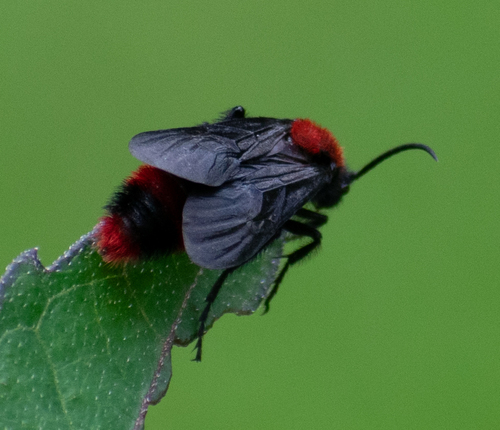
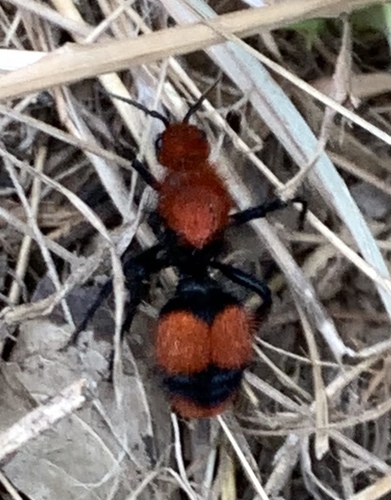
Adult females are densely covered with velvety red hairs on the thorax and often red or partly black abdominal segments; the body is compact and ant-like because females lack wings. Males are winged, slimmer, and show similar red-and-black patterning, with dark smoky wings. The exoskeleton is thick and the body feels hard. Size varies but adults are relatively large and noticeable compared with common ants.
- Females wingless, covered in dense red (sometimes partially black) velvety hairs and ant-like in shape.
- Very hard, compact body; much larger than common ants (about 13-25 mm).
- Males are winged with similar red-and-black abdomen—look for wings to separate sexes.
- When handled or disturbed, females may attempt to sting and can make an audible squeaking sound (stridulation).
Lookalikes
Other Dasymutilla species Dasymutilla spp.
Many Dasymutilla species have similar red-and-black coloration; exact pattern, hair density, and geographic range are needed to separate species.
Other velvet ants Mutillidae (other genera)
Other genera in the family can look similar; examine wing presence (female wingless) and regional field guides for species-level ID.
↻Life cycle
Egg
Female locates a host nest and lays an egg near the host larva or its provisioned cell.
Larva (parasitic grub)
Larva hatches and consumes the host larva or its food stores, developing within the host nest.
Pupa
After feeding, the larva pupates inside the host cell and metamorphoses into an adult.
Adult
Wingless females and winged males emerge, mate, and continue the cycle; females hunt host nests, males search for mates.
🍃Diet and predators
Young eat
Parasitic on the larvae of ground-nesting bees and wasps (consume host larva or its provisions).
Adults eat
Feed on nectar and other sugary secretions.
Predators of the young
Unknown in detail; developing stages are protected inside host nests and by the species' chemical and physical defenses.
Predators of adults
Few predators due to bright warning coloration, thick exoskeleton, and painful sting; some birds and reptiles may attempt predation rarely.
🌱Effect on plants and gardens
Adults visit flowers for nectar and therefore can act as incidental pollinators, but the species does not damage plants.
📍Where and when to find it
Look on flowers for nectar (adults) and on the ground near bare or sandy soil where females probe for host nests. Check edges of paths, sandy banks, and sunny spots.
Best time
Late spring through summer on warm, sunny days and during daylight hours.
Observation tips
Photograph from a safe distance; females are slow-moving and often tolerate observation but may run quickly into crevices. Use a telephoto or macro lens rather than trying to pick one up.
✨Fun facts
- The common name 'cow killer' comes from a folk belief that the sting could kill a cow; the name refers to the sting's severity, not actual lethality.
- Females are wingless and look like large, fuzzy ants, but velvet ants are actually wasps; only the males have wings.
- Velvet ants are heavily armored; their exoskeleton is built to resist predator bites and stings while tunneling into host nests.
?Frequently asked questions
Do red velvet ants sting?
Yes. Females have a powerful sting that is extremely painful but rarely dangerous to healthy adults.
Are red velvet ants aggressive?
No. They are solitary and do not seek out people, but will sting if handled or trapped.
Why is a velvet ant in my house?
They are more common outdoors; a female may wander indoors if confused or following nectar sources. Finding one inside is uncommon and usually accidental.
How can I get rid of velvet ants?
Avoid handling. If you need to remove one, use a long object or jar to trap and release it outdoors. Do not squish it with bare hands. There is no need for chemical control for occasional indoor wanderers.
Where do red velvet ants live?
They prefer sunny, well-drained soils where ground-nesting bees and wasps are present: fields, sandy areas, lawns, and open woodlands across the eastern and central United States.
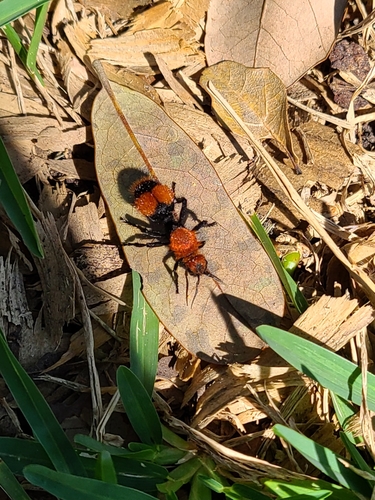
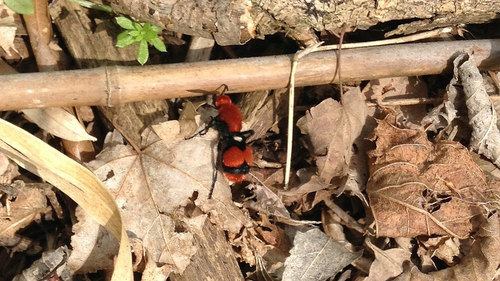
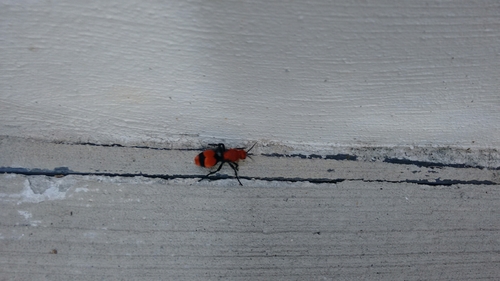
📷Photos of the red velvet ant
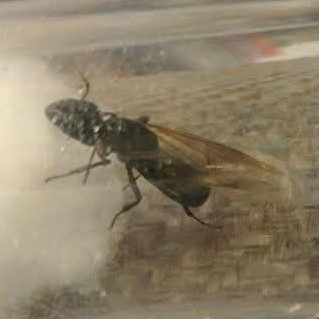
More bees, wasps & ants
Bites and formic acid
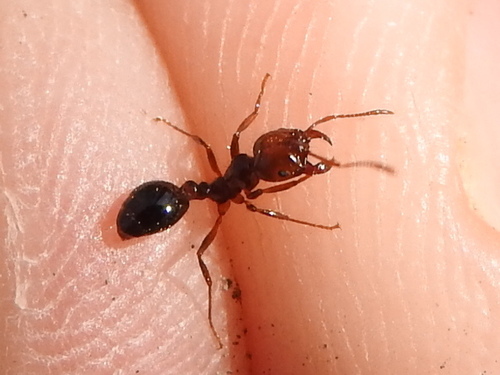
Painful sting
Stinging insect
Can sting
Can sting
Can sting
This guide was written with AI assistance and fact-checked, last updated 2026-10-09. Identification from photos is never certain: don't handle insects you can't identify, and get medical advice for bites, stings or allergic reactions.