
Eastern yellowjacket
Vespula maculifrons · Yellowjackets
A common, social ground-nesting wasp of eastern North America known for aggressive defense of nests and painful stings.
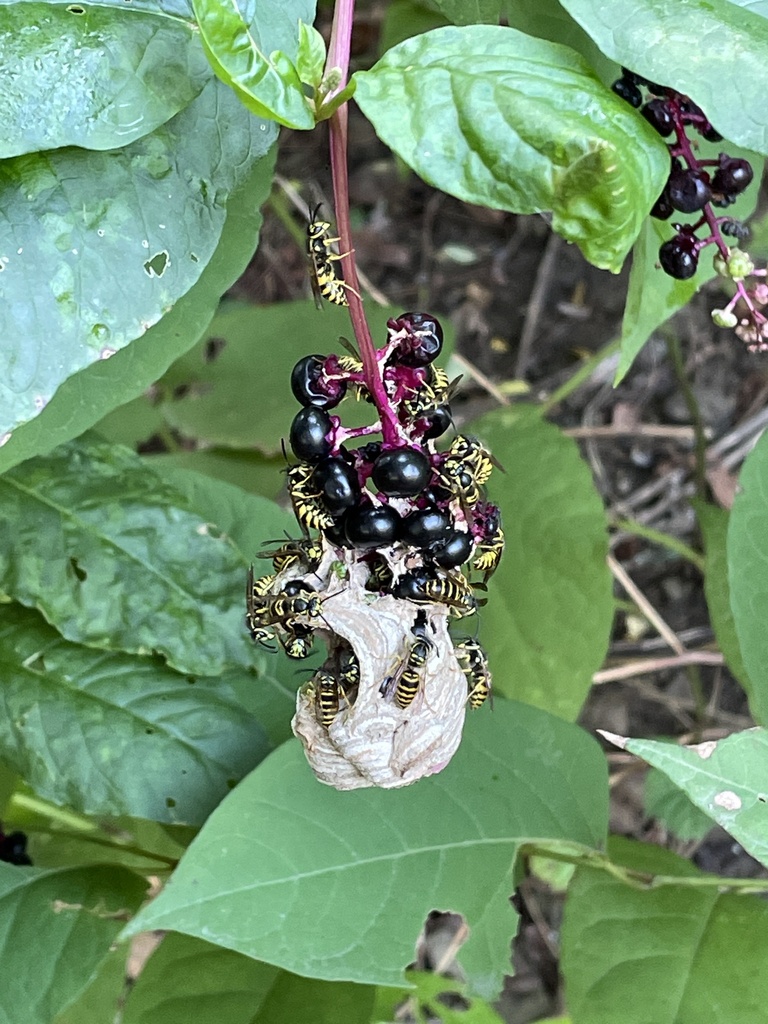
!Is the eastern yellowjacket dangerous?
Yes, it can be. Workers can sting repeatedly and defend nests aggressively. Stings are painful and can cause swelling, redness and itching. People with wasp venom allergy risk severe systemic reactions including anaphylaxis; use a prescribed epinephrine auto-injector if available and call emergency services immediately if breathing or swallowing is affected, or if widespread hives or fainting occur. For normal stings, clean the area, apply cold compresses, take over-the-counter pain relievers or antihistamines for itching, and monitor for worsening symptoms.
Pets
Stings can be painful to pets and may cause localized swelling. Multiple stings or stings in sensitive areas (throat, mouth) can be serious. Allergic pets or small animals can have severe reactions; consult a veterinarian if symptoms are severe.
📖Overview
Vespula maculifrons is a eusocial wasp found across eastern North America. Colonies are annual: a single mated queen founds a nest in spring, the colony grows through summer, and reaches its largest size in late summer before producing new queens and males. Nests are most often in underground cavities but can also be in wall voids, attics, or other sheltered sites. Workers forage for sugar-rich foods and capture insects to feed larvae.
Eastern yellowjackets are notable for defending nests vigorously and can sting repeatedly. They are important predators of many pest insects but are also common human pests around picnics, outdoor food, and garbage. Control of established nests is best handled by trained pest professionals because of the wasps' aggressive response to disturbance.
🔍How to identify a eastern yellowjacket
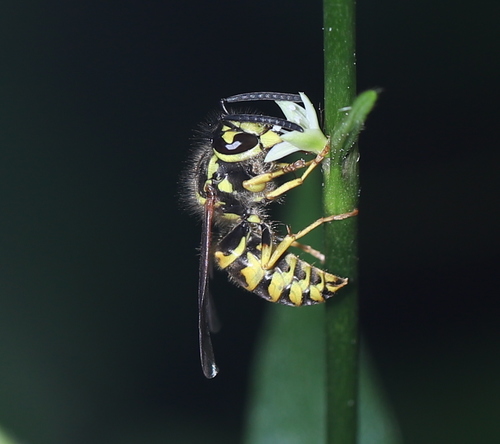
Adults are compact, stocky wasps with the typical black-and-yellow banded pattern of yellowjackets. The head and thorax are mainly black with yellow markings; the abdomen shows alternating black and yellow bands with a pattern of spots and maculations on the dorsal segments that helps distinguish this species from some relatives. Queens are larger and more robust than workers; males (drones) have slightly different markings and longer antennae.
- Stocky yellow-and-black wasp with alternating abdominal bands and distinctive dorsal markings on the abdomen.
- Body length about 10-16 mm for workers; queens noticeably larger.
- Nests typically underground in cavities or rodent burrows; watch for wasps flying directly to and from a small ground entrance.
Lookalikes
German yellowjacket Vespula germanica
V. germanica often has different patterning on the abdomen (more square black spots) and is more cosmopolitan; identification requires close examination of dorsal markings and head patterns.
Common yellowjacket Vespula vulgaris
Very similar in appearance; subtle differences in abdominal markings and geographic range help distinguish species, often requiring expert examination.
↻Life cycle
Egg
Laid by the queen in individual cells within the nest; hatch in a few days depending on temperature.
Larva (grub)
Larvae are fed protein (insect prey, meat) by workers; they develop inside sealed cells over days to weeks.
Pupa
Larvae pupate inside the cell and transform into adults over several days to weeks.
Adult (worker/queen/drone)
Workers forage and defend the nest; new queens and males are produced late season, mate, and mated queens overwinter to found next year's colonies.
🍃Diet and predators
Young eat
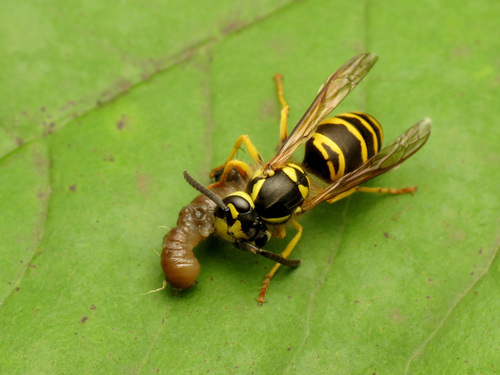
Protein from chewed insect prey and other arthropods provided by workers
Adults eat
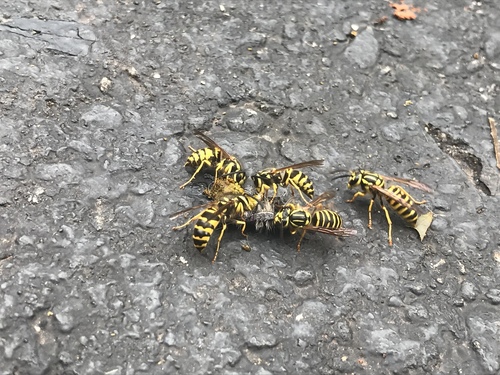
Sugary substances (nectar, ripe fruit, sap, human foods) and carbohydrates; also scavenge meat and insects to feed larvae
Predators of the young
Ants, spiders and parasitic insects may attack brood in abandoned or unguarded nests
Predators of adults
Birds (some species), mammals (skunks, raccoons dig up nests), other insects; nest predation by mammals often destroys colonies
🌱Effect on plants and gardens
Adults feed on nectar and sugary foods and act as incidental pollinators; workers hunt and scavenge other insects, helping reduce pest populations but do not typically damage plants.
How to get rid of eastern yellowjackets
Prevention: remove or tightly cover outdoor food and sugary drinks, keep garbage sealed, repair screens and seal wall or foundation gaps, reduce attractive ground cavities (fill old rodent burrows). If a nest is present and causing risk, hire a licensed pest-control professional to treat or remove it, preferably at night when wasps are less active. Do not attempt to plug or seal active nest entrances; disturbances can provoke many stings. For small nuisance wasps away from a nest, trapped food and proper sanitation often reduce visits.
📍Where and when to find it
Look for foraging workers on flowers, overripe fruit, garbage, or at outdoor meals. To locate a nest, watch for repeated flights directly to and from a single ground hole or wall opening.
Best time
Best observed from late spring through early autumn, peak visibility in mid to late summer, during daylight hours.
Observation tips
When photographing, keep a safe distance and avoid sudden movements. To locate a ground nest, watch flight paths from a safe distance rather than approaching the entrance.
✨Fun facts
- Eastern yellowjackets are both hunters and scavengers: workers hunt living insects for larvae but will scavenge meats and sweets from human food.
- Late-summer yellowjacket activity often increases because colonies reach maximum size and many workers search widely for food.
?Frequently asked questions
Do eastern yellowjackets sting?
Yes. Workers can sting repeatedly and will aggressively defend the nest if threatened.
Are eastern yellowjackets dangerous?
They are painful stingers and can be dangerous to people with venom allergies; multiple stings can also be hazardous to children or small animals.
Why are yellowjackets in my house or yard?
They are attracted to food and sweet drinks, garbage, ripe fruit and meat. Nests may be in wall voids, attics, or in the ground near buildings.
How do I get rid of a yellowjacket nest?
For safety, hire a licensed pest-control professional. If a professional is not available, treatments are done at night with proper protective equipment and appropriate insecticide dusts or sprays; do not attempt removal without training because nests defend aggressively.
Will sealing cracks keep them out?
Sealing entry points helps prevent them from nesting in walls or attic voids. Do this in late fall or winter when nests are inactive; do not seal an active nest entrance without professional advice.
📷Photos of the eastern yellowjacket
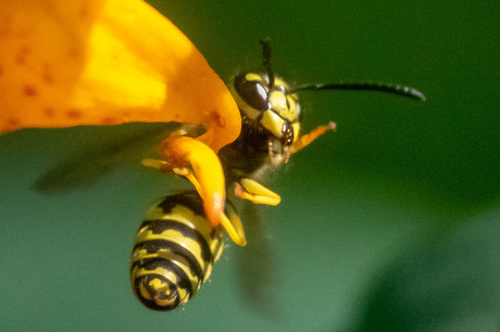
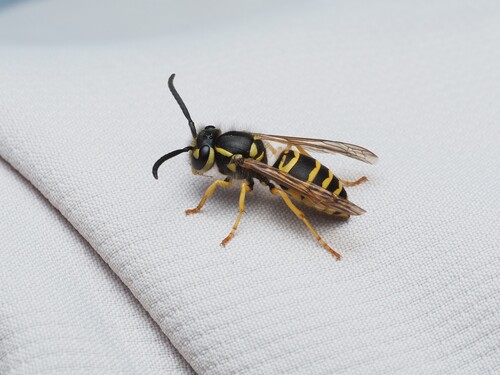
More bees, wasps & ants
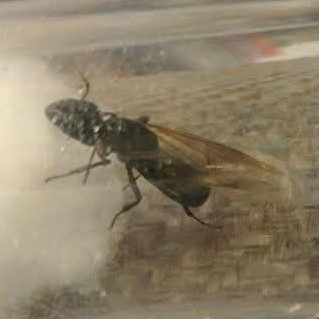
Bites and formic acid
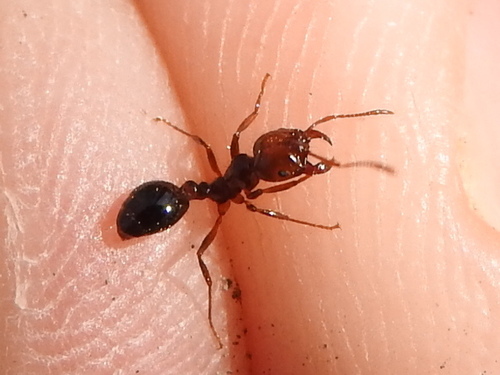
Painful sting
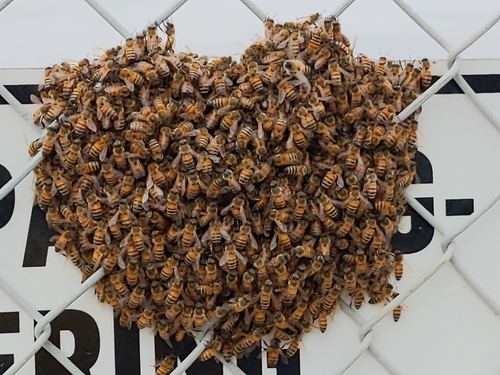
Stinging insect
Can sting
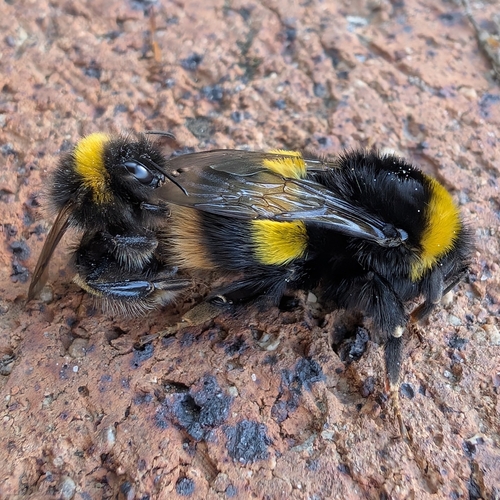
Can sting
Can sting
This guide was written with AI assistance and fact-checked, last updated 2026-10-09. Identification from photos is never certain: don't handle insects you can't identify, and get medical advice for bites, stings or allergic reactions.