
Yellow-faced bumble bee
Bombus vosnesenskii · Bumble bees
A common western North American bumble bee, an efficient pollinator that nests on or near the ground and is generally non-aggressive unless provoked.
!Is the yellow-faced bumble bee dangerous?
Only mildly. Like other bumble bees, B. vosnesenskii can sting if handled, trapped against skin, or if the nest is disturbed, and it can sting more than once. Stings are typically painful but not dangerous for most people. First aid: bumble bees do not leave their stinger behind, so simply wash the area with soap and water and apply a cold pack for pain and swelling. If there are signs of a severe allergic reaction (difficulty breathing, swelling of the face or throat, widespread hives, dizziness), use an epinephrine auto-injector if one has been prescribed and call emergency services immediately.
Pets
Generally low risk; stings can be painful for small pets and allergic reactions are possible. Keep pets away from nests and bees that swarm or are agitated.
📖Overview
Bombus vosnesenskii is a widespread bumble bee native to western North America (British Columbia south through California into Baja California, and east into parts of the Great Basin). It forages on a wide range of wildflowers and crops and often nests in cavities near the ground such as rodent burrows, under sheds, or dense grass. Colonies are annual: new queens produced in late summer overwinter and start new colonies the following spring. This species is important for both wild plant pollination and agriculture, and is commonly seen in urban gardens and natural areas across its range.
🔍How to identify a yellow-faced bumble bee
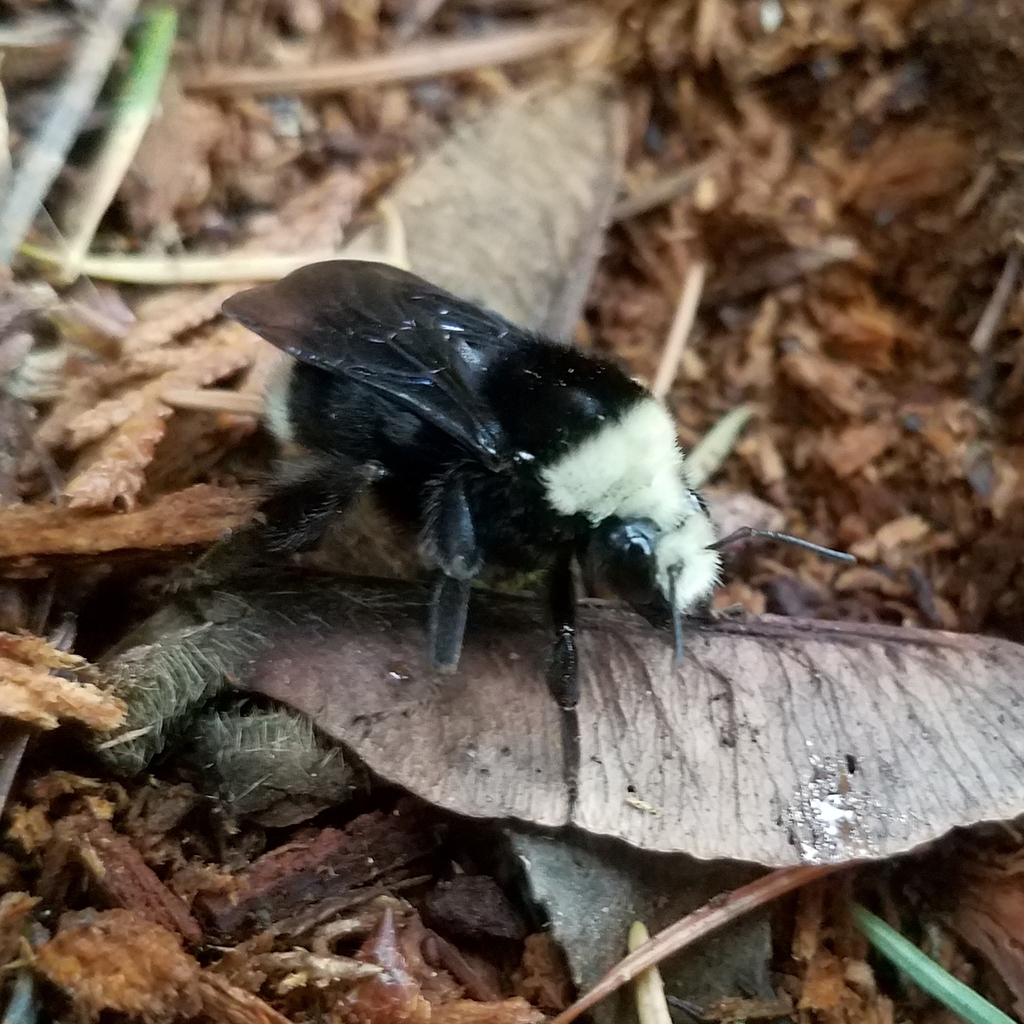
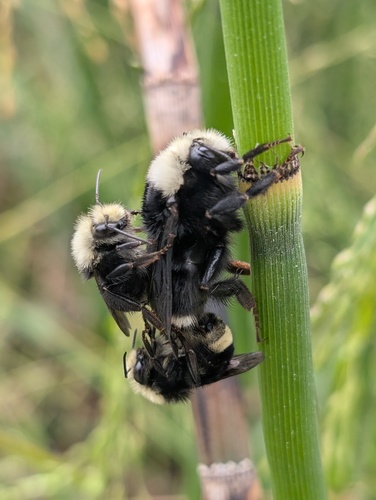
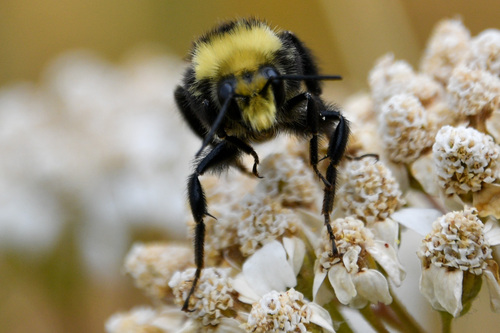
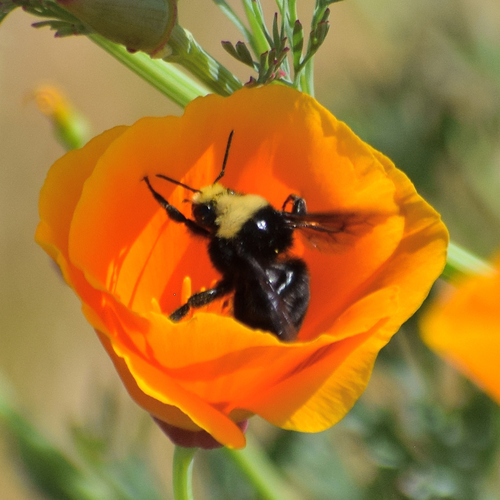
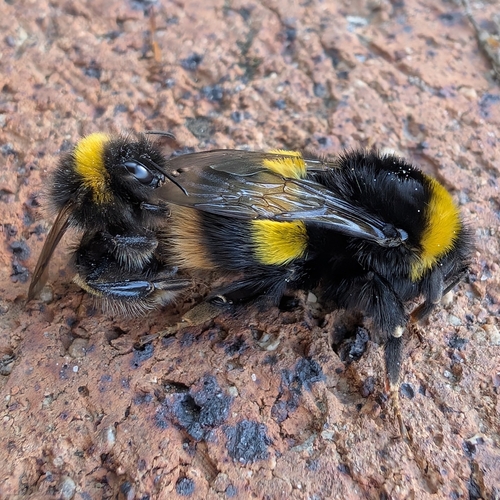
Workers, queens and males are mostly black bumble bees with a distinctive yellow face, yellow hair on the front of the thorax, and a single yellow band near the tip of the abdomen (on the fourth segment); the rest of the abdomen is black, without a white tail. Queens are larger and bulkier than workers. Males are similar but have more yellow hair on the face and longer antennae. The yellow face combined with the single yellow band near the rear is the most consistent field mark.
- Yellow face: the head (face) is distinctly yellow rather than entirely black.
- Yellow hair on the front of the thorax and a single yellow band near the tip of the abdomen; the rest of the body is black.
- Medium-sized, robust bumble bee shape; queens larger and bulkier than workers.
Lookalikes
Red-banded bumble bee Bombus melanopygus
B. melanopygus usually has a red or orange band on the abdomen instead of the second bright yellow band; face colouring and regional range help separate the two.
Western bumble bee Bombus occidentalis
B. occidentalis usually has a mostly black face and a white tip to the abdomen; the yellow face and single yellow band near the tail of B. vosnesenskii separate them.
↻Life cycle
Egg
Laid by the queen within brood cells inside the nest; eggs hatch after a few days.
Larva (grub)
Larvae are fed pollen and nectar by workers; they grow for several days to weeks depending on season and colony needs.
Pupa
Larvae pupate within cells and metamorphose into adults over several days to weeks.
Adult
Adults (workers, males, queens) forage for nectar and pollen, defend the nest, and carry out colony tasks; new queens mate in late summer and overwinter solitary to start new colonies the following spring.
🍃Diet and predators
Young eat
Fed pollen mixed with nectar by workers (protein-rich diet required for growth).
Adults eat
Nectar for energy and pollen for protein; adults collect both from a wide range of flowers.
Predators of the young
Nest predators and parasites such as flies, beetles, ants, and parasitic wasps may attack brood; small mammals may raid nests.
Predators of adults
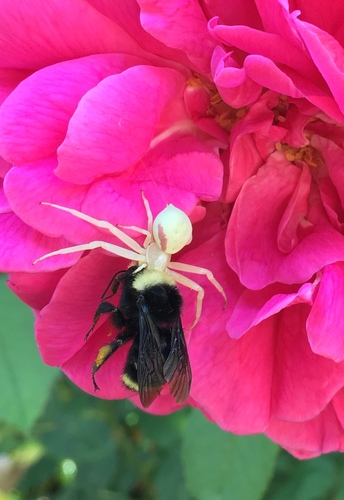
Birds, spiders, robber flies, dragonflies and predatory wasps; humans can also destroy nests unintentionally.
🌱Effect on plants and gardens
Forages widely on many native wildflowers and garden/ornamental plants; important pollinator of crops such as blueberries and some orchard crops. Not known as a plant pest.
📍Where and when to find it
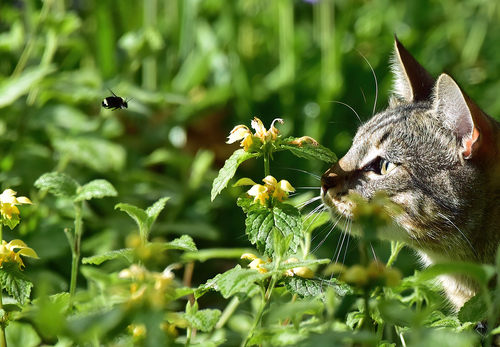
Look for foraging workers on a wide variety of flowers during the day; nests are often at ground level in grass tussocks, under sheds, or in old rodent burrows.
Best time
Best observed spring through early fall (roughly March to October), during warm sunny days when flowers are abundant.
Observation tips
Approach slowly and avoid sudden movements near a nest. To photograph, use a telephoto or macro lens from a short distance; document the yellow face and banding to help confirm ID.
✨Fun facts
- Bombus vosnesenskii is a common and effective pollinator in urban gardens as well as wild habitats.
- Unlike honey bees, bumble bee colonies are annual: only new queens overwinter and survive to start the next year's colony.
- This species readily visits a wide range of flower shapes and can perform buzz pollination (vibrating flowers) which helps release pollen from some plants like tomatoes.
?Frequently asked questions
Are yellow-faced bumble bees dangerous?
Only mildly. They are not aggressive to people unless their nest is disturbed, but they can sting, and stings can cause serious allergic reactions in susceptible people.
Do yellow-faced bumble bees sting?
Yes, individuals can sting if handled or if the nest is threatened. Stings are usually painful but not medically serious for most people.
Why is a bumble bee in my house?
They sometimes enter houses while foraging, or a queen may explore sheltered spots in late summer or fall looking for an overwintering site. Indoor bees usually want to escape and can be guided out.
How can I get rid of a bumble bee nest?
If a nest is in a low-risk location, the recommended approach is to leave it alone or contact a local beekeeper/bee removal service. If removal is necessary, use a professional who can relocate the colony; avoid killing bees because of their pollination value and potential legal protections in some areas.
Where do yellow-faced bumble bees live?
They live across western North America in meadows, coastal scrub, orchards, gardens and urban parks, nesting on or near the ground in cavities, under grass tufts, or in abandoned rodent burrows.
📷Photos of the yellow-faced bumble bee
More bees, wasps & ants
Bites and formic acid
Painful sting
Stinging insect
Can sting
Can sting
Can sting
This guide was written with AI assistance and fact-checked, last updated 2026-10-10. Identification from photos is never certain: don't handle insects you can't identify, and get medical advice for bites, stings or allergic reactions. More about the yellow-faced bumble bee: iNaturalist, Wikipedia.