
Yellow-faced bumble bee vs Hunt's bumble bee
These two are easy to mix up. Here's how to tell a yellow-faced bumble bee from a Hunt's bumble bee, and whether either one bites or stings.
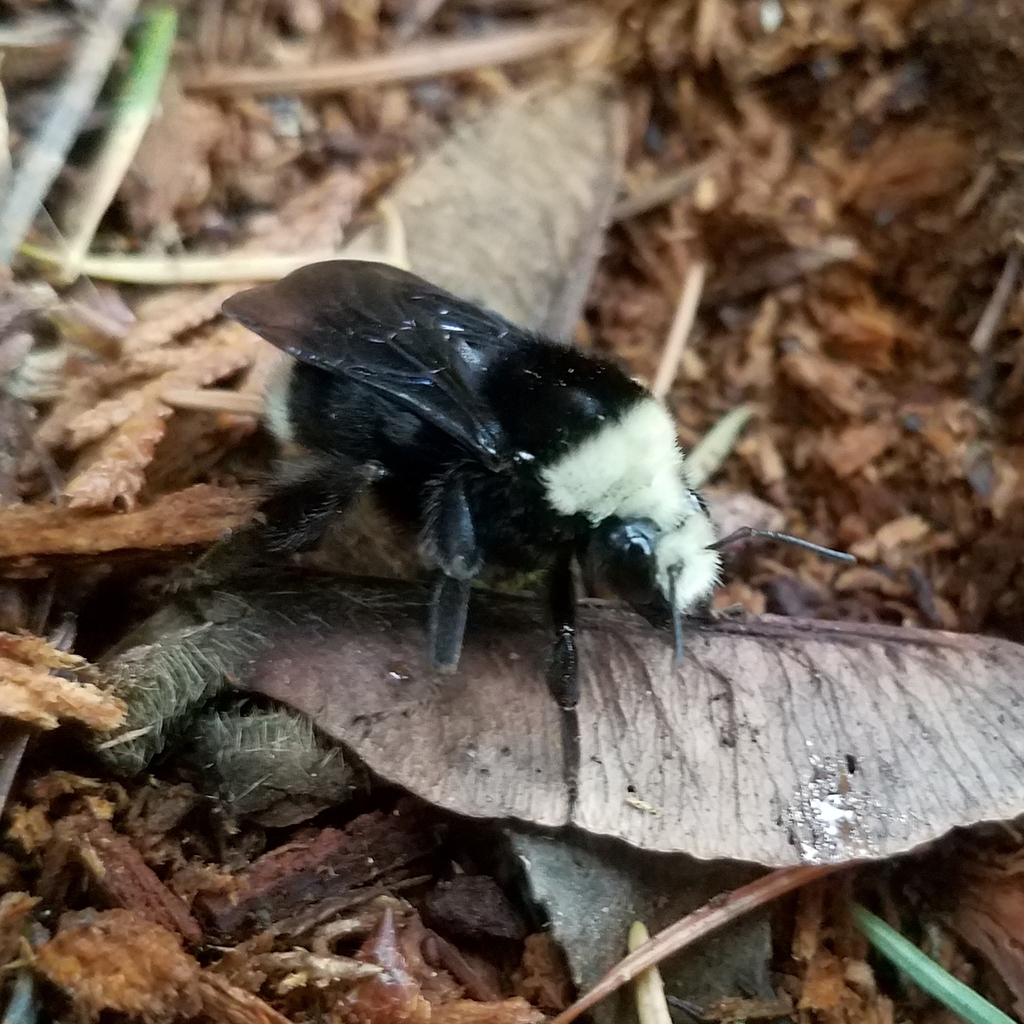
Yellow-faced bumble bee
Bombus vosnesenskii
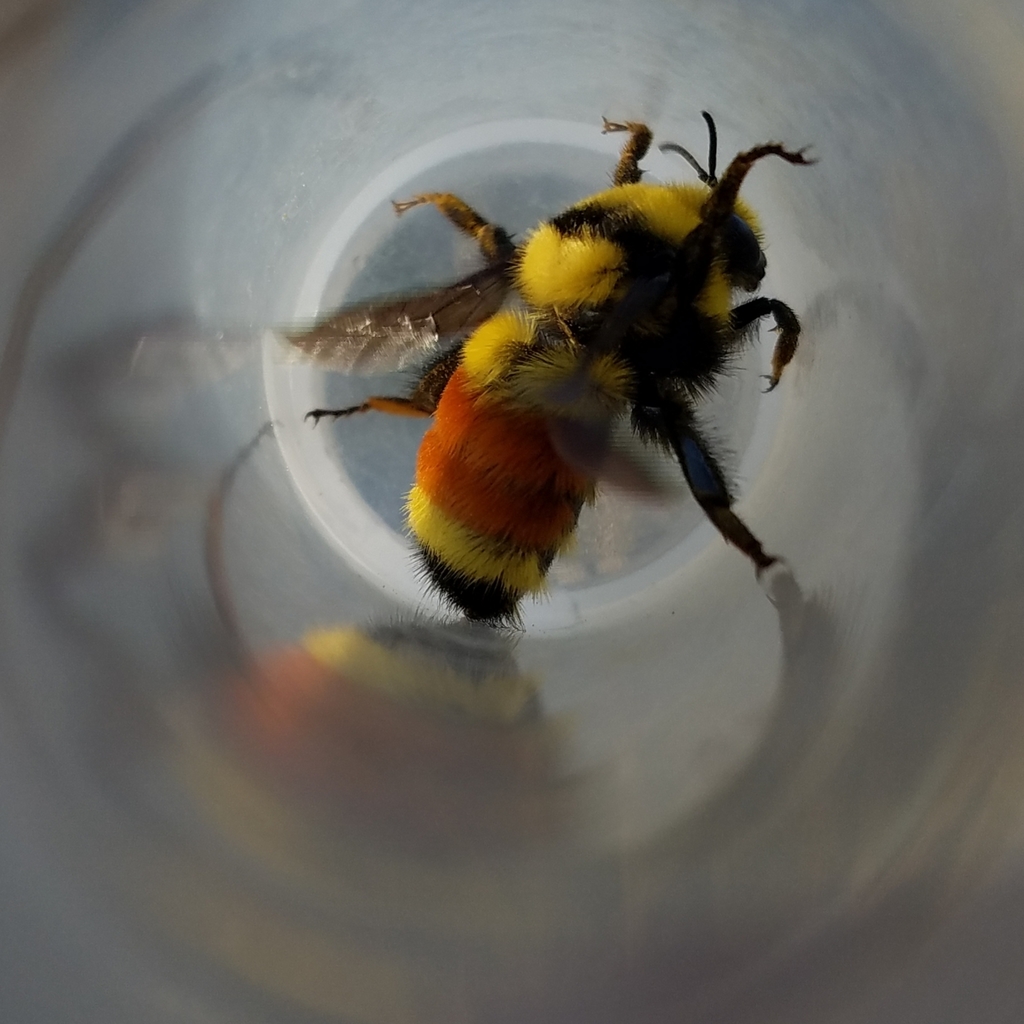
Hunt's bumble bee
Bombus huntii
≠The key differences
B. vosnesenskii has a yellow face and front of thorax but a mostly black abdomen with a single yellow band near the tip, and no orange bands.
⚖︎Side by side
| Yellow-faced bumble bee | Hunt's bumble bee | |
|---|---|---|
| To humans | Can sting | Painful sting |
| Size | Workers about 10-16 mm body length; queens 18-22 mm | Workers about 9-16 mm; queens about 18-22 mm |
| Colours | Bright yellow, Jet black, Cream to white (terminal abdomen tip) | Black, Bright yellow, Orange-red, White (pale tail variants) |
| Family | Apidae | Apidae |
| Habitat | Open and semi-open habitats including meadows, gardens, orchards, coastal scrub, and urban parks; nests on or near the ground in cavities, under grass tussocks, or in abandoned rodent burrows. | Open and semi-open habitats: prairies, meadows, shrub-steppe, agricultural fields, gardens, and montane slopes; nests in ground cavities, tussocks or protected crevices. |
| Range | Western North America: coastal and interior regions from British Columbia through Washington, Oregon and California into Baja California, and inland into parts of Idaho, Nevada and other nearby states. | Western North America — from Alaska and western Canada through the western United States into northern Mexico. Local abundance varies by region and habitat. |
| Active | Spring through fall (roughly March to October in much of its range); active during daylight hours. | Spring through late summer or early autumn; active during daylight hours, most foraging on warm, sunny days. |
| Pest? | No | No |
🔍How to spot a yellow-faced bumble bee
- Yellow face: the head (face) is distinctly yellow rather than entirely black.
- Yellow hair on the front of the thorax and a single yellow band near the tip of the abdomen; the rest of the body is black.
- Medium-sized, robust bumble bee shape; queens larger and bulkier than workers.
🔍How to spot a Hunt's bumble bee
- Robust, hairy bumble bee with a yellow face and thorax (black band between the wings), and an abdomen of yellow, then orange-red, then yellow, ending in a black tip.
- Larger size with dense hair compared with many solitary bees; slow, bumbling flight.
- Nest site in ground cavities, rodent burrows, compost piles or protected crevices (not in open exposed nests).
?Frequently asked questions
What is the difference between a yellow-faced bumble bee and a Hunt's bumble bee?
B. vosnesenskii has a yellow face and front of thorax but a mostly black abdomen with a single yellow band near the tip, and no orange bands.
Is a yellow-faced bumble bee or a Hunt's bumble bee more dangerous?
Yellow-faced bumble bee: Can sting. Hunt's bumble bee: Painful sting. Like other bumble bees, B. Hunt's bumble bees can sting, and unlike honey bees they do not leave the stinger behind.
Identification from photos is never certain: don't handle insects you can't identify, and get medical advice for bites, stings or allergic reactions.