
Northern paper wasp vs Western yellowjacket
These two are easy to mix up. Here's how to tell a northern paper wasp from a western yellowjacket, and whether either one bites or stings.
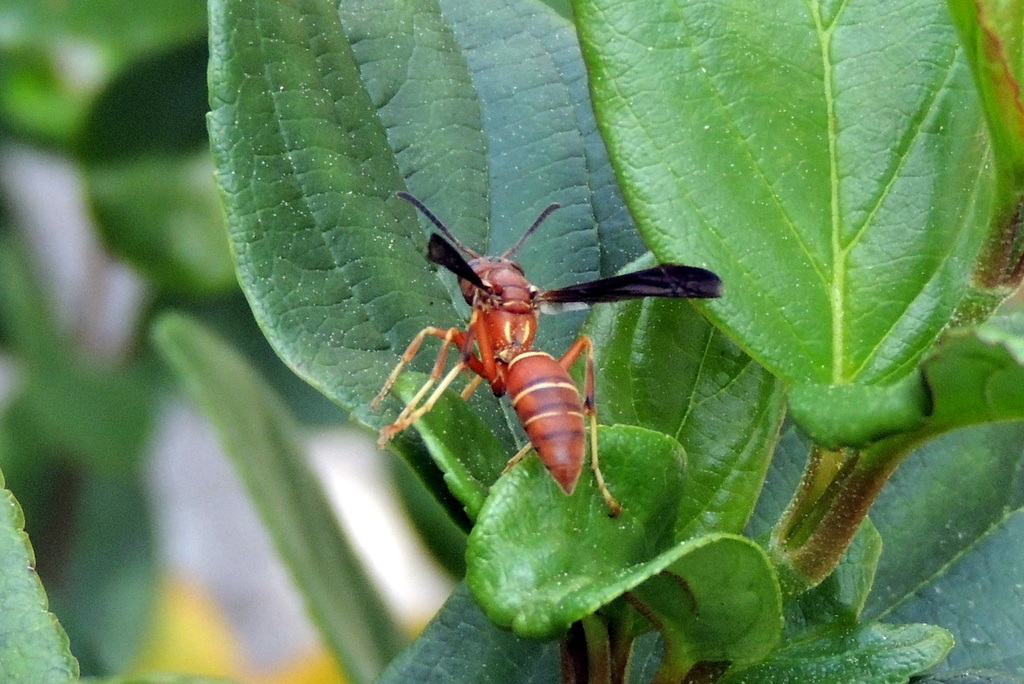
Northern paper wasp
Polistes fuscatus
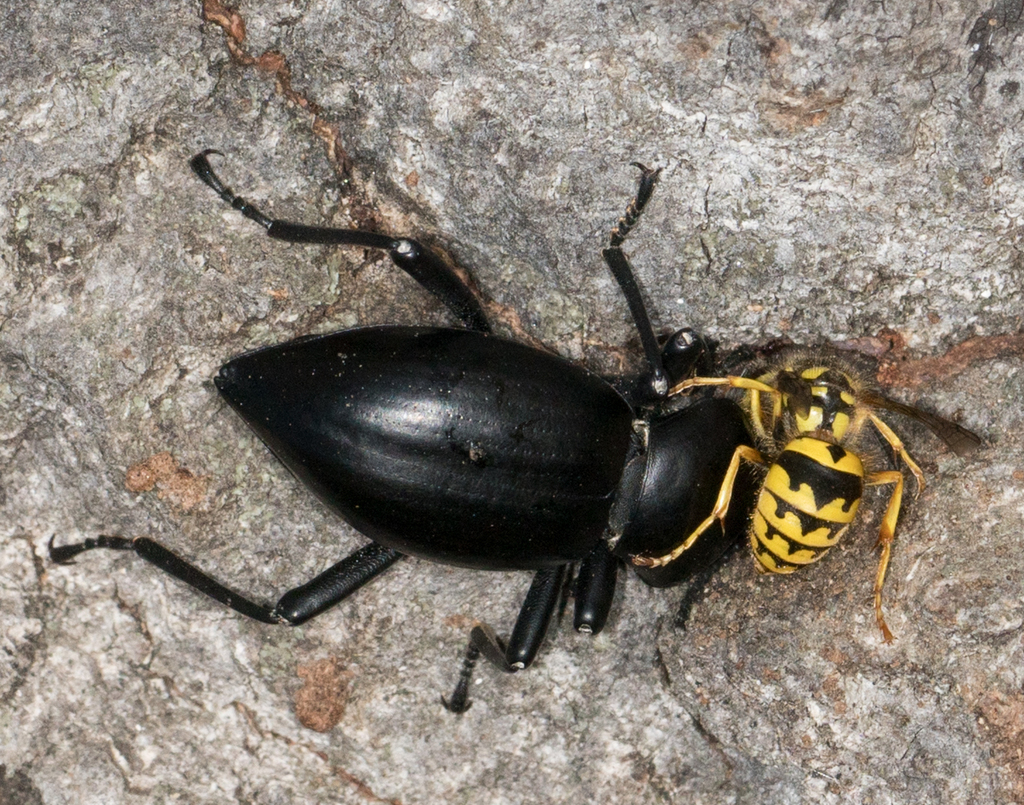
Western yellowjacket
Vespula pensylvanica
≠The key differences
Paper wasps are longer, more slender, with a narrow 'wasp waist' and often build open, umbrella-shaped nests rather than enclosed cavity nests.
⚖︎Side by side
| Northern paper wasp | Western yellowjacket | |
|---|---|---|
| To humans | Painful sting | Painful sting |
| Size | 12-20 mm body length | 10-16 mm (workers); queens larger, up to 18-20 mm |
| Colours | Reddish-brown, Dark brown / nearly black, Yellow, Cream / pale | Yellow, Black, Dark brown |
| Family | Vespidae | Vespidae |
| Habitat | Open wooded areas, gardens, suburban and urban structures; nests under eaves, in sheds, porches, shrubs and tree branches. | Open and semi-open habitats, urban areas, orchards, gardens, forest edges; nests are usually underground in abandoned rodent burrows, sometimes in wall voids, hollow logs or other cavities |
| Range | Widespread across much of North America, including Canada and the United States; locally common in temperate regions. | Native to western North America (British Columbia to Baja California, east to parts of the Rocky Mountains); introduced and invasive in Hawaii and some other Pacific islands |
| Active | Spring to autumn (nesting season mostly May-September in temperate North America); diurnal (active in daylight). | Spring to autumn in temperate zones; year-round activity possible in warm climates. Mostly active during daylight hours. |
| Pest? | No | Yes |
🔍How to spot a northern paper wasp
- Slender wasp with narrow 'waist' and long legs that dangle in flight.
- Variable facial markings (yellow or cream patches) that differ between individuals—useful identifier of P. fuscatus in combination with regional range.
- Open, umbrella-shaped single-comb paper nests suspended from a stalk, usually without an outer envelope.
- Body 12-20 mm, brown to dark brown with yellow or cream markings on the abdomen and face.
🔍How to spot a western yellowjacket
- Robust wasp 10-16 mm with bold alternating black and yellow bands on the abdomen
- Face and thorax marked with yellow and black, with a complete yellow ring around each eye; stout, compact body compared with long-bodied paper wasps
- Nests usually underground in rodent burrows, sometimes in wall voids or other cavities; enclosed papery nest rarely exposed
- Behavior: flies rapidly and gleans food from surfaces; frequently seen at human food and trash
?Frequently asked questions
What is the difference between a northern paper wasp and a western yellowjacket?
Paper wasps are longer, more slender, with a narrow 'wasp waist' and often build open, umbrella-shaped nests rather than enclosed cavity nests.
Is a northern paper wasp or a western yellowjacket more dangerous?
Northern paper wasp: Painful sting. Western yellowjacket: Painful sting. Northern paper wasps can deliver painful stings and are defensive around their nest. Western yellowjackets can deliver painful stings and workers can sting multiple times.
Identification from photos is never certain: don't handle insects you can't identify, and get medical advice for bites, stings or allergic reactions.