
German yellowjacket vs Western yellowjacket
These two are easy to mix up. Here's how to tell a German yellowjacket from a western yellowjacket, and whether either one bites or stings.
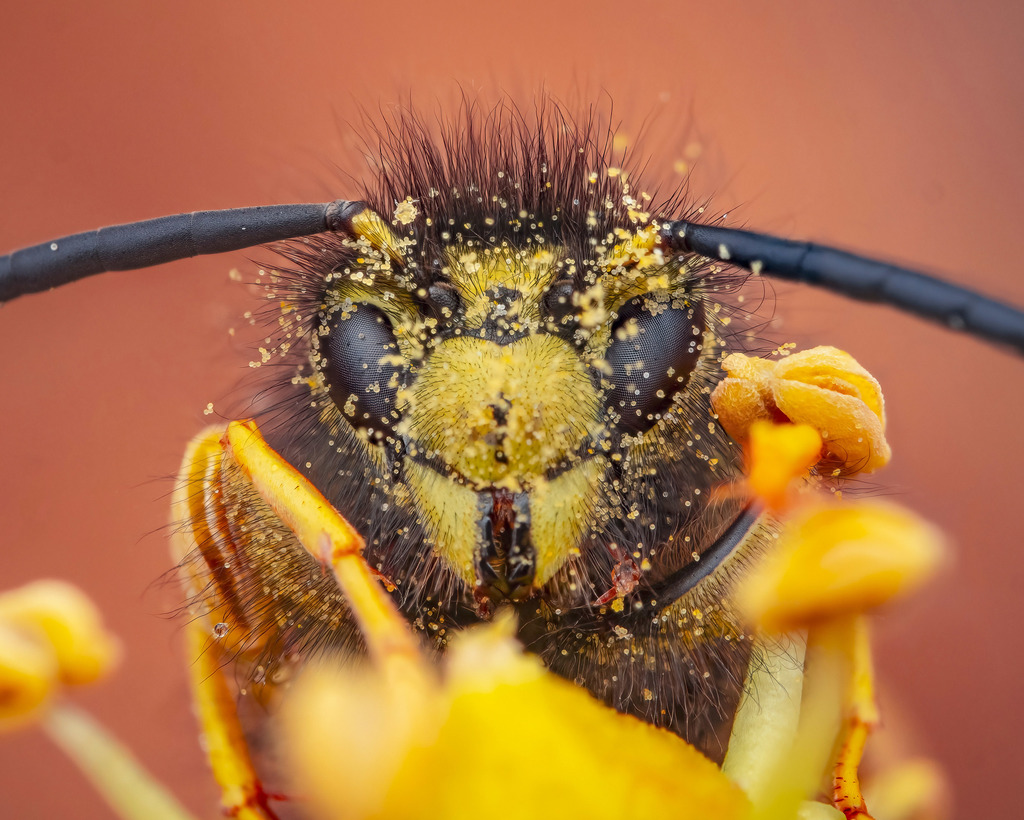
German yellowjacket
Vespula germanica
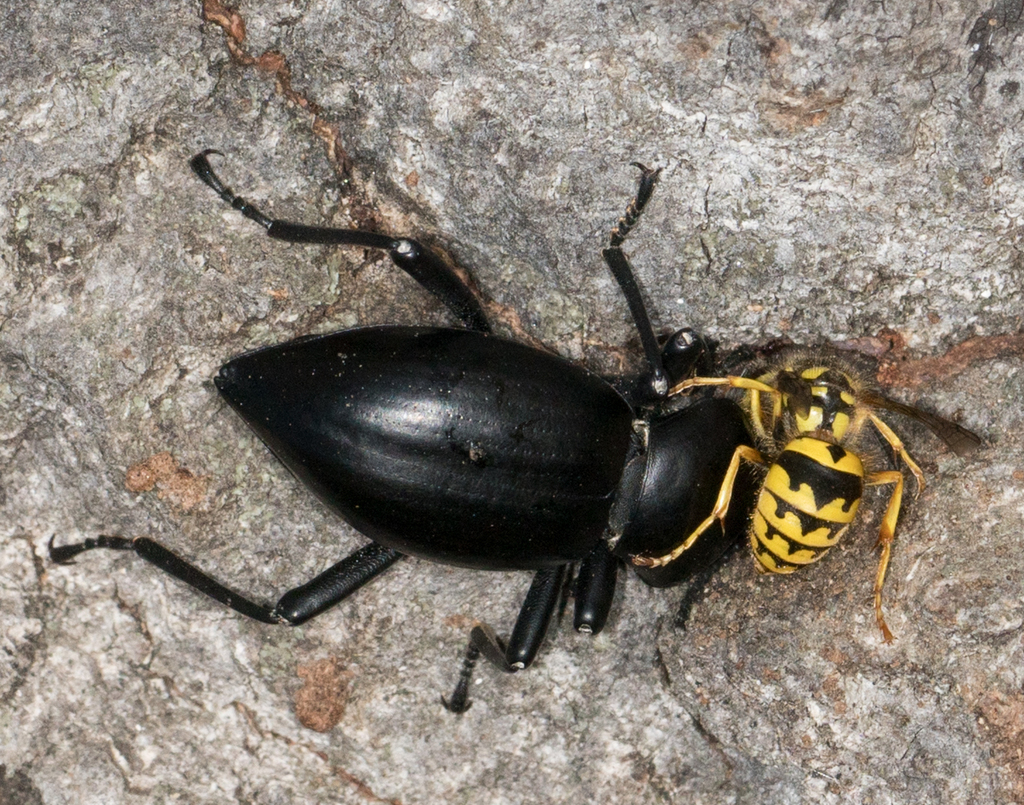
Western yellowjacket
Vespula pensylvanica
≠The key differences
Overlap in appearance; V. pensylvanica in some regions is darker and can form large perennial colonies. Geographic location helps separate them.
⚖︎Side by side
| German yellowjacket | Western yellowjacket | |
|---|---|---|
| To humans | Painful sting | Painful sting |
| Size | Workers 10-16 mm; queens 18-22 mm | 10-16 mm (workers); queens larger, up to 18-20 mm |
| Colours | Yellow, Black, Brown (abdomen/shaded areas) | Yellow, Black, Dark brown |
| Family | Vespidae | Vespidae |
| Habitat | Nests in cavities (wall voids, roof spaces, rodent burrows, hollow trees) and sometimes underground; forages in gardens, parks, farms, and around human food sources. | Open and semi-open habitats, urban areas, orchards, gardens, forest edges; nests are usually underground in abandoned rodent burrows, sometimes in wall voids, hollow logs or other cavities |
| Range | Native to Europe, northern Africa and temperate Asia; introduced and established in North and South America, southern Africa, Australia, New Zealand and several islands. | Native to western North America (British Columbia to Baja California, east to parts of the Rocky Mountains); introduced and invasive in Hawaii and some other Pacific islands |
| Active | Active spring to autumn in temperate regions; most visible and abundant in late summer and early autumn, daytime foragers. | Spring to autumn in temperate zones; year-round activity possible in warm climates. Mostly active during daylight hours. |
| Pest? | Yes | Yes |
🔍How to spot a German yellowjacket
- Bold alternating yellow and black bands on the abdomen with characteristic black triangular markings on the second abdominal segment.
- Compact, stocky body shape typical of yellowjackets; workers 10-16 mm, queens larger.
- Face often shows a darker 'mask' of black with yellow highlights; compare banding pattern to other local Vespula species for reliable ID.
- Nests commonly found in cavities (walls, attics, rodent burrows) and sometimes shallow underground.
🔍How to spot a western yellowjacket
- Robust wasp 10-16 mm with bold alternating black and yellow bands on the abdomen
- Face and thorax marked with yellow and black, with a complete yellow ring around each eye; stout, compact body compared with long-bodied paper wasps
- Nests usually underground in rodent burrows, sometimes in wall voids or other cavities; enclosed papery nest rarely exposed
- Behavior: flies rapidly and gleans food from surfaces; frequently seen at human food and trash
?Frequently asked questions
What is the difference between a German yellowjacket and a western yellowjacket?
Overlap in appearance; V. pensylvanica in some regions is darker and can form large perennial colonies. Geographic location helps separate them.
Is a German yellowjacket or a western yellowjacket more dangerous?
German yellowjacket: Painful sting. Western yellowjacket: Painful sting. Workers can sting repeatedly and deliver painful stings; reactions range from local pain, swelling and redness to severe allergic anaphylaxis in sensitized people. Western yellowjackets can deliver painful stings and workers can sting multiple times.
Identification from photos is never certain: don't handle insects you can't identify, and get medical advice for bites, stings or allergic reactions.