
Common carder bee vs Tree bumblebee
These two are easy to mix up. Here's how to tell a common carder bee from a tree bumblebee, and whether either one bites or stings.
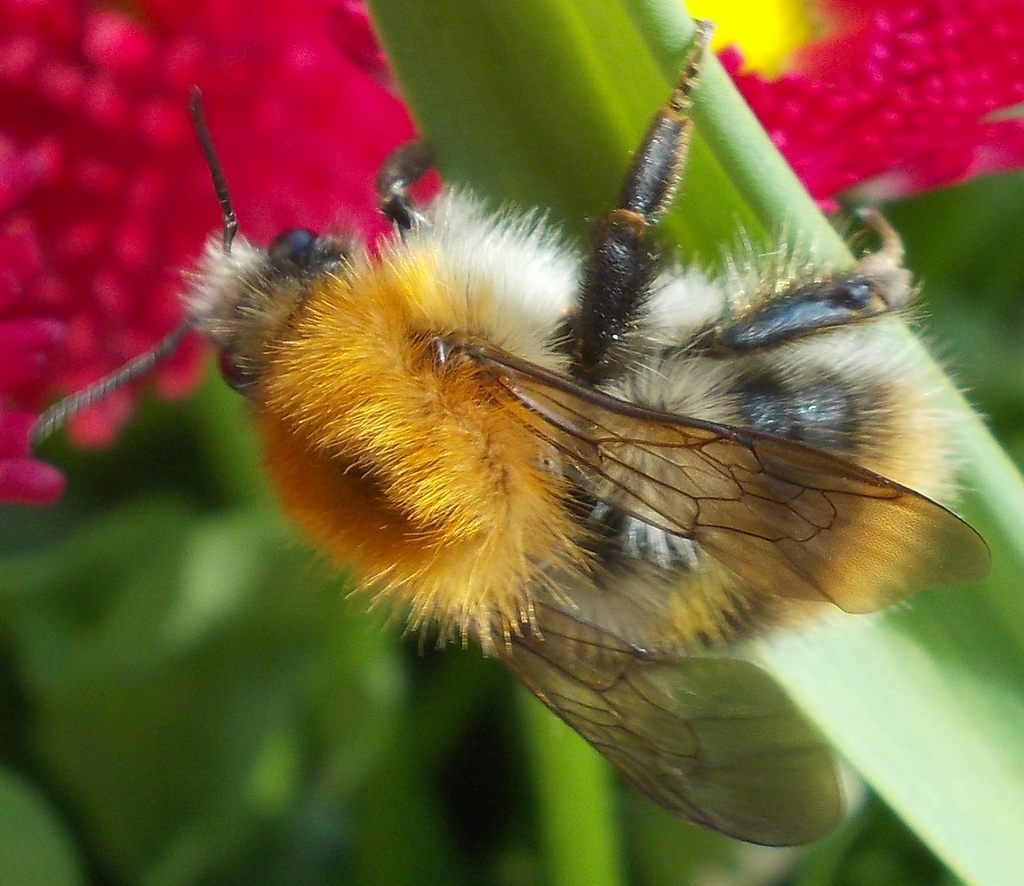
Common carder bee
Bombus pascuorum
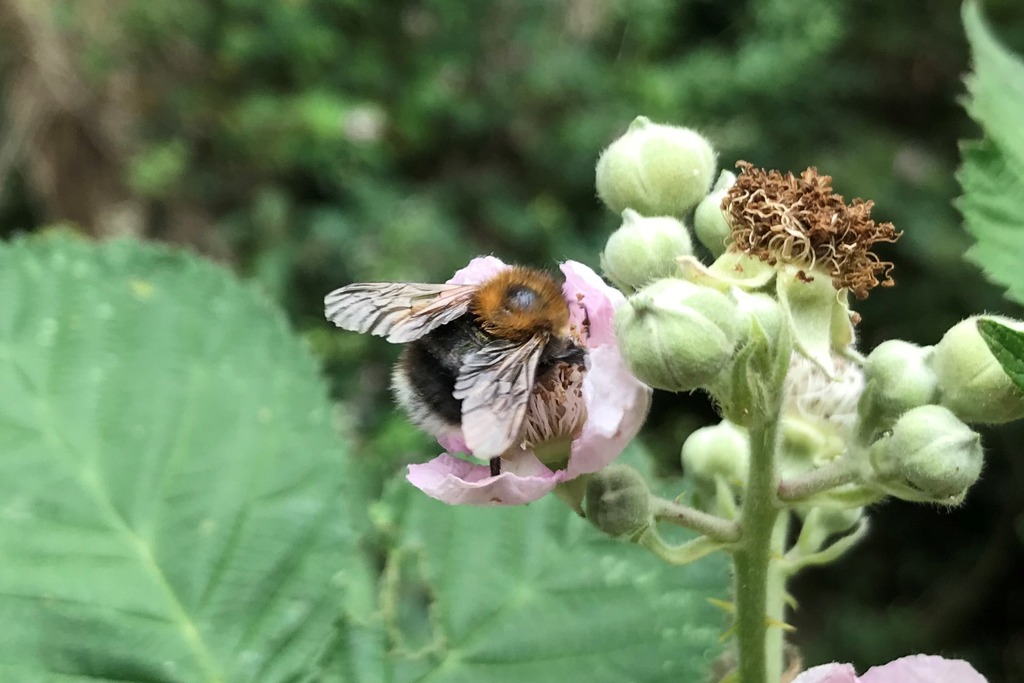
Tree bumblebee
Bombus hypnorum
≠The key differences
Tree bumblebee also has a ginger-brown thorax, but its abdomen is black with a clean white tail; common carder bees have a mostly ginger abdomen without a white tail.
B. pascuorum is slimmer and generally entirely brown/orange-haired without the sharp black abdomen and white tail contrast of B. hypnorum.
⚖︎Side by side
| Common carder bee | Tree bumblebee | |
|---|---|---|
| To humans | Can sting | Can sting |
| Size | Workers 8-15 mm; males 10-16 mm; queens 15-18 mm (body length) | Queen 15-18 mm; workers 10-15 mm (body length) |
| Colours | Ginger-brown, Pale buff, Black, Yellow (minor markings) | Ginger / Orange, Black, White |
| Family | Apidae | Apidae |
| Habitat | Gardens, meadows, hedgerows, woodland edges, parks and farmland; nests in grass tussocks, compost heaps, under sheds or shallow soil cavities. | Woodland edges, gardens, parks, hedgerows, and urban areas; nests in above-ground cavities such as bird boxes, roof spaces and tree holes. |
| Range | Widespread across Europe and parts of western Asia; common in the British Isles and continental Europe. | Native across much of northern and central Europe and parts of Asia; recently expanded into the British Isles and other regions where it has become common in urban and suburban areas. |
| Active | Spring to autumn (roughly April to October, depending on latitude); active during daylight. | Spring to autumn (typically April-October in temperate zones); diurnal (active during daylight). |
| Pest? | No | No |
🔍How to spot a common carder bee
- Dense, long fur that is predominantly ginger-brown on thorax and much of abdomen.
- Lacks strong, contrasting black-yellow banding; tail often pale or buff rather than bright white.
- Medium size with queens noticeably larger and bulkier than workers and males.
- Found on a wide variety of flowers in gardens and meadows; slow, steady flight compared with smaller solitary bees.
🔍How to spot a tree bumblebee
- Ginger-orange thorax contrasted with a mostly black abdomen and a conspicuous white tail.
- Compact, stocky bumblebee shape with dense fuzz; face and head darker than thorax.
- Nests above ground in cavities (bird boxes, roof voids, tree holes) more often than underground species.
?Frequently asked questions
What is the difference between a common carder bee and a tree bumblebee?
Tree bumblebee also has a ginger-brown thorax, but its abdomen is black with a clean white tail; common carder bees have a mostly ginger abdomen without a white tail. B. pascuorum is slimmer and generally entirely brown/orange-haired without the sharp black abdomen and white tail contrast of B. hypnorum.
Is a common carder bee or a tree bumblebee more dangerous?
Common carder bee: Can sting. Tree bumblebee: Can sting. Not aggressive and rarely sting unless handled or trapped against the skin. Tree bumblebees are not aggressive but females (queens and workers) can sting if handled, trapped against skin or if a nest is disturbed.
Identification from photos is never certain: don't handle insects you can't identify, and get medical advice for bites, stings or allergic reactions.