
Red mason bee vs Tawny mining bee
These two are easy to mix up. Here's how to tell a red mason bee from a tawny mining bee, and whether either one bites or stings.
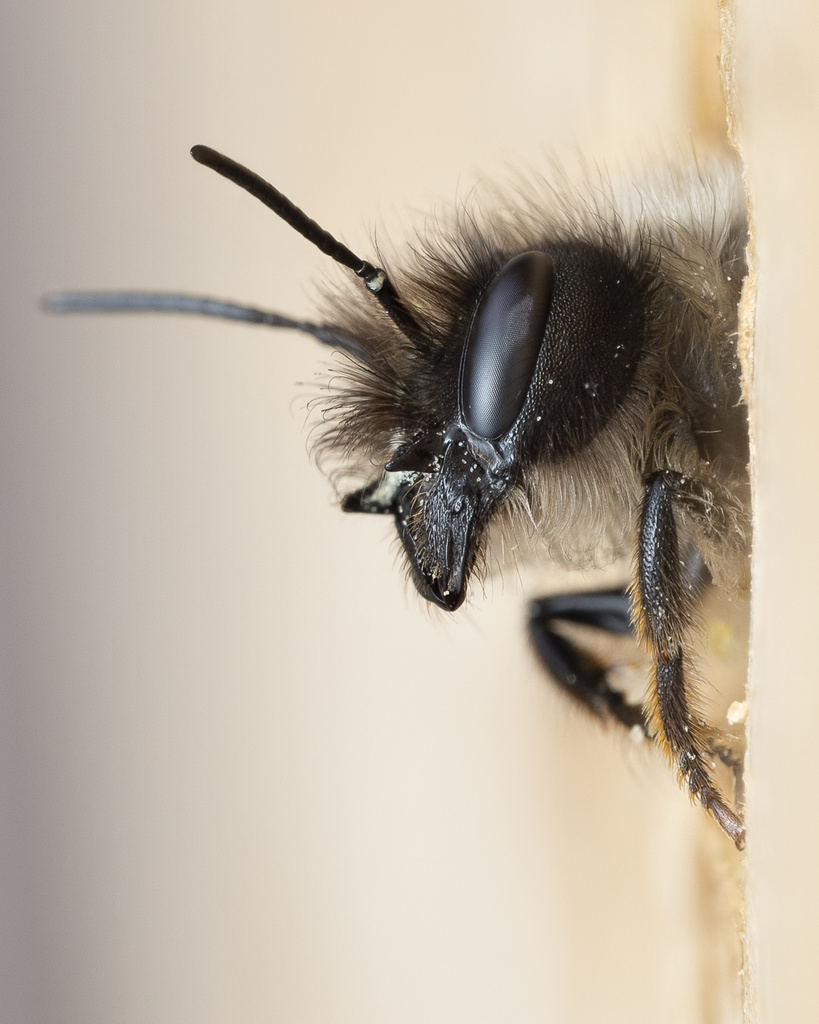
Red mason bee
Osmia bicornis
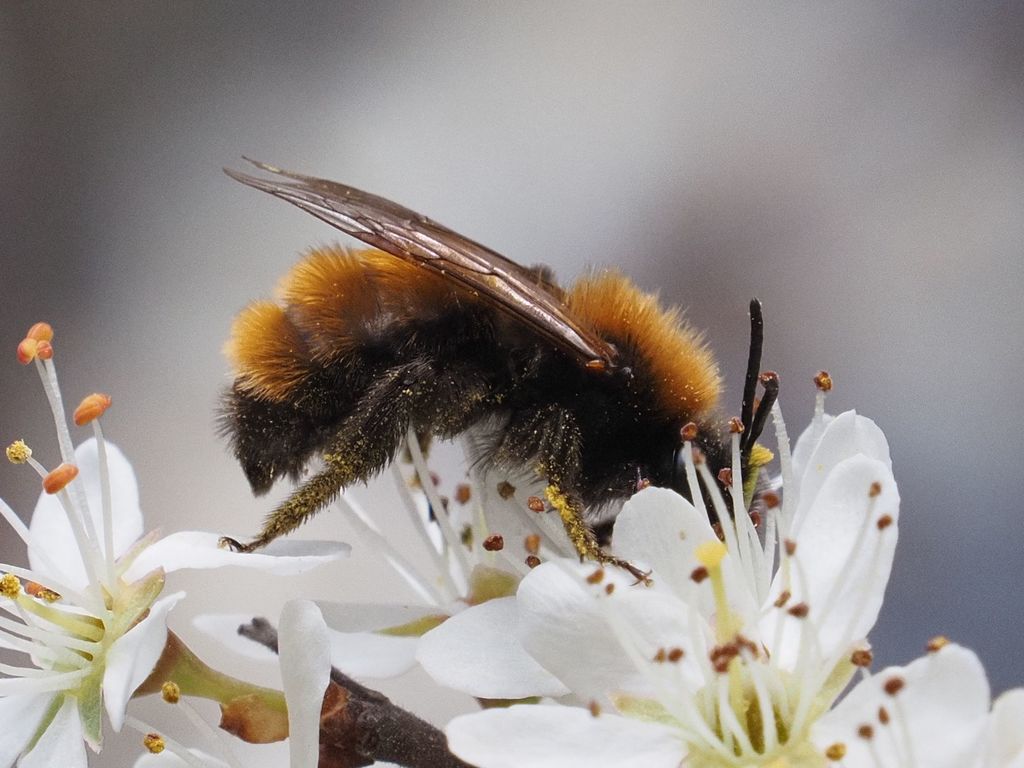
Tawny mining bee
Andrena fulva
≠The key differences
Red mason bee females have a black-haired head and ginger body but nest in hollow stems, walls and bee hotels rather than digging burrows in the ground.
⚖︎Side by side
| Red mason bee | Tawny mining bee | |
|---|---|---|
| To humans | Generally harmless | Non-toxic |
| Size | 7-12 mm long | 10-14 mm body length |
| Colours | Reddish brown, Black, Pale gray-beige hairs | Tawny orange, Reddish-brown, Pale buff, Black (face/eyes) |
| Family | Megachilidae | Andrenidae |
| Habitat | Woodland edges, gardens, orchards, hedgerows and urban areas where cavities or bee hotels are available | Bare or sparsely vegetated ground, short turf, banks, garden lawns, woodland edges and sunny patches with spring flowers. |
| Range | Widespread across much of Europe and parts of western Asia; common in the UK and northern/central Europe | Widespread across much of Europe, including the UK, and parts of western Asia. |
| Active | Spring (commonly April to June, depending on climate); diurnal (active during daylight) | Spring (typically March to May, depending on latitude and local climate); diurnal (active in daylight). |
| Pest? | No | No |
🔍How to spot a red mason bee
- Compact, robust bee 7-12 mm long with a reddish-brown abdomen (especially in females).
- Females carry pollen on dense scopal hairs beneath the abdomen rather than on hind legs.
- Active in spring on fruit-tree blossoms and other early flowers; nests in straight cavities lined with mud partitions.
- Males are smaller, paler-haired and may be seen flying around nesting holes or flowers before females.
🔍How to spot a tawny mining bee
- Tawny-orange to reddish-brown dense hairs covering thorax and abdomen in females (gives a cinnamon look).
- Females 10-14 mm long with pollen-collecting hairs (scopa) on hind legs; males slimmer and paler.
- Active in spring on low flowers and often seen flying close to the ground near bare soil where nests occur.
?Frequently asked questions
What is the difference between a red mason bee and a tawny mining bee?
Red mason bee females have a black-haired head and ginger body but nest in hollow stems, walls and bee hotels rather than digging burrows in the ground.
Is a red mason bee or a tawny mining bee more dangerous?
Red mason bee: Generally harmless. Tawny mining bee: Non-toxic. Red mason bees are non-aggressive and rarely sting. Tawny mining bees are not aggressive.
Identification from photos is never certain: don't handle insects you can't identify, and get medical advice for bites, stings or allergic reactions.