
Eastern carpenter bee vs Southern carpenter bee
These two are easy to mix up. Here's how to tell an eastern carpenter bee from a southern carpenter bee, and whether either one bites or stings.
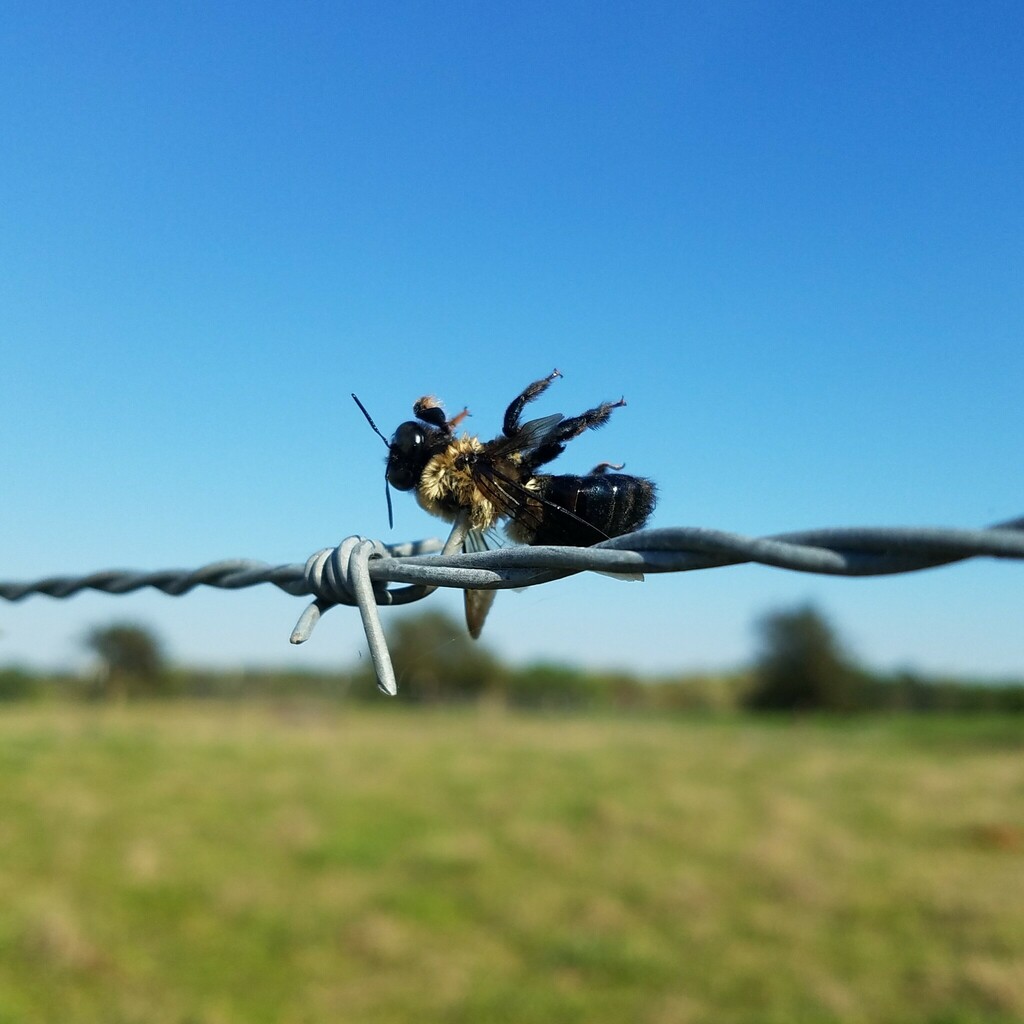
Eastern carpenter bee
Xylocopa virginica
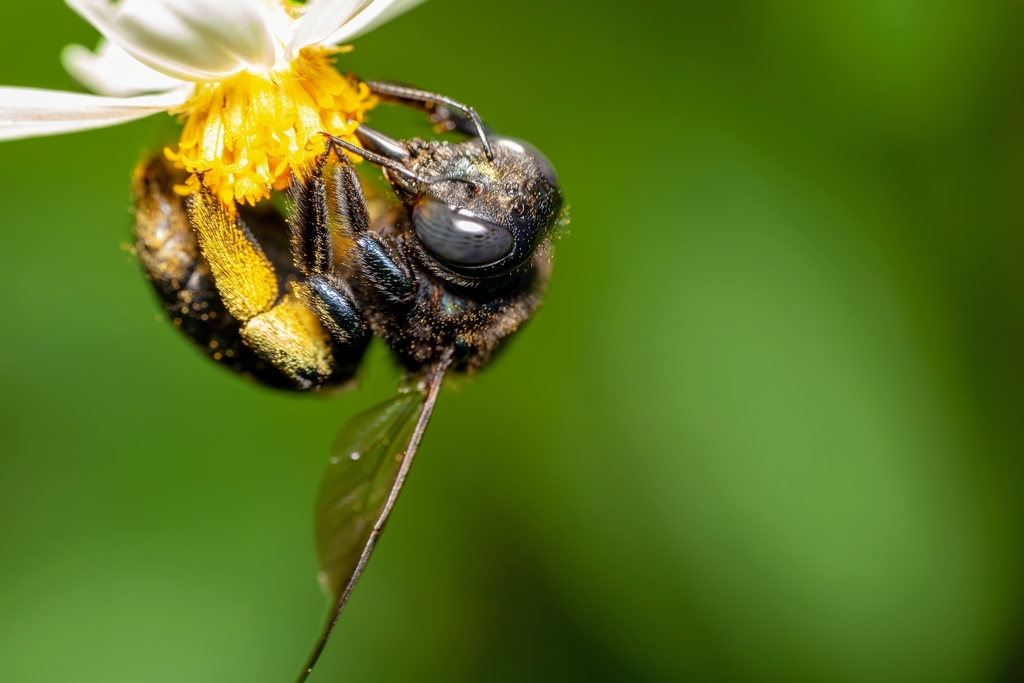
Southern carpenter bee
Xylocopa micans
≠The key differences
X. virginica is similar in size and habits; females of X. virginica often have more obvious yellowish hairs on the thorax and X. micans tends to appear darker and more uniformly metallic. Range and local field guides help separate them.
⚖︎Side by side
| Eastern carpenter bee | Southern carpenter bee | |
|---|---|---|
| To humans | Can sting | Can sting |
| Size | 15-25 mm body length | 15-25 mm body length (about 1.5-2.5 cm) |
| Colours | Shiny black, Golden yellow (thoracic hairs), Dark iridescent wing sheen | Metallic blue-black, Black, Dark smoky brown (wings) |
| Family | Apidae | Apidae |
| Habitat | Wooded edges, gardens, orchards, suburban and rural areas where untreated or weathered wood is present | Dead wood, fence posts, eaves, untreated wooden structures, cane stems and thick plant stalks in open sunny sites and gardens |
| Range | Eastern and central North America, from southern Canada through much of the eastern United States | Southeastern United States, from Virginia south to Florida and west along the Gulf Coast to Texas |
| Active | Spring through late summer; most active during warm days (spring nesting peak) | Spring through summer (peak activity in spring); diurnal, most active during warm sunny hours |
| Pest? | Yes | Yes |
🔍How to spot an eastern carpenter bee
- Large size (15-25 mm) with a shiny, largely hairless black abdomen (females).
- Thorax with dense golden-yellow hairs; males often have a pale yellow or white face patch.
- Smooth, round circular holes 10-12 mm across in untreated or weathered wood where tunnels begin.
- Unlike bumble bees, carpenter bees have a bare, shiny abdomen rather than a fuzzy one.
🔍How to spot a southern carpenter bee
- Very large, robust bee with a glossy dark blue-black or black body and rounded, shiny abdomen
- Solitary behavior: individual tunnels in wood rather than colonies or combs
- Males often hover near nest entrances and may show paler facial markings
- Wings smoky or dark with a slight bluish sheen in good light
?Frequently asked questions
What is the difference between an eastern carpenter bee and a southern carpenter bee?
X. virginica is similar in size and habits; females of X. virginica often have more obvious yellowish hairs on the thorax and X. micans tends to appear darker and more uniformly metallic. Range and local field guides help separate them.
Is an eastern carpenter bee or a southern carpenter bee more dangerous?
Eastern carpenter bee: Can sting. Southern carpenter bee: Can sting. Female eastern carpenter bees can sting, but they are not aggressive and stings are uncommon if not provoked. Females can sting and the sting is painful but rarely medically serious for people not allergic.
Identification from photos is never certain: don't handle insects you can't identify, and get medical advice for bites, stings or allergic reactions.