
Common house spider
Parasteatoda tepidariorum · Cobweb spiders
A small, non-aggressive cobweb-building spider commonly found in and around houses; preys on household insects and rarely causes more than a mild bite.
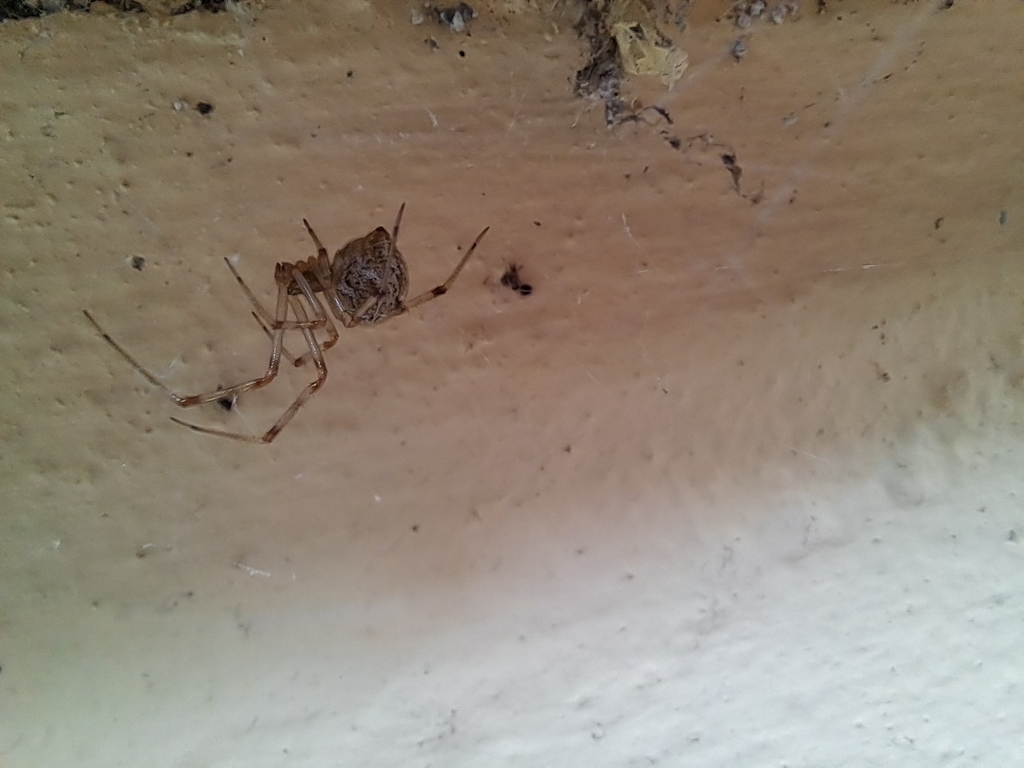
!Is the common house spider dangerous?
Only mildly. Bites are rare and usually occur only if the spider is trapped against skin. Typical symptoms are a brief sting or sharp pain, followed by mild local swelling, redness and itching that resolve in hours to a few days. Clean the area with soap and water, apply ice to reduce swelling, and take an oral antihistamine or pain reliever if needed. Seek medical care if symptoms worsen, signs of infection appear, or if you have severe allergic reactions.
Pets
Generally not dangerous to pets. A bite could cause localized pain and minor swelling in small animals; systemic effects are unlikely. If a pet shows unusual lethargy, vomiting, severe swelling or other concerning signs after a suspected spider bite, contact a veterinarian.
📖Overview
Parasteatoda tepidariorum is a widespread, synanthropic cobweb spider that builds irregular tangled webs in sheltered corners of buildings, garages, sheds and eaves. Females are sedentary and maintain a messy web where they sit near their retreat; males wander more while seeking mates. They feed on small flying and crawling insects and are common in temperate regions around the world, often introduced by human activity.
This species is not considered dangerous to people. Bites are uncommon and usually produce only minor local symptoms (redness, itching, short-lived pain). As an insect predator, it can reduce nuisance insect numbers indoors. They tolerate a range of indoor conditions and can reproduce year-round in temperate homes where prey and shelter are available.
🔍How to identify a common house spider
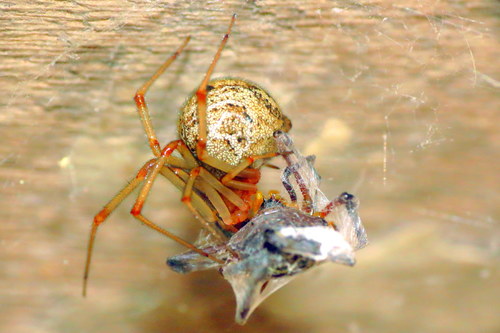
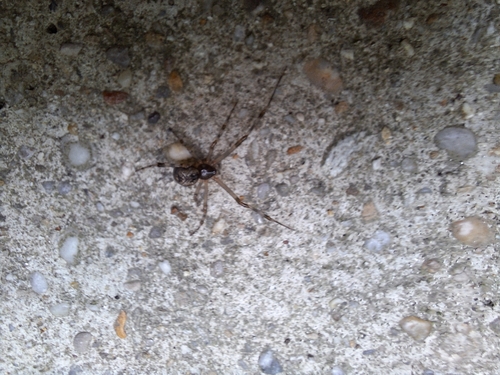
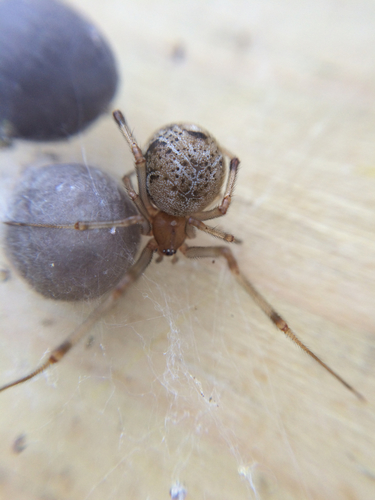
Adults have a rounded abdomen and relatively small cephalothorax. Coloration varies from light tan to darker brown, often with irregular lighter or darker markings on the abdomen. Legs are slender, often banded light and dark, and shorter than those of long-legged funnel weavers. Females are noticeably larger and more bulbous in the abdomen than males; males are slimmer and may have longer pedipalps. The web is an irregular, three-dimensional cobweb with a retreat (silken tube or tangle) where the spider hides.
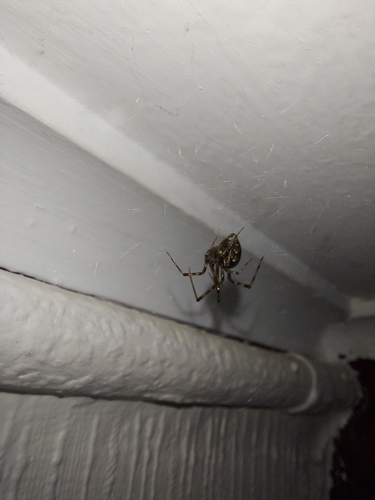
- Irregular, three-dimensional tangled web in sheltered indoor corners with a silken retreat.
- Rounded, somewhat bulbous abdomen with variable brown/tan markings.
- Females noticeably larger and more robust than males; males slimmer with visible pedipalps.
- Shorter legs relative to long-legged house spiders; abdomen often patterned rather than uniformly black.
Lookalikes
False black widow Steatoda grossa
Steatoda is usually darker, often more uniformly brown to purplish-brown and may have a smoother, more rounded abdomen; false black widows can be mistaken for Parasteatoda but Steatoda lacks the variable mottled tan patterns and may produce larger, stronger bites in rare cases.
Domestic house spider (funnel weaver) Tegenaria domestica
Tegenaria builds flat sheet-like or funnel-shaped webs and has much longer legs and a more elongated body compared with the compact, rounded-bodied Parasteatoda.
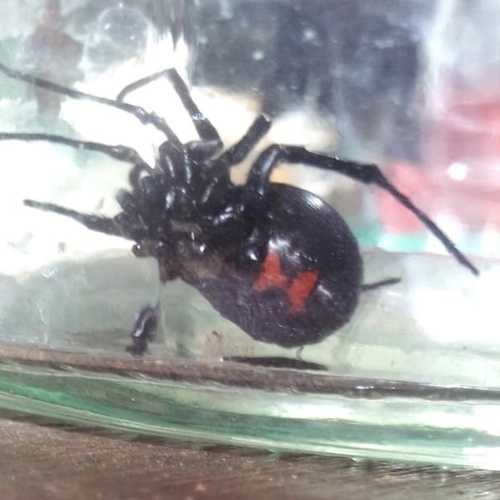
Black widow Latrodectus mactans
Latrodectus species have a glossy black body often with a red hourglass marking on the underside of the abdomen and carry medically significant venom; Parasteatoda is usually brown/tan and lacks the distinctive hourglass.
↻Life cycle
Egg sac
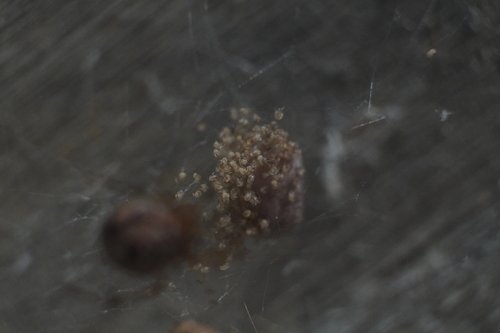
Females wrap eggs in a silk sac, often guarded in the web or tucked into a retreat; each sac can contain dozens to a few hundred eggs.
Spiderling (juvenile)
Spiderlings hatch and disperse by 'ballooning' on silk threads or by moving within the web; they molt several times as they grow.
Adult spider
Mature spiders build and maintain cobwebs, mate (males locate females), and females produce one or more egg sacs; adults continue the cycle year-round indoors.
🍃Diet and predators
Young eat
Small flying and crawling insects, captured in the web (fruit flies, gnats, tiny moths).
Adults eat
Small insects and other arthropods that become entangled in the cobweb, including flies, mosquitoes, ants and small beetles.
Predators of the young
Ants, predatory insects, other spiders, parasitoid wasps and small vertebrates.
Predators of adults
Birds, larger spiders, wasps (including spider-hunting wasps), centipedes and small mammals.
🌱Effect on plants and gardens
Does not feed on plants; beneficial as a predator of household pest insects such as flies, mosquitoes and small moths.
📍Where and when to find it
Look in ceiling corners, behind furniture, in basements, attics, garages, sheds, window frames and under eaves; egg sacs and adults are often tucked into a silken retreat within the web.
Best time
Any time indoors; more active at night. Outdoors, activity increases in warm months in temperate climates.
Observation tips
Use a flashlight to check dark corners and undersides of eaves. Photograph the web and spider from a safe distance; avoid disturbing the web if you want to observe natural behaviour.
✨Fun facts
- Females often sit near or inside a silken retreat rather than out in the open web, which can make them hard to spot.
- Spiderlings of Parasteatoda may disperse by 'ballooning' on silk threads and can travel significant distances on air currents.
- This species has spread worldwide largely through human activity, establishing populations in buildings and greenhouses far from its native range.
?Frequently asked questions
Are common house spiders dangerous?
No — they are not considered dangerous. Bites are uncommon and usually cause only mild local symptoms.
Do common house spiders bite?
They can bite if provoked or trapped against skin, but bites are rare and typically produce minor, short-lived symptoms.
Why is this spider in my house?
Homes provide shelter, stable temperatures and a steady supply of prey (flies, mosquitoes, ants), so these spiders thrive in buildings and sheltered outdoor structures.
How do I get rid of common house spiders?
Reduce insect prey and remove webs regularly with a vacuum or broom, seal entry cracks, declutter, and use sticky traps if needed. Pesticides are rarely necessary; if used, follow label instructions or consult a professional.
How can I tell this spider from a black widow?
Black widows (Latrodectus) are usually glossy black with a red hourglass marking and have a different body shape; Parasteatoda is brown/tan with variable markings and lacks the hourglass.
Will sealing my house keep them out?
Sealing gaps and installing screens helps reduce new spiders entering, but established indoor populations may persist if prey and shelter remain available.
📷Photos of the common house spider
More spiders
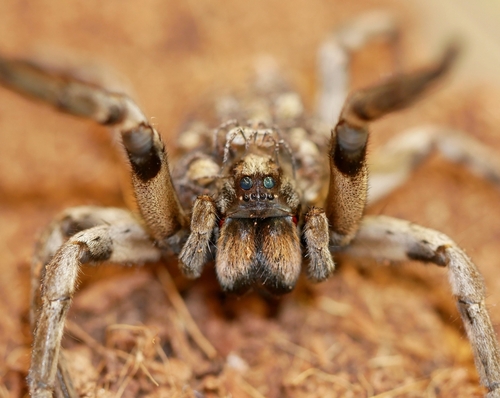
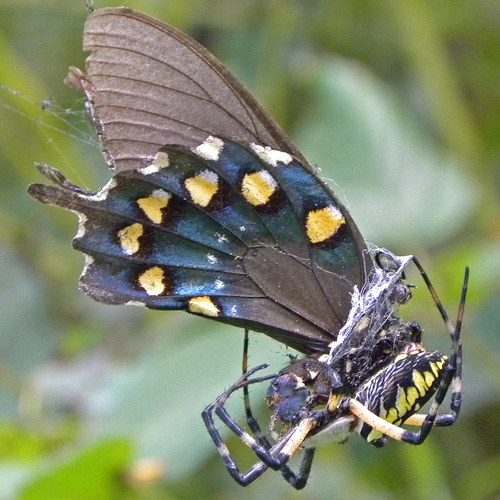
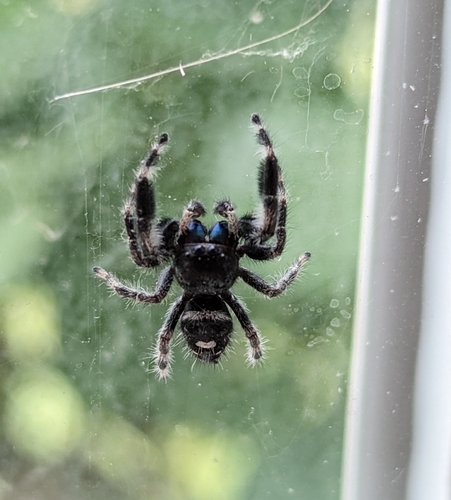
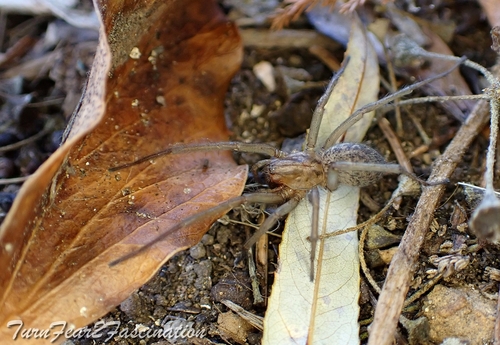
This guide was written with AI assistance and fact-checked, last updated 2026-10-09. Identification from photos is never certain: don't handle insects you can't identify, and get medical advice for bites, stings or allergic reactions.