
Southern black widow
Latrodectus mactans · Cobweb spiders
A glossy black, medically important spider of the Americas whose females have a painful neurotoxic bite and often live near buildings and clutter.
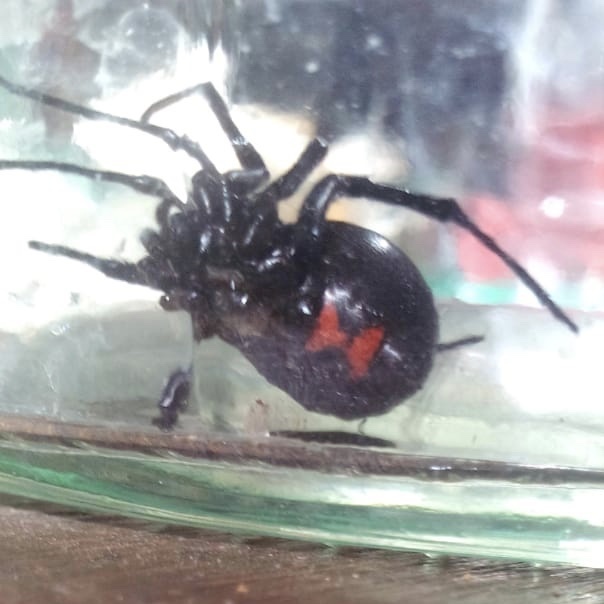
!Is the southern black widow dangerous?
Yes, it can be. Female bites inject neurotoxic venom (latrotoxin) that can cause local pain, muscle cramps, sweating, nausea, elevated blood pressure, and in severe cases respiratory difficulty. Bites are rarely fatal with modern medical care but can be serious for children, the elderly, and people with health conditions. First aid: wash wound with soap and water, apply cold pack for pain, keep the patient calm and still, seek medical attention promptly (emergency department). Do not attempt to suck out venom. Antivenom is available in severe cases.
Pets
Pets (cats and small dogs) can be affected by similar symptoms: muscle tremors, weakness, vomiting, hypersalivation, and respiratory distress. Seek veterinary care if a pet is bitten.
📖Overview
Latrodectus mactans, the Southern black widow, is a stout-bodied cobweb-building spider best known for the female's glossy black abdomen and red hourglass marking. Females build irregular, sticky webs in sheltered, undisturbed locations and feed on crawling and flying insects. Males are much smaller, less conspicuous, and non-aggressive. Bites are uncommon and typically occur when the spider is disturbed or trapped against skin; venom is neurotoxic and can cause systemic symptoms that require medical attention, especially in children, older adults, and people with health problems.
This species is synanthropic in many areas: it commonly lives near human structures (woodpiles, sheds, basements, garages) where prey and shelter are abundant. Female black widows can live for more than a year and may produce several egg sacs, each holding dozens to hundreds of eggs. Identification and careful avoidance are the best ways to reduce bite risk; eradication of individual spiders is usually by targeted removal rather than broad pesticide use.
🔍How to identify a southern black widow
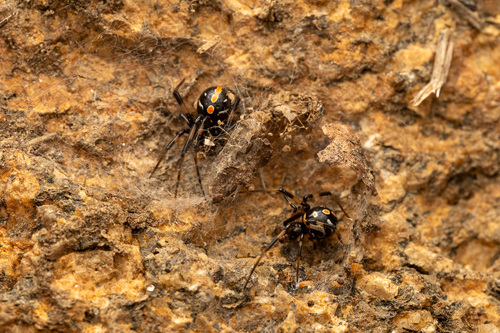
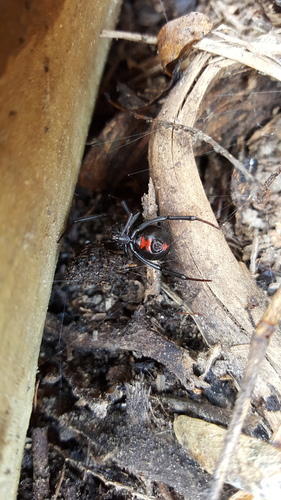
Adult females are 8-13 mm body length (not including legs), glossy black with a distinct red hourglass marking on the underside of the abdomen; the dorsal abdomen may have small red or white spots or faint striping in some individuals. Males are slimmer, 3-6 mm body length, often brown to black with white and red dorsal markings; their ventral hourglass is often fainter or broken. Legs are relatively short and stout compared with long-legged spiders, and the web is an irregular tangle of sticky silk rather than a neat orb.
- Shiny black, globular abdomen on females with a red hourglass marking on the ventral side.
- Females 8-13 mm body length; males much smaller and often brownish with dorsal markings.
- Tangled irregular cobwebs in sheltered, undisturbed areas near the ground or in buildings.
- Hourglass marking is usually on the underside of the abdomen; look at web location and body shape if marking is not visible.
Lookalikes
Northern black widow Latrodectus variolus
Its red hourglass is usually split into two separate marks, and it often has a row of red spots on the back; L. variolus tends to occur further north and may show variable dorsal markings. Identification often requires geographic context or expert examination.
Red widow Latrodectus bishopi
Has more extensive red/orange dorsal markings and is restricted to parts of Florida; look for range and brighter dorsal coloration.
False black widow Steatoda spp.
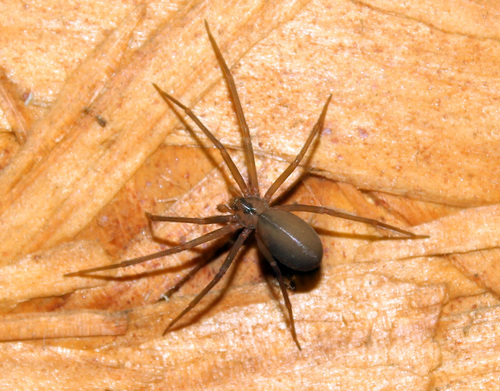
Generally rounder and duller brown or purple-black; lack the clear red hourglass and are less likely to cause severe envenomation, causing only mild bite symptoms.
↻Life cycle
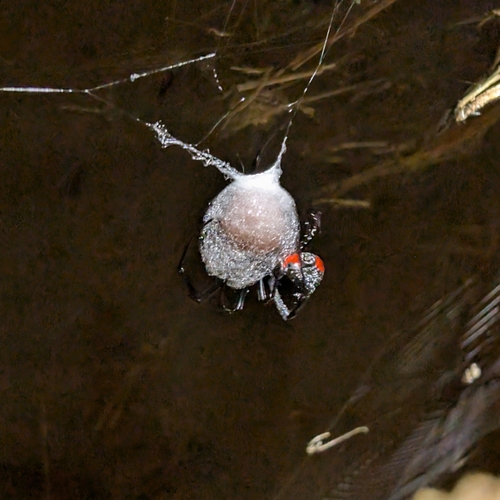
Egg sac
Female produces silk egg sacs, each containing 100-400 eggs. Egg sacs are guarded or hidden in the web; eggs hatch in weeks depending on temperature.
Juvenile (spiderling)
Young spiders emerge and disperse by 'ballooning' on silk threads or stay near the sac; they molt multiple times while growing and may overwinter as juveniles in cooler regions.
Adult spider
Sexually mature after several molts; females build and maintain webs and produce egg sacs, males search for females to mate and usually die soon after mating.
🍃Diet and predators
Young eat
Small arthropods and tiny insects captured in silk or scavenged.
Adults eat
Insects and other spiders caught in their tangled webs, including flies, beetles, ants and occasionally other spiders.
Predators of the young
Birds, larger spiders, predatory insects and parasitoid wasps.
Predators of adults
Wasp predators (including spider wasps), some birds, small mammals, and other spiders; parasites and diseases also affect populations.
🌱Effect on plants and gardens
Does not feed on plants; helps control insect and other arthropod populations around homes and gardens.
📍Where and when to find it
Look in dark, sheltered spots: beneath furniture and boxes in garages, inside woodpiles, under eaves, in crawlspaces and basements. Egg sacs and webs are often hidden near the ground or in corners.
Best time
Warm months (spring to fall) and at night when they are most active. Early morning or after dusk are good times to check webs.
Observation tips
Use a flashlight and a long-handled tool or pole when inspecting potential hiding places; wear gloves and avoid putting hands into undisturbed piles or boxes. Photograph the spider from a safe distance rather than trying to handle it.
✨Fun facts
- Only female black widows have the large, medically significant venom glands; males are much smaller and rarely bite.
- The famous 'hourglass' is on the underside of the abdomen; dorsal markings vary and are not always a reliable field mark.
- Black widows help control pest insects and are an important part of the local food web despite their fearsome reputation.
?Frequently asked questions
Are Southern black widows dangerous?
Yes. Female bites deliver neurotoxic venom that can cause intense pain and systemic symptoms. Bites are rarely fatal with modern medical care, but seek medical attention if bitten.
Do Southern black widows bite people unprovoked?
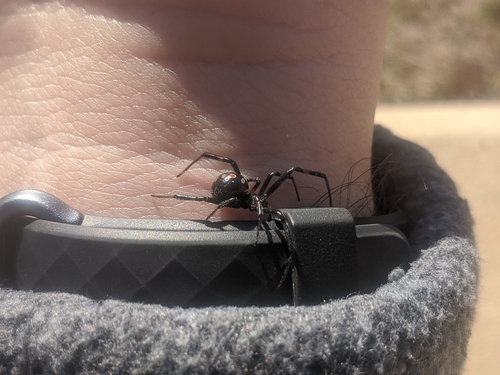
They are not aggressive and usually bite only when threatened, trapped against skin, or handled (for example when reaching into clutter or gloves).
Why am I finding black widows in my house?
They seek sheltered, undisturbed places with access to prey—basements, garages, woodpiles, closets and storage boxes are attractive. Clutter and gaps into crawlspaces increase the chance of encounters.
How do I get rid of a black widow safely?
Reduce shelter and food sources (declutter, seal entry points, move wood away from structures). For individual spiders, use a long-handled tool, a vacuum with a hose, or call pest control. Wear gloves and avoid handling directly.
What should I do if I'm bitten?
Wash the bite with soap and water, apply a cold pack for pain control, keep the person calm and immobile, and seek medical care promptly. Take or photograph the spider if it can be safely collected for identification.
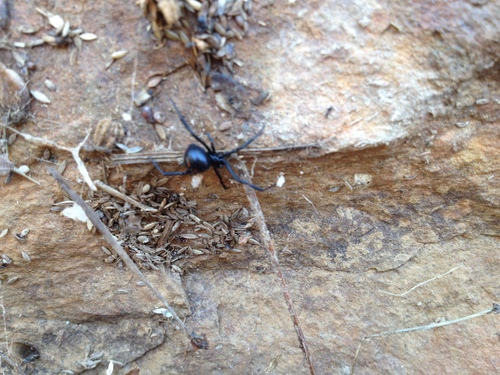
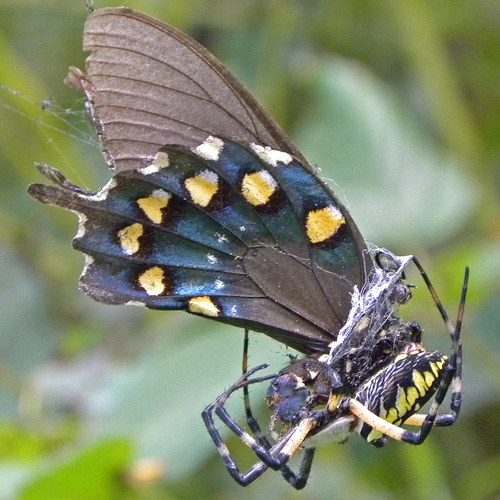
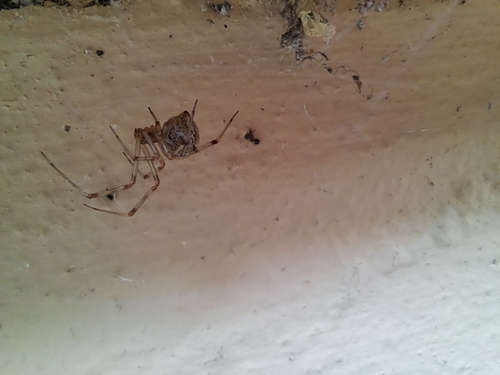
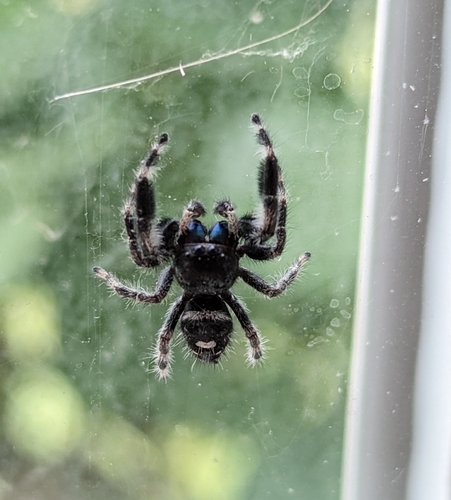
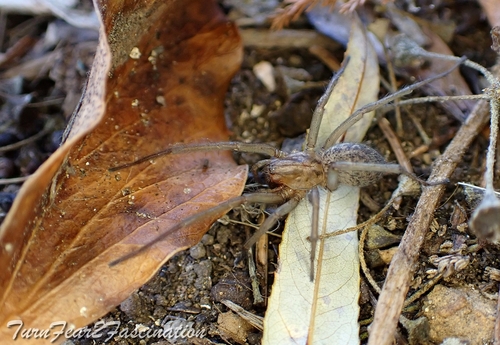
📷Photos of the southern black widow
More spiders
This guide was written with AI assistance and fact-checked, last updated 2026-10-09. Identification from photos is never certain: don't handle insects you can't identify, and get medical advice for bites, stings or allergic reactions.