
Carolina wolf spider
Hogna carolinensis · Wolf spiders
One of North America's largest wolf spiders, a ground-dwelling nocturnal hunter often seen in and around homes and gardens.
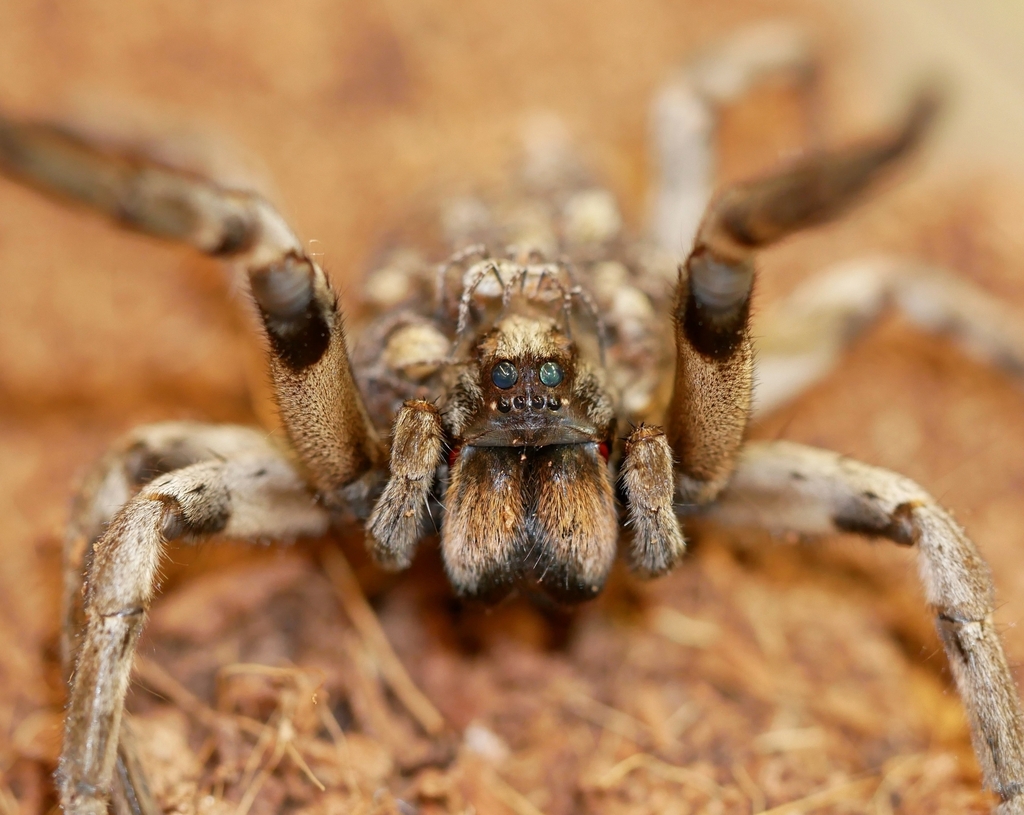
!Is the carolina wolf spider dangerous?
Only mildly. Bites are uncommon and usually occur only if the spider is handled or trapped against skin. A bite can be painful, with localized redness, swelling and sometimes minor bruising. Severe allergic reactions are rare. First aid: clean the area with soap and water, apply a cold pack to reduce swelling, and monitor for worsening symptoms; seek medical attention if signs of infection, spreading redness, severe pain, or allergic reaction occur.
Pets
Generally not dangerous to dogs or cats; a bite to a small pet could be painful or cause localized swelling. Monitor pets for signs of distress and consult a veterinarian if a bite is suspected and the animal is unwell.
📖Overview
Hogna carolinensis is a large, robust wolf spider native to North America and found across much of the United States. It is a wandering predator that does not build webs to catch prey; instead it hunts insects and other small arthropods on the ground, often at night. Females carry round egg sacs attached to their spinnerets and later carry newly hatched spiderlings on their backs for a short period. They are commonly encountered in lawns, fields, forest edges and sometimes inside buildings.
Although imposing because of their size, these spiders are generally not aggressive toward humans and will flee if disturbed. Bites are uncommon and usually occur only when the spider is trapped against skin; medically significant reactions are rare, but bites can be painful and may cause localized swelling and redness.
🔍How to identify a carolina wolf spider
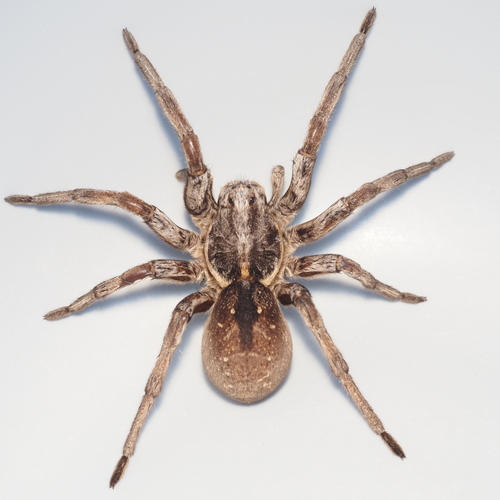
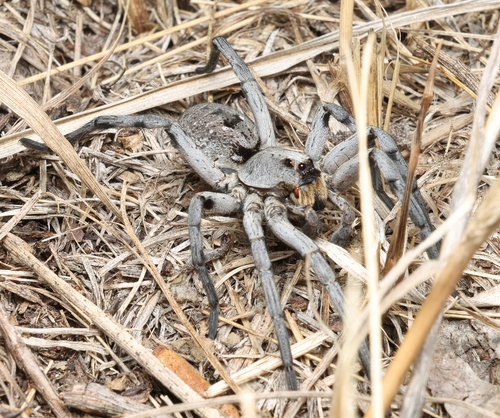
Adult H. carolinensis are large and heavy-bodied for wolf spiders. Females commonly reach body lengths of about 22-35 mm, with males smaller (about 18-20 mm); legspan can make them appear much larger. The cephalothorax and abdomen are various shades of brown with a distinct pattern of darker and lighter stripes or mottling; a pale median dorsal stripe on the abdomen is often visible. Legs are stout and banded. Eye arrangement is typical for wolf spiders: a row of four small eyes on the bottom, two very large forward-facing eyes in the middle row, and two medium-sized eyes on the top row, giving excellent night vision.
- Large, heavy-bodied wolf spider with female body length commonly 22-35 mm and substantial legspan.
- Distinctive eye arrangement: two very large middle forward-facing eyes (excellent night vision).
- Dorsal pattern of mottled brown with a pale median stripe on the abdomen and banded legs.
- Female often seen carrying a round silk egg sac attached to the spinnerets; spiderlings sometimes ride on the mother's back.
Lookalikes
Other large wolf spiders Hogna spp. or Tigrosa helluo
Similar ground-hunting wolf spiders can look alike; H. carolinensis is among the largest in its range and often has a distinctive broad abdomen with a pale median stripe. Precise separation may require close examination of genitalia or expert ID.
Rabid wolf spider Rabidosa rabida
Smaller (females up to about 20 mm) and paler, with two dark stripes on the cephalothorax and a dark central band on the abdomen; often found on low vegetation rather than in ground burrows.
↻Life cycle
Egg sac
Females produce a round silk egg sac and carry it attached to the spinnerets until spiderlings near hatching.
Spiderling care and maturation
After hatching, spiderlings climb onto the mother's back and remain there for several days to weeks before dispersing. Juveniles molt multiple times before reaching adult size the following season(s).
Adult (mature)
Adults are solitary, roam to hunt prey, mate in spring or summer, and the cycle repeats. Females may produce one or more egg sacs per season.
🍃Diet and predators
Young eat
Small insects and other tiny arthropods captured on the ground.
Adults eat
Ground-dwelling insects, other spiders and small arthropods; active hunters that do not use capture webs.
Predators of the young
Small birds, predatory insects, ants, and parasitoid wasps.
Predators of adults
Birds, small mammals, larger spiders, toads and some wasps; human habitat control can also reduce local populations.
🌱Effect on plants and gardens
H. carolinensis preys on many insects that might feed on plants, so it is generally beneficial in gardens and crops as a natural pest controller.
📍Where and when to find it
Look at night on the ground in lawns, trails, gardens, under logs, rocks and in leaf litter. Females with egg sacs may be seen moving slowly; spiderlings may be visible on a mother's back shortly after hatching.
Best time
Spring through fall; best observed at night when they hunt actively.
Observation tips
Use a flashlight at night to spot their reflective eyes. Approach slowly to photograph; a low camera angle at ground level shows scale and eye arrangement. For safety, avoid handling.
✨Fun facts
- Females carry both the silk egg sac and, after hatching, the tiny spiderlings on their backs for protection.
- Hogna carolinensis is among the largest wolf spiders found in North America.
- They do not spin prey-catching webs; instead they actively hunt by sight and touch, often at night.
?Frequently asked questions
Are Carolina wolf spiders dangerous?
No—Hogna carolinensis is not dangerous to humans. Bites can be painful and cause local swelling, but serious medical problems are rare.
Do Carolina wolf spiders bite?
They can bite if threatened or handled, but bites are uncommon. Most encounters end with the spider fleeing rather than biting.
Why is a wolf spider in my house?
They enter homes searching for prey, shelter or to escape extreme weather. Garages, basements and ground-level entry points are common access ways.
How do I get rid of Carolina wolf spiders?
Reduce clutter, seal gaps around doors and windows, remove debris and leaf litter near foundations, and control insect prey populations. For immediate removal, capture and release outdoors using a jar and a piece of stiff paper. Use pesticides only as a last resort and follow label instructions.
Where do Carolina wolf spiders live?
They live on the ground in grassy areas, leaf litter, forest edges, fields and sometimes inside buildings across much of the United States.
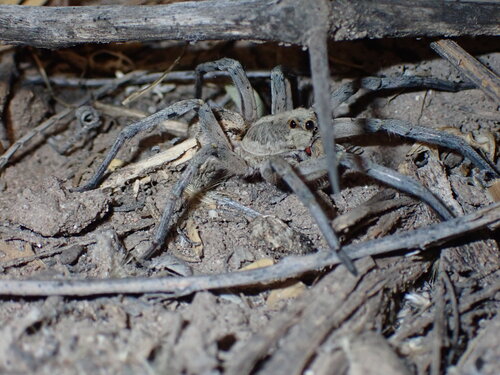
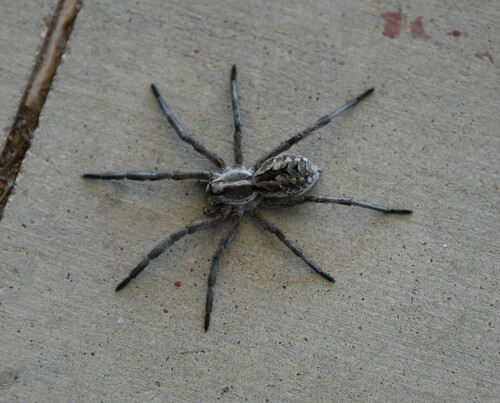
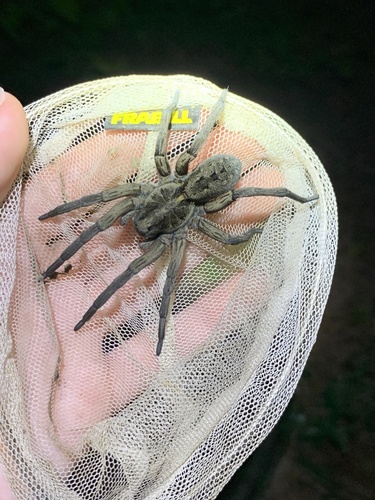
📷Photos of the carolina wolf spider
More spiders
This guide was written with AI assistance and fact-checked, last updated 2026-10-09. Identification from photos is never certain: don't handle insects you can't identify, and get medical advice for bites, stings or allergic reactions.