
Is this a brown recluse? How to tell, and 6 spiders often mistaken for one
Brown recluses have a scary reputation, so almost every brown spider in a house gets mistaken for one. Most of them aren't. Brown recluses only live in part of the United States, and even there, cellar spiders, house spiders and wolf spiders are far more common.
A few features tell a brown recluse apart reliably. Check them first, then compare your spider with the lookalikes below.
How to recognise a real brown recluse
Brown recluses are small: the body is about 6-12 mm long (1/4 to 1/2 inch), and with legs they're roughly the size of a US quarter. Look for these features together, not just one of them:
A dark violin-shaped mark on the front part of the body (the cephalothorax), with the neck of the violin pointing back towards the abdomen. Other spiders can have dark marks here too, so don't rely on the violin alone.
Six eyes arranged in three pairs in a semicircle. Most spiders have eight eyes. You may need a close-up photo or a magnifying glass to see this.
Plain, evenly coloured legs with no bands, stripes or obvious spines, and a plain abdomen with no stripes, spots or chevrons.
Brown recluses live in the south-central and lower Midwest US, including Missouri, Kansas, Oklahoma, Arkansas, Tennessee and Kentucky. Outside this area, a spider found in your home is very unlikely to be one. Indoors they hide in boxes, closets, shoes and clothes left on the floor, and their webs are small, messy retreats rather than catching webs.
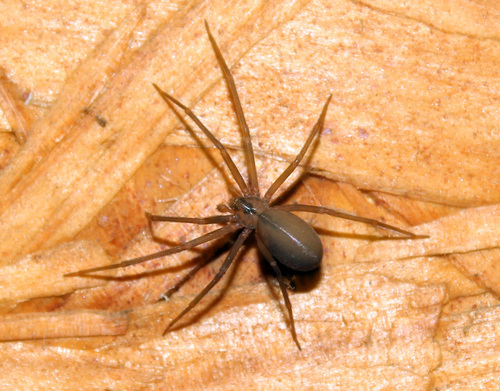
Long-legged and in a messy web: cellar spiders
Cellar spiders (daddy long-legs spiders) are the spider most often confused with brown recluses. They have a tiny, pale, elongated body and extremely long, thin legs, much longer in proportion than a recluse's. They hang upside down in loose, messy webs in corners, basements and ceilings, and when disturbed they shake the web rapidly.
A brown recluse never sits in an open web like this, and its legs are thicker. Cellar spiders are harmless to people and eat other spiders, including recluses.

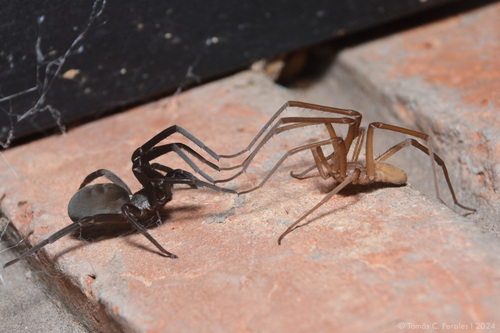
Tan and long-legged in the South: southern house spider
Male southern house spiders are tan to light brown with long legs and are very often mistaken for brown recluses in the southern US. They have eight eyes clustered in a small bump on the front of the head, and no violin mark. Females look completely different: stocky and velvety black, living in a woolly web around a crack in a wall or window frame.
They're shy and bites are rare and minor.
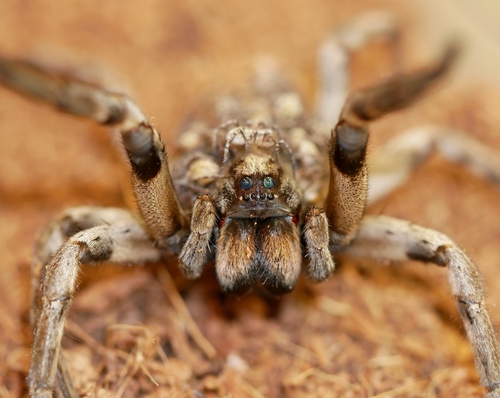
Hairy, striped and fast: wolf spiders
Wolf spiders are brown and often larger than a recluse, which is why people worry. Look at the pattern: wolf spiders usually have stripes or mottling on the body and banded, hairy legs. From the front you can see two large eyes that shine in torchlight. They hunt on the ground and don't build webs.
A wolf spider bite can be painful but isn't medically dangerous.
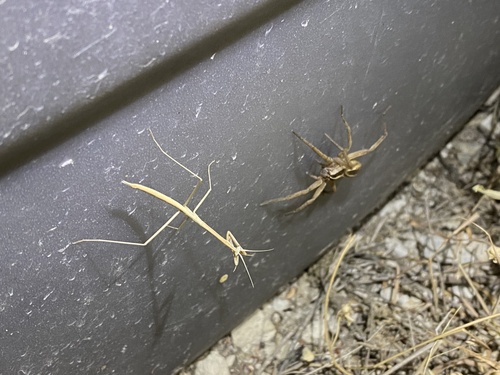
Funnel webs and chevrons: house and funnel weaver spiders
Barn funnel weavers, giant house spiders and hobo spiders are brown, long-legged spiders that run fast across floors, especially in late summer and autumn. They have dark chevron or herringbone markings on the abdomen and banded legs, and they build flat sheet webs with a funnel retreat in a corner. Brown recluses have neither the markings nor the funnel web.
These spiders aren't considered dangerous to people.
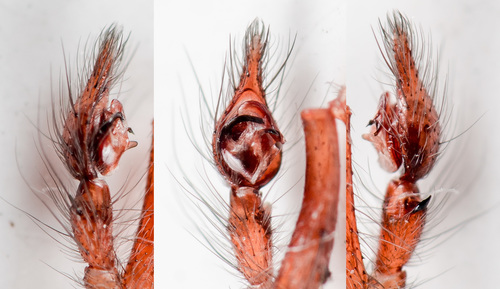
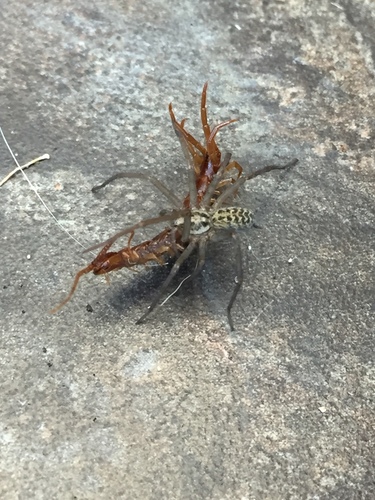
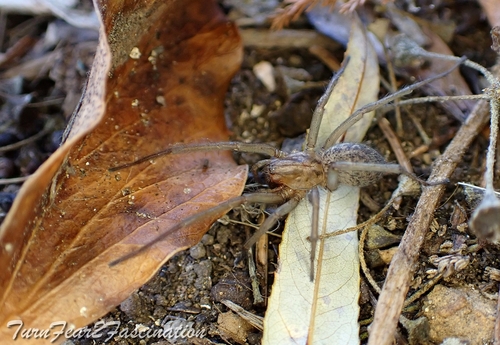
Red legs and big fangs: woodlouse spider
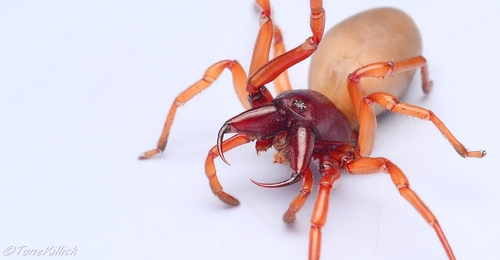
The woodlouse spider also has six eyes, which confuses some people. But it looks very different: a glossy dark red to orange front body and legs, a pale cream to greyish abdomen, and very large fangs pointing forward. It lives under stones and logs, hunting woodlice, and sometimes wanders indoors.
Its bite can be painful for a short time but isn't dangerous.
What to do if you think you've found one
Don't handle it. Trap it under a glass if you can, and take a clear, close photo from above.
If you live within the recluse's range and find several, reduce clutter, store boxes off the floor in sealed plastic tubs, shake out clothes, shoes and bedding that have been on the floor, and pull beds away from walls. Sticky traps along walls are a good way to check what's living in a room. For a confirmed infestation, a pest control professional can help.
If you think you've been bitten, wash the area, apply a cold pack and keep it raised. Get medical advice if the wound grows, turns dark or blisters, or if you feel unwell. Many wounds blamed on recluses turn out to be infections or other conditions, so it's worth seeing a doctor rather than guessing.
?Frequently asked questions
How can I tell if a spider is a brown recluse?
Look for three things together: a dark violin-shaped mark on the front of the body with the neck pointing back, six eyes in three pairs, and plain legs and abdomen with no bands, stripes or spots. Also check where you are: brown recluses live in the south-central and lower Midwest US.
What spider is most often mistaken for a brown recluse?
Cellar spiders, male southern house spiders, wolf spiders and funnel weaver spiders. Cellar spiders have much longer, thinner legs and sit in messy webs; wolf spiders and funnel weavers have stripes, chevrons or banded legs, which brown recluses never have.
Are brown recluse bites dangerous?
Bites are uncommon and most heal without problems. A minority cause a wound that slowly spreads and damages the skin over days to weeks, and rarely a more serious reaction. Get medical advice if a bite grows, darkens or blisters, or if you feel unwell.
Do cellar spiders kill brown recluses?
Yes, cellar spiders catch and eat other spiders, including brown recluses. They're harmless to people, so there's no need to remove them.
Written by the Insect Scanner team, last updated 2026-10-26. Identification from photos is never certain: don't handle insects you can't identify, and get medical advice for bites, stings or allergic reactions.