
Giant house spider
Eratigena atrica · Funnel weaver spiders
Large, fast-moving funnel-web spider commonly found in and around buildings; not dangerous to people but can deliver a rare mild bite.
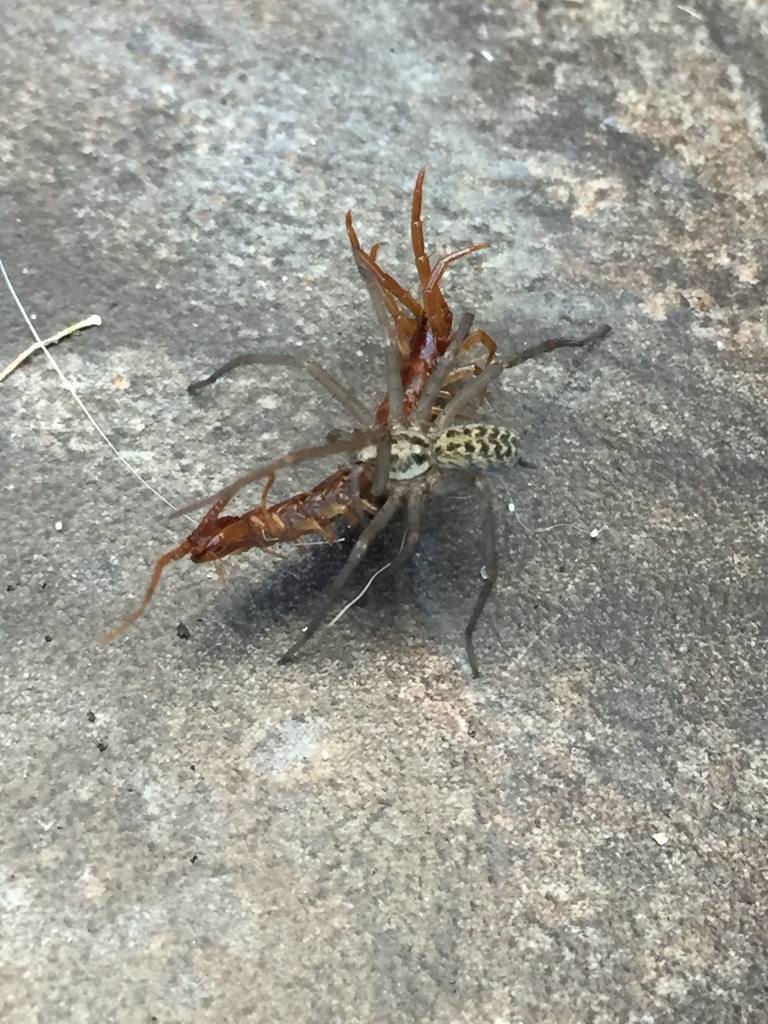
!Is the giant house spider dangerous?
Only mildly. Not dangerous to humans. Bites are rare and typically cause mild local pain, redness and swelling similar to a bee sting; allergic reactions are uncommon. Clean the wound, apply cold compress and monitor for infection or allergic reaction. Seek medical care if severe pain, spreading redness, systemic symptoms or suspected infection occur.
Pets
Generally not harmful to pets. Small animals that try to eat the spider could receive a defensive bite; effects are usually minor. If a pet shows unusual symptoms after contact, consult a veterinarian.
📖Overview
Eratigena atrica is a large, mostly nocturnal funnel-web spider frequently encountered in houses, basements and outbuildings in Europe and parts of North America. It builds a flat sheet web with a funnel retreat where the spider hides and waits for prey. Adults are notable for long legs and rapid running when disturbed. They are not aggressive toward people and bites are uncommon and usually produce minor local symptoms.
🔍How to identify a giant house spider
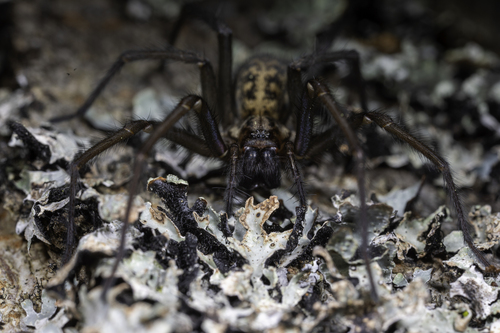
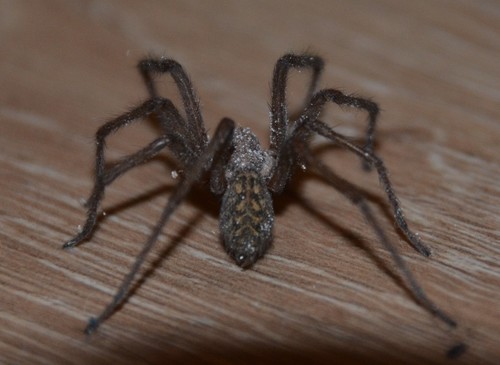
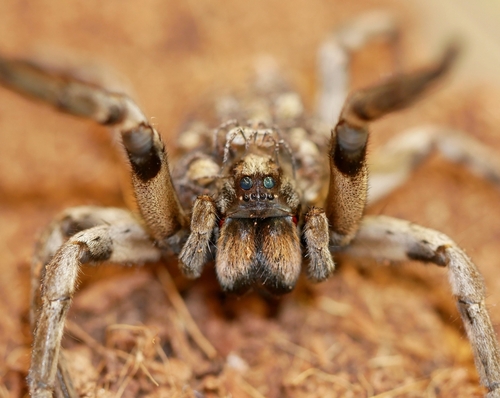
Adults have a long-legged, elongated body with a distinct cephalothorax and abdomen. Body length of females is larger than males, but both sexes display long spindly legs. The abdomen usually shows a mottled brown pattern; legs are banded or uniformly brown and covered in fine hairs. The pedipalps and genitals are diagnostic for species-level ID and are used by specialists to distinguish similar species in the atrica species complex.
- Large funnel-web spider with long, spindly legs and a visible funnel retreat in the web
- Mottled brown abdomen with indistinct patterned markings and banded or uniformly brown long legs
- Fast, smooth running when disturbed; adult legspan noticeably larger than common house spiders
- Definitive species ID requires examination of genitalia (pedipalps in males, epigyne in females) by a specialist
Lookalikes
Eratigena duellica (part of the atrica complex) Eratigena duellica
Very similar in appearance; separation from E. atrica typically requires microscopic examination of reproductive structures or genetic testing.
Eratigena saeva (part of the atrica complex) Eratigena saeva
Looks nearly identical to E. atrica to the naked eye; reliable distinction needs expert examination of genitalia.
↻Life cycle
Egg sac
Females produce silk egg sacs containing dozens to a few hundred eggs, which are guarded in the funnel retreat or hidden in crevices.
Juvenile (spiderling)
Spiderlings hatch and disperse; juveniles moult several times as they grow, remaining within similar sheltered habitats.
Adult
Mature spiders mate in late summer to autumn; males wander in search of females and typically die soon after mating while females may survive to lay more egg sacs.
🍃Diet and predators
Young eat
Small flying and crawling insects and other arthropods
Adults eat
Flies, moths, ants, beetles and other household or garden insects captured in the sheet web and at the funnel entrance
Predators of the young
Predatory insects, other spiders, parasitoid wasps and small vertebrates
Predators of adults
Birds, small mammals, larger spiders and some wasps
🌱Effect on plants and gardens
Does not feed on plants; helps control household and garden insect populations by preying on flying and crawling insects.
📍Where and when to find it
Look in corners of rooms, attics, basements, behind furniture, in sheds and garages. Check the flat sheet webs with a funnel retreat along skirting boards or near windows.
Best time
Late summer to autumn is prime time for spotting active adults, especially at night.
Observation tips
Turn off lights and use a torch to photograph webs and the spider in the funnel. Approach slowly to avoid causing the spider to flee; a long-focus lens helps capture detail without disturbance.
✨Fun facts
- Giant house spiders can run very fast for their size and will dash away when the web is disturbed.
- They build flat sheet webs with a funnel where they hide; the sheet catches prey and the spider rushes out from the funnel to grab it.
- What many people call the 'giant house spider' in different regions actually belongs to a species complex that was split into several closely related species by researchers.
?Frequently asked questions
Are giant house spiders dangerous?
No. They are not medically dangerous. Bites are uncommon and usually cause only mild local symptoms.
Do giant house spiders bite people?
Bites are rare and usually occur only if the spider is provoked or trapped against skin; effects are generally minor.
Why do I find them in my house?
They enter buildings seeking shelter, stable temperatures, and abundant prey (insects) and use corners, basements and attics to build their funnel webs.
How can I get rid of giant house spiders?
Reduce their food (insect) sources, seal cracks and gaps, remove webs and vacuum corners regularly. Capture and release outdoors if you prefer nonlethal removal. Pesticides are rarely necessary and should be used carefully.
Where do giant house spiders live?
They live in and around human structures (houses, garages, sheds), in undisturbed corners, basements, cellars and sometimes in vegetation or stone walls.
📷Photos of the giant house spider
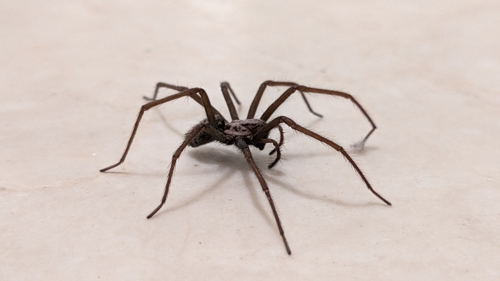
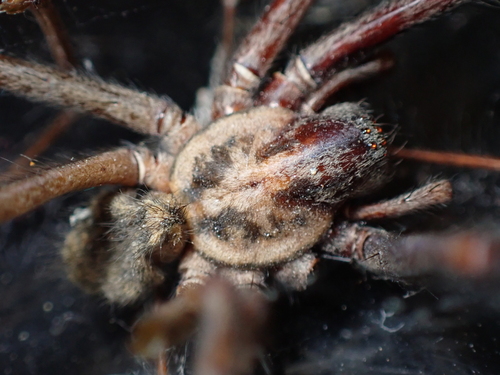
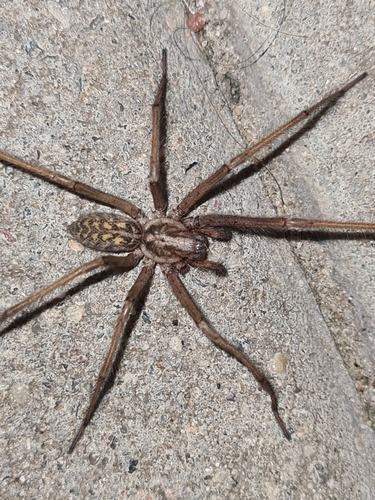
More spiders
This guide was written with AI assistance and fact-checked, last updated 2026-10-09. Identification from photos is never certain: don't handle insects you can't identify, and get medical advice for bites, stings or allergic reactions.