
Zebra jumping spider
Salticus scenicus · Jumping spiders
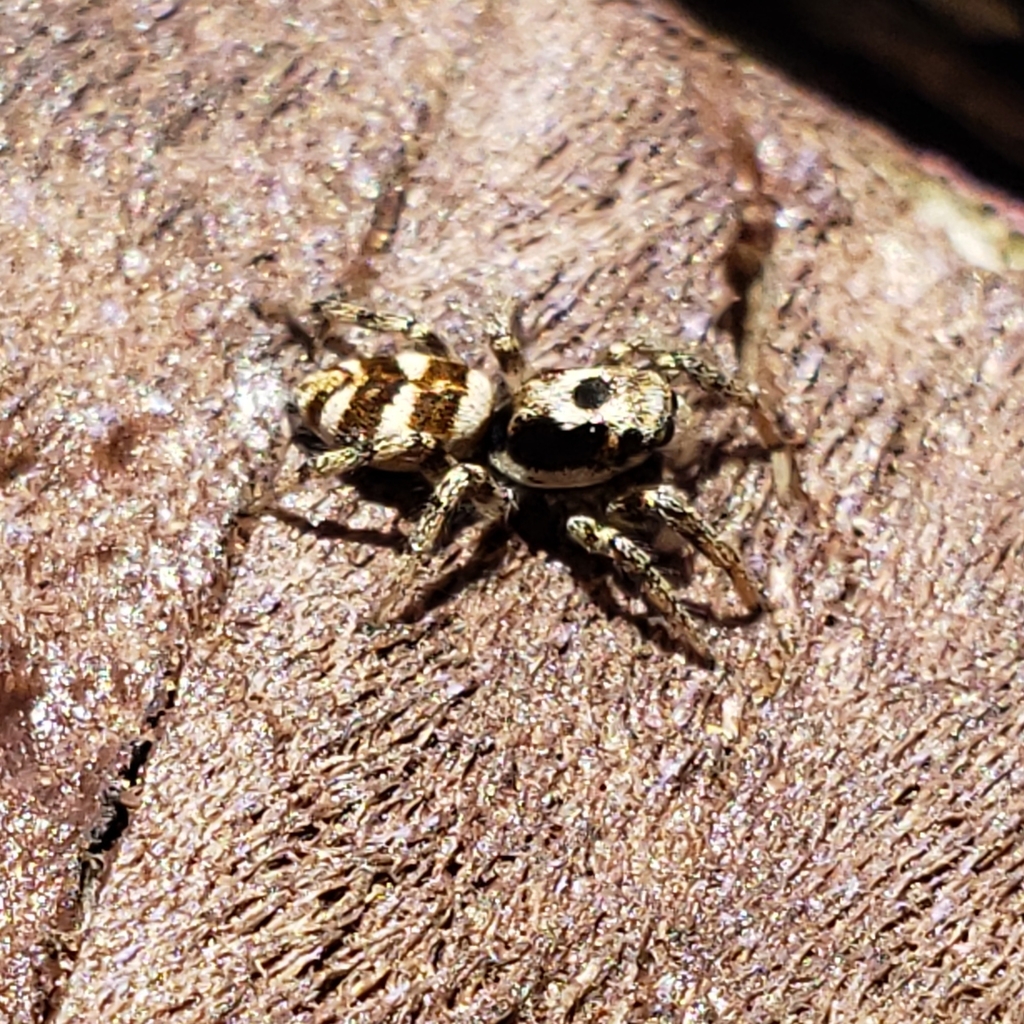
A small, diurnal jumping spider with bold black-and-white stripes, common on sunny walls and window frames across the Holarctic.
!Is the zebra jumping spider dangerous?
No. Salticus scenicus is not dangerous. Bites are extremely rare, and if one occurs it usually causes only minor, short-lived local redness or itching. No serious medical effects are known. For a bite, wash with soap and water and apply a cold compress; seek medical advice if symptoms worsen or an allergic reaction occurs.
Pets
Generally harmless to cats and dogs; bites would be minor and unlikely because these spiders avoid large animals. Pets that eat spiders may experience brief stomach upset but serious effects are not expected.
📖Overview
Salticus scenicus is a compact, active jumping spider (family Salticidae) known for its distinctive black-and-white striped pattern and quick, jerky leaps. It is frequently seen on sunny vertical surfaces such as walls, fences and window frames where it hunts small insects by sight. It is widespread across Europe and North America and well adapted to human environments.
These spiders rely on excellent vision and agile jumps to capture prey rather than webs. They are solitary and often show curious, deliberate movements when approached. Salticus scenicus is not aggressive toward humans and plays a useful role as a predator of nuisance insects.
🔍How to identify a zebra jumping spider
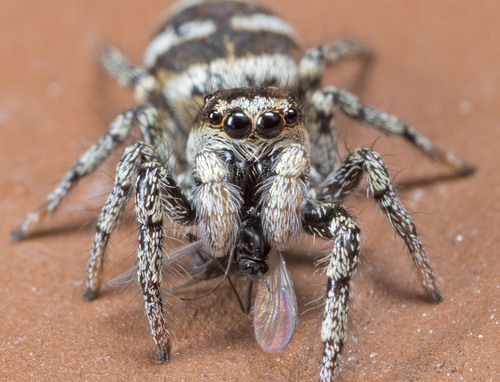
Adults are small (about 5-7 mm long) with a flattened, compact body. The dorsal pattern is striking: a black body marked with bands and patches of white hairs, especially across the abdomen, giving a 'zebra' look. The anterior median eyes are large and forward-facing, giving a rounded, alert-looking face. Males have greatly enlarged, forward-projecting chelicerae (jaws).
- Distinct black-and-white 'zebra' bands on the body and legs
- Very large forward-facing central eyes compared with other spiders
- Stout, compact body and noticeably jerky, leaping movement when hunting
- Usually found on sunny vertical surfaces like walls and window frames
Lookalikes
Bark zebra spider Salticus cingulatus
A close relative usually found on tree trunks rather than walls, with more greyish-white hairs and less sharply defined stripes.
Evarcha (typical small salticid) Evarcha arcuata
Also small and on walls, but lacks the bold zebra stripes and often shows different dorsal markings and body shape.
↻Life cycle
Egg
Females lay eggs in a silk sac, often hidden in a crevice or under bark; the sac is guarded by the female.
Spiderling (juvenile)
Spiderlings hatch resembling small adults and go through several moults (instars) while growing; juveniles are active hunters.
Adult
After final moult the spider reaches sexual maturity; adults hunt by sight and court via visual displays.
🍃Diet and predators
Young eat
Small flying and crawling insects and other tiny arthropods
Adults eat
Small flies, aphids, springtails and other small insects captured by stalking and leaping
Predators of the young
Larger spiders, insectivorous beetles, parasitic wasps, birds
Predators of adults
Birds, larger spiders, predatory insects and some small vertebrates
🌱Effect on plants and gardens
Does not feed on plants; helps reduce small insect pests in gardens and around buildings
📍Where and when to find it
Look on sunny walls, window frames, fences, garden sheds and tree bark. Eggs are in silk sacs tucked into crevices; spiderlings stay near sheltered spots.
Best time
Spring to early autumn during daylight hours, especially on warm, sunny days.
Observation tips
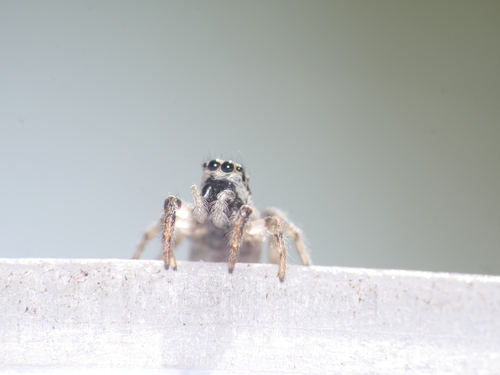
Approach slowly and use a zoom lens or macro setting; the spiders are curious and may turn to face you, showing their large eyes. Photograph from eye level for a striking shot.
✨Fun facts
- Zebra jumping spiders have excellent vision: the large central eyes give sharp, binocular vision used to judge distances before leaping.
- They do not use webs to catch prey; instead they make a dragline of silk as a safety tether when jumping.
- Males perform elaborate visual displays during courtship, waving legs and abdomen to attract females.
?Frequently asked questions
Are zebra jumping spiders dangerous?
No. They are not dangerous to people. Bites are rare and usually cause only mild, temporary irritation.
Do zebra jumping spiders bite?
They can bite if handled or provoked, but bites are uncommon and typically minor.
Why is a zebra jumping spider in my house?
They are attracted to sunny window sills and walls where prey (small insects) is plentiful. They may wander indoors while hunting or seeking shelter.
How do I get rid of zebra jumping spiders?
They are beneficial predators; if you want them removed, gently capture them in a jar and release outdoors. Seal cracks and reduce outdoor lighting that attracts insects to make your walls less attractive.
Where do zebra jumping spiders live?
On sunny vertical surfaces such as stone, brick and wood, around human buildings, fences and garden structures across much of Europe, North America and parts of Asia.
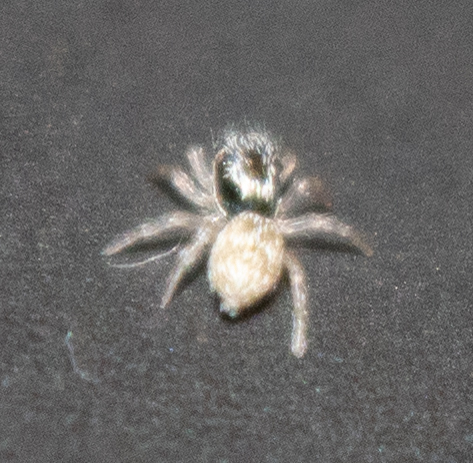
📷Photos of the zebra jumping spider
More spiders
This guide was written with AI assistance and fact-checked, last updated 2026-10-10. Identification from photos is never certain: don't handle insects you can't identify, and get medical advice for bites, stings or allergic reactions. More about the zebra jumping spider: iNaturalist, Wikipedia.