
Tan jumping spider
Platycryptus undatus · Jumping spiders
A compact, tan-brown jumping spider common on tree bark, fences and buildings in North America, known for its bold stripes and agile leaps.
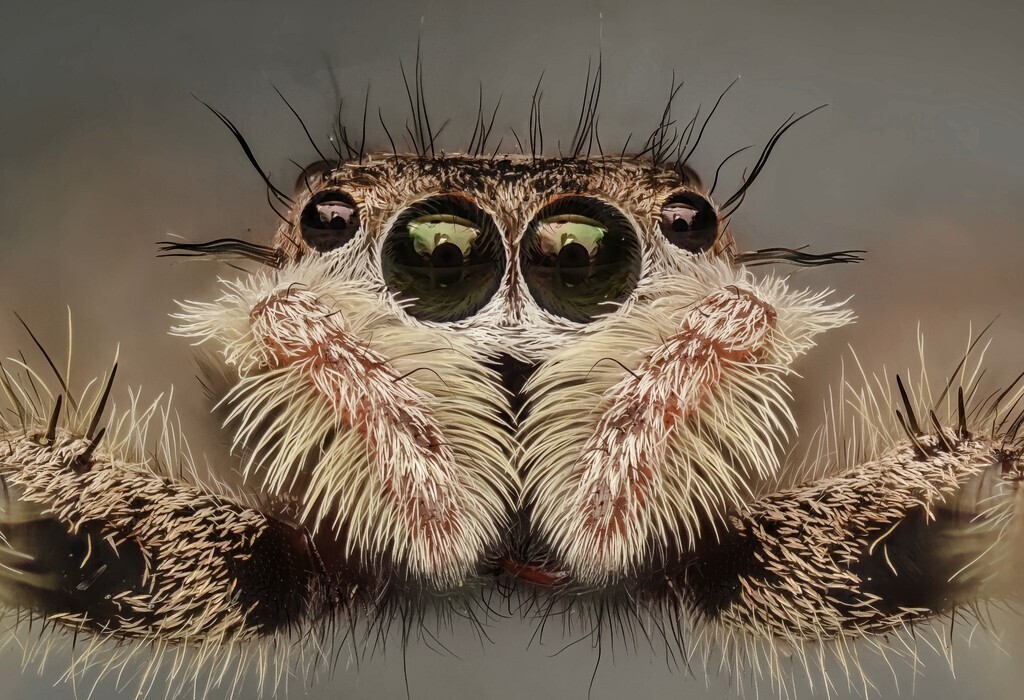
!Is the tan jumping spider dangerous?
Only mildly. Jumping spiders like Platycryptus undatus have venom for subduing prey but bites to humans are rare and typically cause only minor, localized pain, redness or itching, like a mild pinprick. People with arachnid allergies should seek medical advice if they react strongly. First aid: clean the area, apply a cold pack for swelling, and use over-the-counter pain relievers or antihistamines as needed. Seek medical care if symptoms worsen or signs of infection appear.
Pets
Bites to pets are very uncommon; if a small pet is bitten it may show temporary localized swelling or discomfort. Serious reactions are rare.
📖Overview
Platycryptus undatus is a small, stout jumping spider often found on vertical surfaces such as tree trunks, wooden fences, and the exterior walls of houses. It is active during daylight and hunts visually, leaping onto prey rather than using webs to capture it. Adults are typically seen alone; males perform short visual displays during courtship. This species is widespread in North America and adapts well to human-altered environments.
🔍How to identify a tan jumping spider
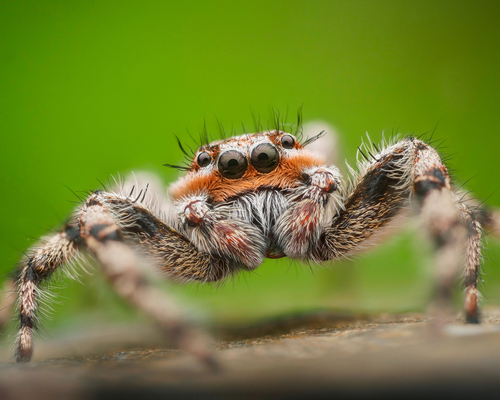
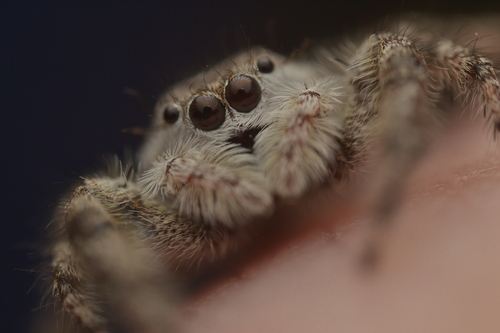
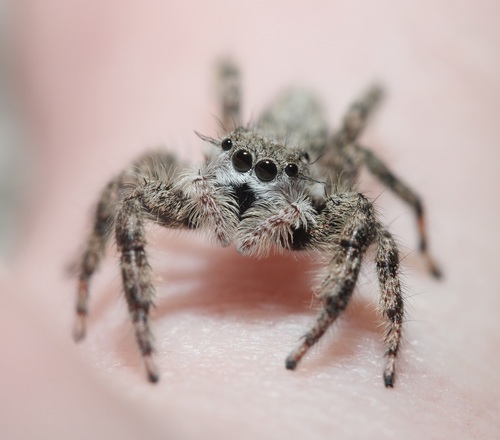
Adults are compact, with a short, slightly flattened body and robust front legs. The dorsal pattern includes broad, irregular tan to brown bands and a pale median stripe or chevron on the abdomen; legs are banded or mottled. Females are generally plainer and more robust; males may have slightly darker markings and sometimes subtle iridescence on the chelicerae. Eyes are large and forward-facing, typical of jumping spiders.
- Look for a compact, flattened body with broad tan-brown dorsal bands and a pale median stripe or chevron on the abdomen.
- Found on vertical rough surfaces like tree bark or fences; active during the day and often seen moving in short hops.
- Large forward-facing eyes typical of jumping spiders; body length about 8-13 mm.
- Legs and body often show mottled banding that breaks up the outline against bark.
Lookalikes
Bold jumping spider Phidippus audax
Larger (often 8-15 mm), stockier, and frequently has metallic chelicerae and distinctive white or orange dorsal spots rather than the broad tan-brown bands of Platycryptus undatus.
Zebra jumping spider Salticus scenicus
Smaller with high-contrast black-and-white striped pattern and rounder abdomen; typically seen on vertical walls but pattern and size help separate it from Platycryptus undatus.
↻Life cycle
Egg
Females lay eggs in silk sacs hidden in crevices, under bark or in sheltered spots; sacs are guarded by the female until hatching.
Spiderling (juvenile)
Young spiders hatch as miniature adults (no metamorphic larval stage). Spiderlings disperse by walking or ballooning and molt several times as they grow.
Adult
Sexually mature spiders that hunt visually, mate, and produce the next generation; adults are most visible in warmer months.
🍃Diet and predators
Young eat
Small flying or crawling insects and other tiny arthropods
Adults eat
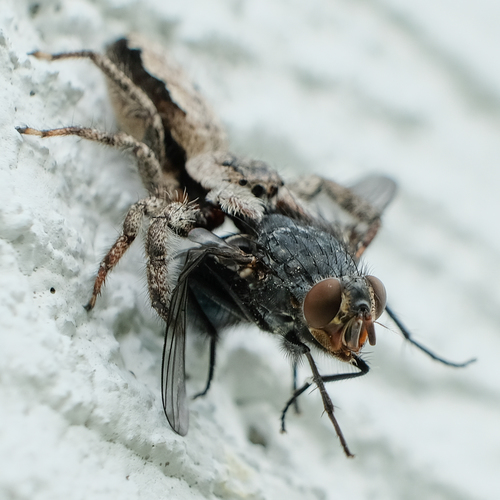
Small insects and spiders captured by active hunting and leaping
Predators of the young
Ants, larger spiders, small predatory insects and birds
Predators of adults
Birds, wasps, larger spiders and small insectivorous vertebrates
🌱Effect on plants and gardens
Does not feed on plants; predatory on small insects and arthropods, so it can help reduce pest insect numbers.
📍Where and when to find it
Search vertical rough surfaces: tree bark, fences, siding, window frames and porch posts. Look for movement in daylight; adults perch and make short hops.
Best time
Spring through fall during daylight hours; mid-morning to afternoon when insects are active.
Observation tips
Use a camera with a short focal distance or a macro lens; approach slowly and photograph from the side to show the distinctive dorsal pattern and large forward-facing eyes.
✨Fun facts
- Like other jumping spiders, Platycryptus undatus has excellent vision and can judge distances precisely before leaping.
- They do not build capture webs; instead they use silk as a safety tether when jumping and to line retreats for eggs and resting.
- Individuals often favor tree bark and wood, where their mottled coloration provides camouflage.
?Frequently asked questions
Are tan jumping spiders dangerous?
No. They are not dangerous to people. Bites are rare and cause only minor, localized symptoms in most cases.
Do tan jumping spiders bite?
They can bite if handled or provoked, but bites are uncommon and usually mild, like a small pinprick or sting.
Why is this spider in my house?
They wander indoors searching for prey or shelter. Windows, doors and open garages allow them access. They prefer vertical surfaces and may explore inside near lighted windows that attract insects.
How do I get rid of tan jumping spiders?
Nonlethal methods: remove spiders by capturing them in a jar and releasing outside, reduce outdoor lighting that attracts prey, seal cracks and gaps, and remove clutter and stacks of wood near the house. Vacuuming and regular cleaning also discourage them. Chemical sprays are unnecessary in most cases.
Where do tan jumping spiders live?
They live on tree trunks, wooden fences, decks, porch posts and building exteriors across much of North America, often in suburban and rural settings.
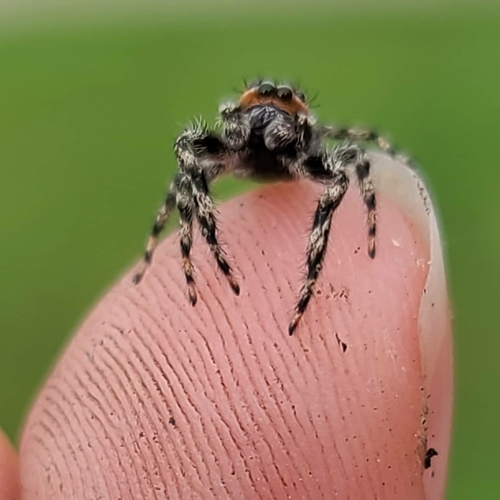
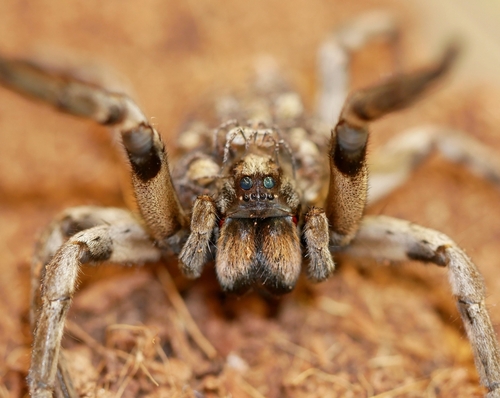
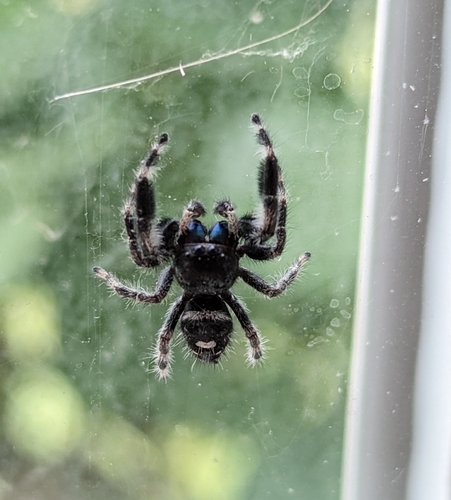
📷Photos of the tan jumping spider
More spiders
This guide was written with AI assistance and fact-checked, last updated 2026-10-10. Identification from photos is never certain: don't handle insects you can't identify, and get medical advice for bites, stings or allergic reactions. More about the tan jumping spider: iNaturalist, Wikipedia.