
Bold jumping spider vs Tan jumping spider
These two are easy to mix up. Here's how to tell a bold jumping spider from a tan jumping spider, and whether either one bites or stings.
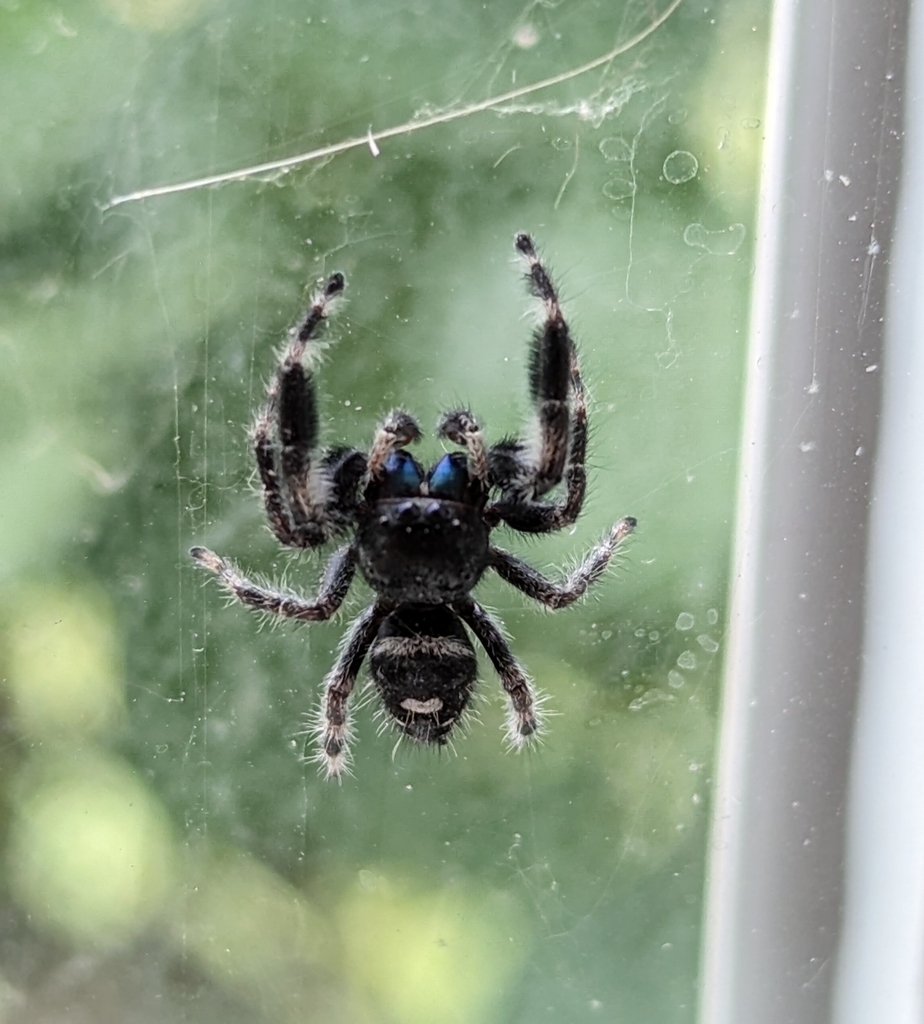
Bold jumping spider
Phidippus audax
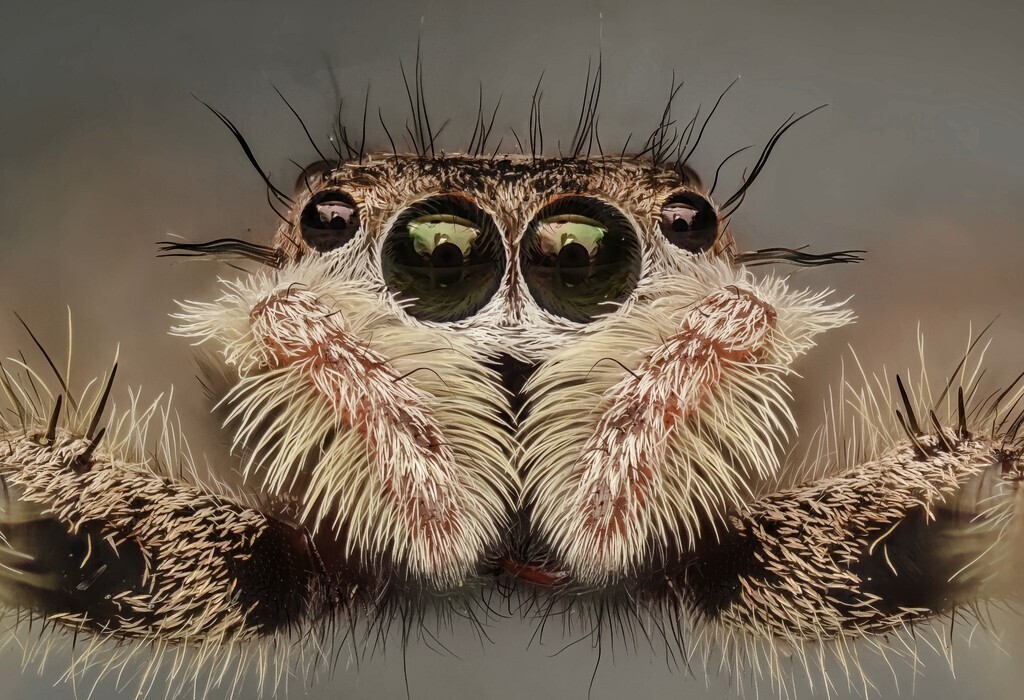
Tan jumping spider
Platycryptus undatus
≠The key differences
Larger (often 8-15 mm), stockier, and frequently has metallic chelicerae and distinctive white or orange dorsal spots rather than the broad tan-brown bands of Platycryptus undatus.
⚖︎Side by side
| Bold jumping spider | Tan jumping spider | |
|---|---|---|
| To humans | Mild bite | Mild bite |
| Size | 6-18 mm body length | About 8-13 mm body length |
| Colours | Black, White (spots), Orange (juvenile spots / variants), Iridescent green/blue (chelicerae) | Tan, Brown, Black, White |
| Family | Salticidae | Salticidae |
| Habitat | Open sunny spots: grassy areas, shrubs, tree bark, fence posts, porches, and building exteriors; also inside houses near windows or light sources. | Vertical rough surfaces: tree bark, wooden fences, decks, porches, siding and outdoor structures; sometimes inside buildings near windows and doors. |
| Range | Widespread across North America, from Canada through the United States into northern Mexico; established in many human-altered habitats. | Mainly eastern and central North America (United States and southern Canada), with scattered records further west; commonly found in suburban and rural areas. |
| Active | Active in spring through fall; diurnal (most active during daylight). | Daytime-active (diurnal); most commonly seen in spring through fall in temperate regions. |
| Pest? | No | No |
🔍How to spot a bold jumping spider
- Black to dark brown compact spider with two or three bold white or orange spots on the abdomen.
- Large forward-facing eyes and short, powerful legs typical of jumping spiders.
- Iridescent chelicerae (green/blue) often visible in good light, particularly in males.
- Body length 6-18 mm; juveniles often show orange spots that fade to white with age.
🔍How to spot a tan jumping spider
- Look for a compact, flattened body with broad tan-brown dorsal bands and a pale median stripe or chevron on the abdomen.
- Found on vertical rough surfaces like tree bark or fences; active during the day and often seen moving in short hops.
- Large forward-facing eyes typical of jumping spiders; body length about 8-13 mm.
- Legs and body often show mottled banding that breaks up the outline against bark.
?Frequently asked questions
What is the difference between a bold jumping spider and a tan jumping spider?
Larger (often 8-15 mm), stockier, and frequently has metallic chelicerae and distinctive white or orange dorsal spots rather than the broad tan-brown bands of Platycryptus undatus.
Is a bold jumping spider or a tan jumping spider more dangerous?
Bold jumping spider: Mild bite. Tan jumping spider: Mild bite. Bites are uncommon and typically occur only if the spider is handled or trapped against skin. Jumping spiders like Platycryptus undatus have venom for subduing prey but bites to humans are rare and typically cause only minor, localized pain, redness or itching, like a mild pinprick.
Identification from photos is never certain: don't handle insects you can't identify, and get medical advice for bites, stings or allergic reactions.