
Bold jumping spider
Phidippus audax · Jumping spiders
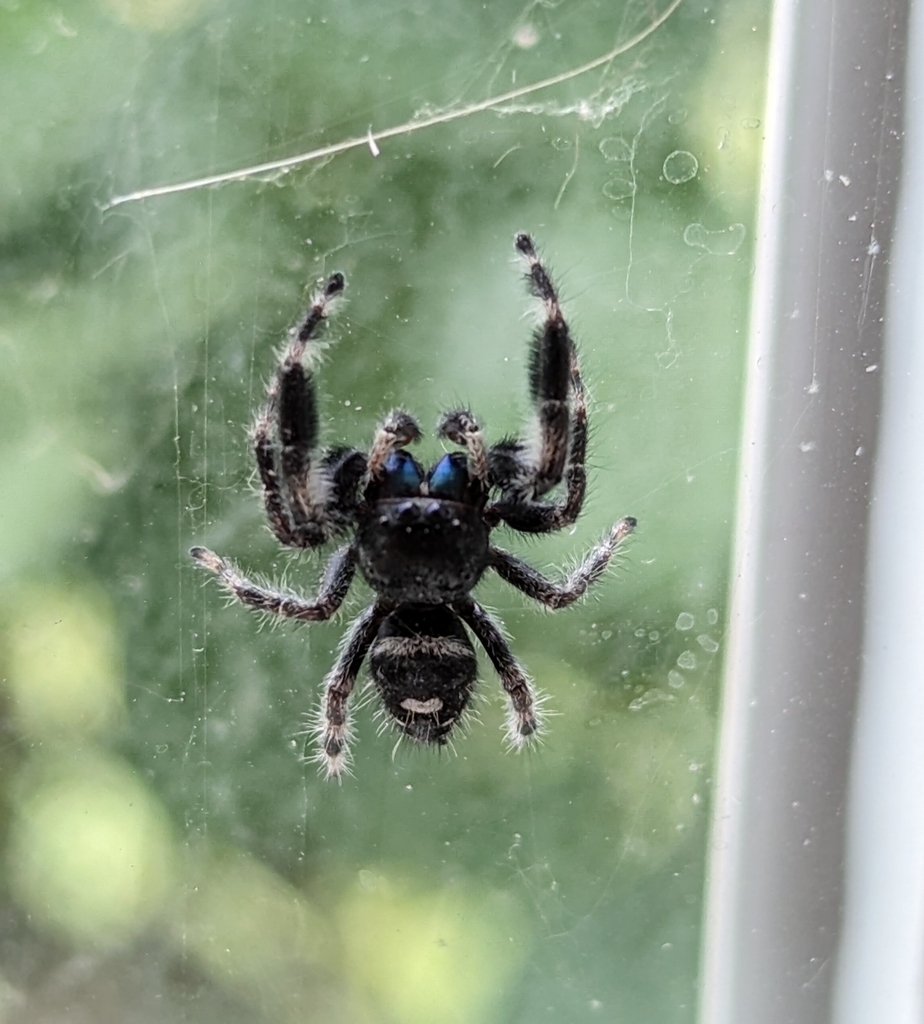
A conspicuous North American jumping spider with iridescent chelicerae and bold white spots on a black body, a skilled diurnal hunter that does not build a capture web.
!Is the bold jumping spider dangerous?
Only mildly. Bites are uncommon and typically occur only if the spider is handled or trapped against skin. A bite can cause brief local pain, redness and swelling similar to a bee sting in sensitive people; systemic reactions are rare. Clean the area, apply ice and use over-the-counter pain relievers or antihistamines for itching. Seek medical help if you experience severe pain, spreading redness, or allergic symptoms such as difficulty breathing.
Pets
Generally not dangerous to cats or dogs; a bite may cause local irritation or short-lived discomfort. Small pets could show more noticeable effects but serious reactions are rare. Contact a veterinarian if symptoms are severe.
📖Overview
Phidippus audax is a common, diurnal jumping spider native to North America and frequently found around homes, gardens and fields. Adults are active hunters that use excellent vision and jumping ability to catch insects rather than spinning prey-capture webs. They are curious and often tolerate human presence, which makes them one of the more frequently noticed spider species.
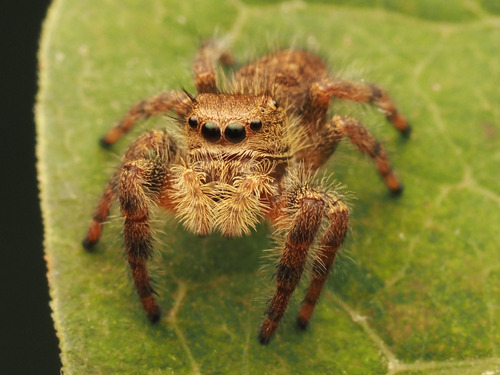
Males and females show similar coloration: a mostly dark body with distinctive white or orange spots on the abdomen; very young spiders and some populations have orange spots that often turn white with maturity. They are solitary and territorial; females protect egg sacs until spiderlings disperse. While capable of biting if provoked, bites are uncommon and usually cause only minor, short-lived local effects in people.
🔍How to identify a bold jumping spider
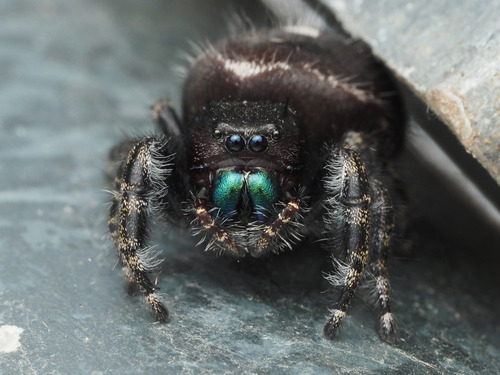
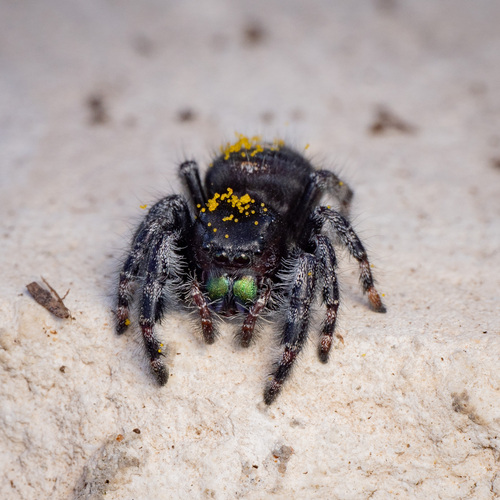
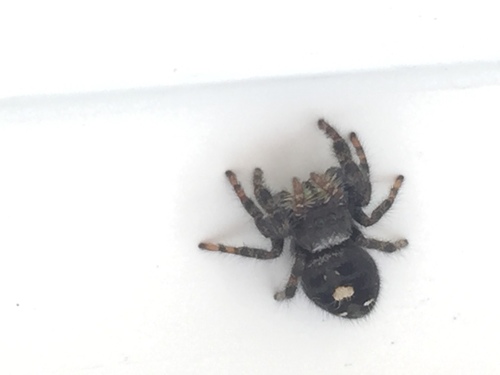
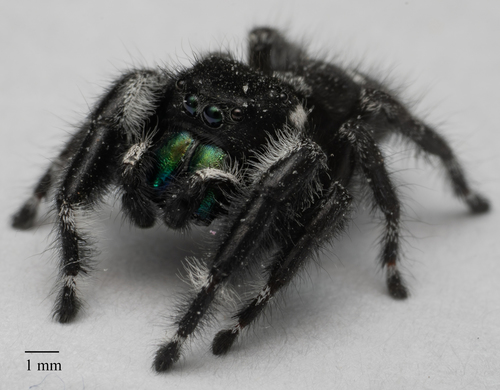
Adults have a robust, compact body typical of salticids, with relatively short legs and a large forward-facing pair of eyes. Body length ranges roughly 6-18 mm depending on sex and age. The carapace and legs are generally black to dark brown; the abdomen is black with two or three bold contrasting spots that are white or orange depending on age and population. Chelicerae (mouthparts) are often iridescent green, blue or orange—particularly in males. Dense setae (hairs) cover the body and give a slightly fuzzy appearance.
- Black to dark brown compact spider with two or three bold white or orange spots on the abdomen.
- Large forward-facing eyes and short, powerful legs typical of jumping spiders.
- Iridescent chelicerae (green/blue) often visible in good light, particularly in males.
- Body length 6-18 mm; juveniles often show orange spots that fade to white with age.
Lookalikes
Red-backed jumping spider Phidippus johnsoni
P. johnsoni has a bright red abdomen (females often with a central black stripe) rather than black with white spots, and it is mainly found in western North America.
Regal jumping spider Phidippus regius
Larger, found mainly in the southeastern United States (especially Florida); males are black with white bands and spots, while females are often grey, orange or brown.
Other small salticids Various Salticidae
Smaller salticids lack the robust body and large contrasting abdominal spots of P. audax; cheliceral iridescence is less pronounced.
↻Life cycle
Egg
Females lay eggs in a silk sac and guard it. The sac is hidden in crevices, under bark, or sheltered locations; eggs hatch in 2-3 weeks depending on temperature.
Juvenile (spiderling)
Young spiderlings go through several molts while hunting small prey; they disperse by walking or 'ballooning' on silk threads in some cases.
Adult
Sexually mature spiders molt into adults; adults mate in spring or summer. Females may produce one or more egg sacs per season.
🍃Diet and predators
Young eat
Small insects and other tiny arthropods (aphids, thrips, springtails).
Adults eat
Varied insect prey caught by stalking and leaping; occasionally scavenges or takes nectar.
Predators of the young
Birds, predatory insects, other spiders, small reptiles and amphibians.
Predators of adults
Birds, lizards, larger spiders, wasps and some insectivorous mammals.
🌱Effect on plants and gardens
Not a plant pest; adults and juveniles feed on insects and other small arthropods, helping reduce pest populations in gardens.
📍Where and when to find it
Look on sunlit walls, fence posts, window frames, tree trunks, shrubs and tall grasses. Egg sacs are tucked into crevices or under bark; juveniles may be on vegetation or near ground litter.
Best time
Spring through fall during daylight hours; mid-morning to afternoon when they hunt actively.
Observation tips
Approach slowly and keep the spider in frame—P. audax often turns to face observers. Use a macro lens or phone close-up; good light reveals chelicerae iridescence and abdominal spots.
✨Fun facts
- Phidippus audax can leap many times its body length by rapidly increasing blood pressure in its legs rather than using muscular contraction alone.
- They have excellent vision for a spider; the large central eyes provide sharp, binocular sight used for hunting and recognizing mates.
- Individual spiders often show bold, inquisitive behaviors and may turn to face an observer rather than flee.
?Frequently asked questions
Do bold jumping spiders bite?
They can bite if handled or cornered, but bites are uncommon. Most bites cause only minor local pain, redness and swelling.
Are bold jumping spiders dangerous to humans?
No—bites are rarely serious. Severe allergic reactions are possible but uncommon; seek medical help for breathing difficulty or severe symptoms.
Why is a jumping spider in my house?
They enter houses seeking prey (insects), shelter or warm sunny spots. Windows, doors and gaps around eaves are common entry points.
How do I get rid of bold jumping spiders?
Reduce insect prey and seal entry points. Capture and release spiders outdoors if you prefer nonlethal removal. Insecticide spraying is rarely necessary and not recommended for routine control.
Where do bold jumping spiders live?
In open, sunny habitats—gardens, fences, shrubs, tree bark and building exteriors across much of North America; they may also be found indoors near lights.
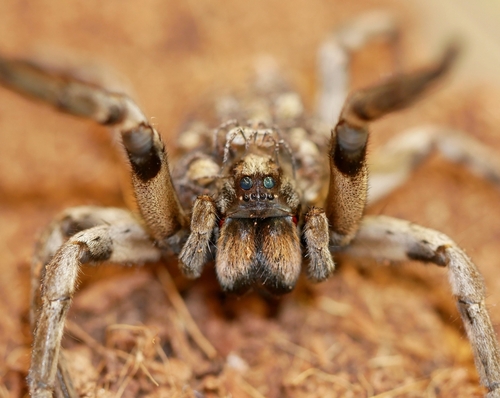
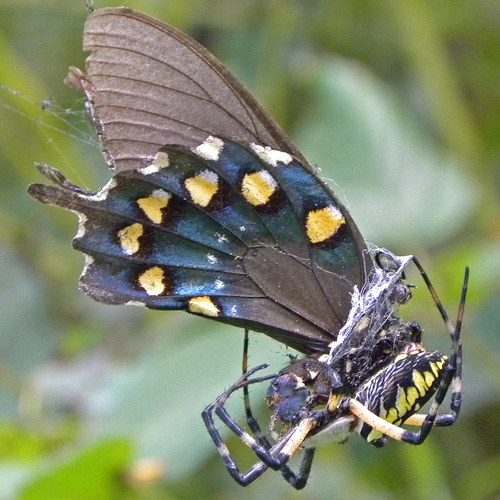
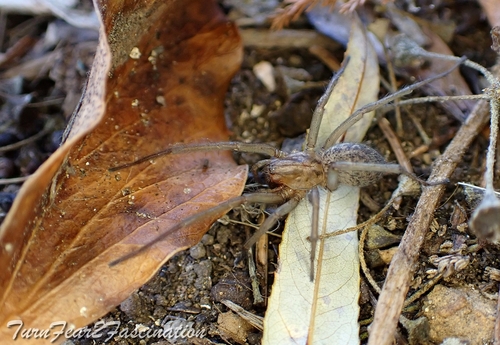
📷Photos of the bold jumping spider
More spiders
This guide was written with AI assistance and fact-checked, last updated 2026-10-09. Identification from photos is never certain: don't handle insects you can't identify, and get medical advice for bites, stings or allergic reactions.